Principle of Assay
This IL-2 sRa enzyme linked immunosorbent assay (ELISA) applies a technique called a quantitative sandwich immunoassay. The microtiter plate provided in this kit has been pre-coated with a monoclonal antibody specific to IL-2 sRa. Standards or samples are then added to the appropriate microtiter plate wells with a biotin-conjugated polyclonal antibody preparation specific for IL-2 sRa and incubated. IL-2 sRa? if present, will bind and become immobilized by the antibody pre-coated on the wells and then become “sandwiched” by biotin conjugate. The microtiter plate wells are thoroughly washed to remove unbound IL-2 sRa and other components of the sample. In order to quantitatively determine the amount of IL-2sRa present in the sample, Avidin conjugated to Horseradish Peroxidase (HRP) is added to each microplate well and incubated. Avidin is a tetramer containing four identical subunits, each having a high affinity-binding site for biotin. The wells are thoroughly washed to remove all unbound HRP-conjugated Avidin and a TMB (3,3'5, 5' tetramethyl-benzidine) substrate solution is added to each well. The enzyme (HRP) and substrate are allowed to react over a short incubation period. Only those wells that contain IL-2 sRa, biotin-conjugated antibody, and enzyme-conjugated Avidin will exhibit a change in colour. The enzyme-substrate reaction is terminated by the addition of a sulphuric acid solution and the colour change is measured spectrophotometrically at a wavelength of 450nm ± 2nm.
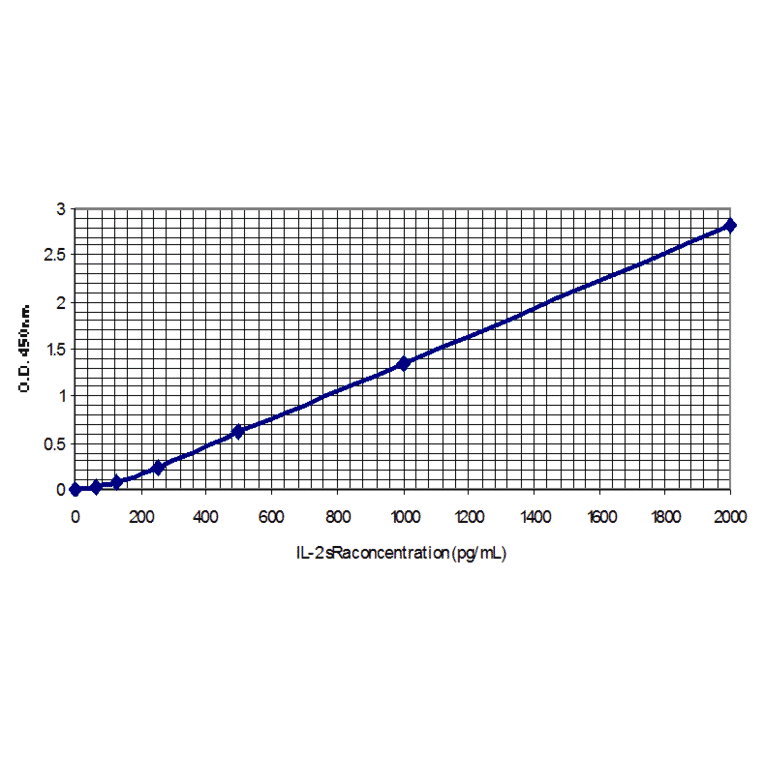
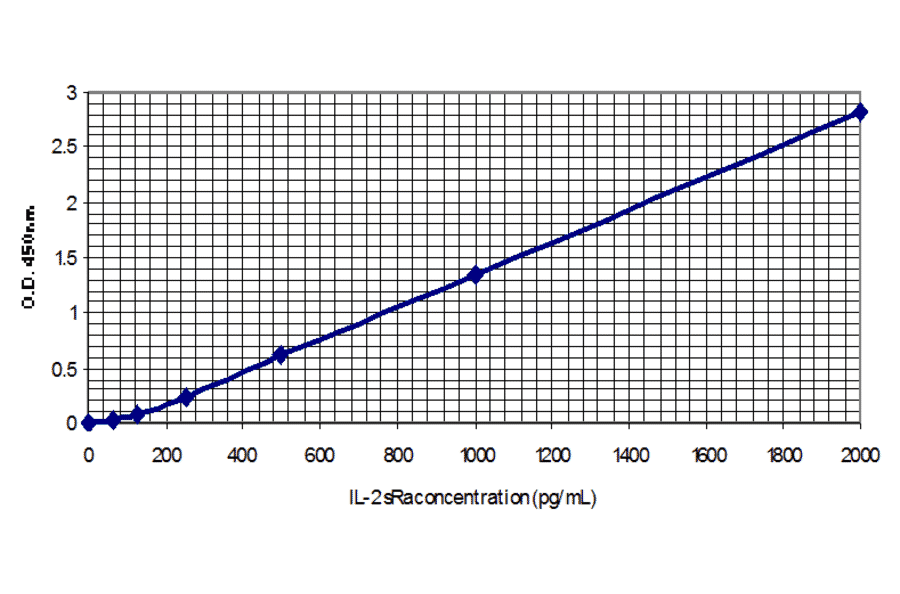
In order to measure the concentration of IL-2 sRa in the samples this kit includes two calibration diluents (Calibrator Diluent I for serum/plasma testing and Calibrator Diluent II for cell culture supernatant testing.) According to the testing system, the provided standard is diluted (2-fold) with the appropriate Calibrator Diluent and assayed at the same time as the samples. This allows the operator to produce a standard curve of Optical Density (O.D) versus IL-2 sRa concentration (pg/mL). The concentration of IL-2 sRa in the samples is then determined by comparing the O.D. of the samples to the standard curve.