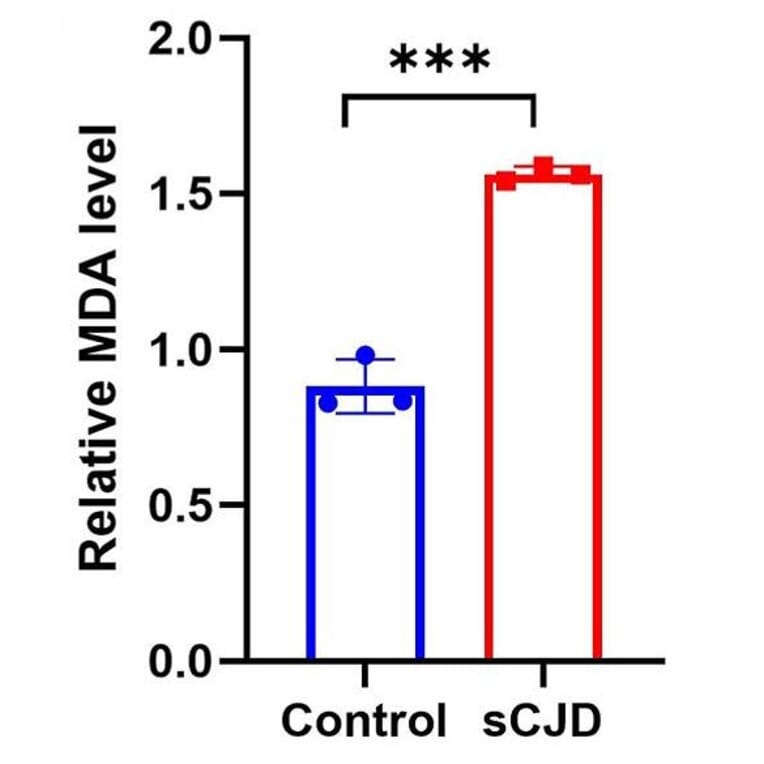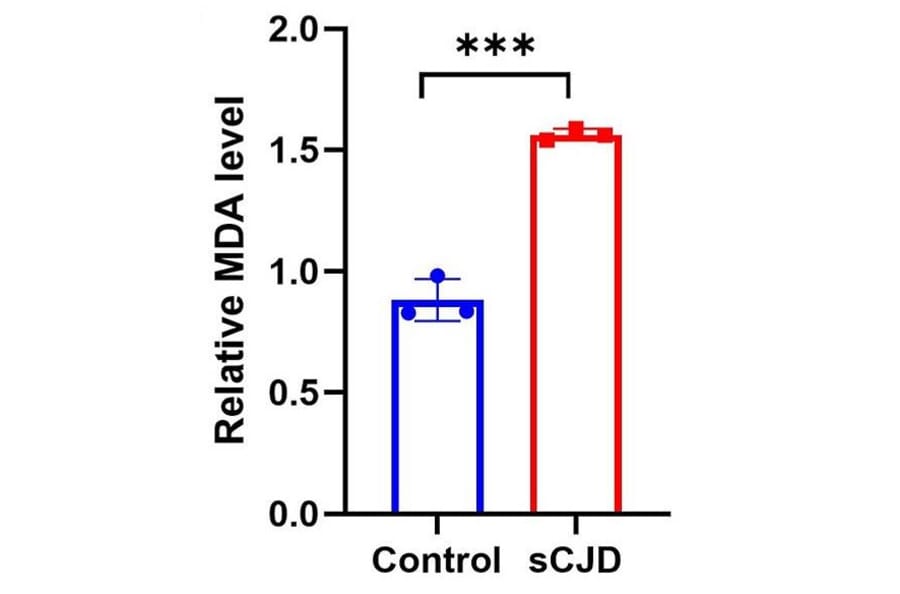

Prion diseases are a group of fatal neurodegenerative disorders caused by misfolded proteins. Understanding the regulatory networks of ferroptosis in prion diseases could unveil new diagnostic and therapeutic strategies. To explore this, we systematically evaluated ferroptosis-associated alterations across human sporadic Creutzfeldt-Jakob disease (sCJD) brain samples, the ME7-infected mouse model, and in vitro using PrP106-126-treated SH-SY5Y cells. In sCJD patients, we observed a significant decrease in GPX4 expression, accompanied by elevated lipid peroxidation, as confirmed by malondialdehyde assays. Furthermore, in vitro experiments using PrP106-126-treated cells confirmed that ferroptosis-related mechanisms actively contribute to cell death, characterized by elevated lipid peroxidation, reactive oxygen species, and increased intracellular Fe2+ levels, as well as diminished glutathione activity. Critically, pharmacological inhibition with ferrostatin-1 effectively mitigated this neurotoxicity, consistent with a ferroptosis-related mechanism. To validate these findings in vivo, we demonstrated that ME7-infected mice exhibited significantly lower levels of GPX4 and SLC7A11, which correlated with increased 4-hydroxynonenal and neuronal damage. Finally, bioinformatic analysis of the GSE124571 dataset identified a distinct transcriptomic signature of 130 differentially expressed ferroptosis-related genes in sCJD patients. These results collectively suggest that ferroptosis-associated alterations are involved in prion-associated neurodegeneration, offering valuable pathophysiological insights into disease progression.
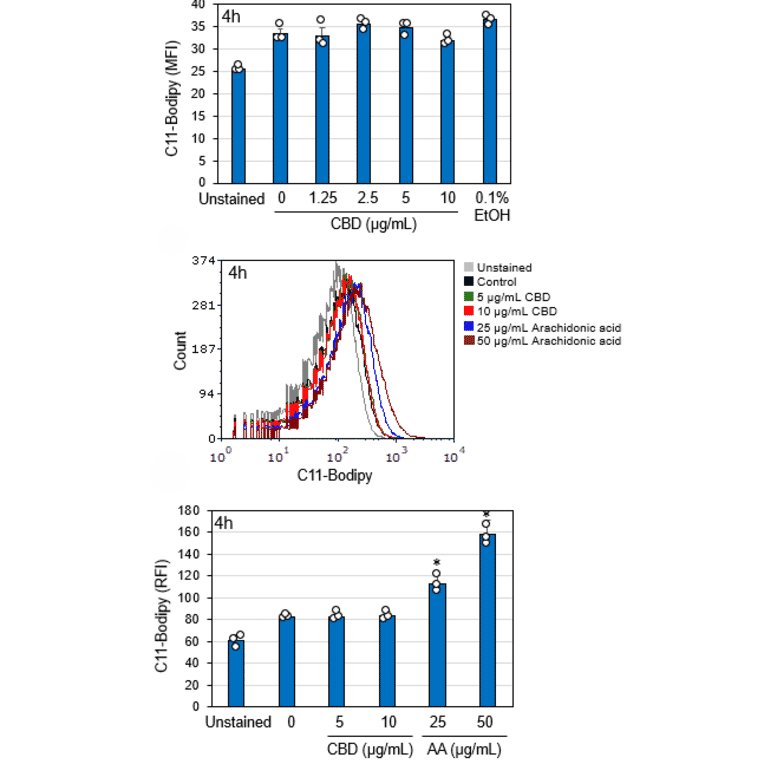
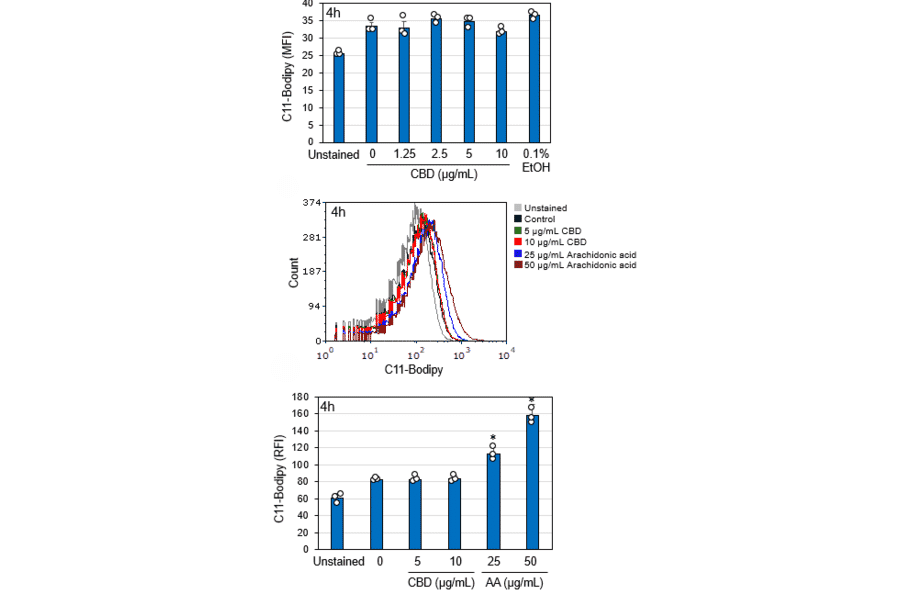
Background: Gardnerella vaginalis is a natural inhabitant of the vagina, but when an imbalance occurs in the vaginal microbiota, this bacterium can cause vaginosis, a condition that must be treated when symptomatic and prior to a gynecological intervention. Cannabidiol (CBD) is an anti-inflammatory compound that also has antibacterial activities against several Gram-positive and certain Gram-negative bacteria. Objectives: Since G. vaginalis is an opportunistic pathogenic Gram-variable bacterium, we investigated its response to CBD. Methods: The antibacterial activity of CBD was studied by broth dilution assay, changes in intracellular ATP levels, and the ability of bacteria to recover on chocolate agar plates. The antibiofilm activity was investigated by MTT metabolic assay, crystal violet staining, and HR-SEM. Flow cytometric analyses were performed to measure changes in membrane potential, membrane perforation, and metabolic activity. Reactive oxygen species (ROS) production was analyzed using the nitro blue tetrazolium (NBT) reagent. Gene expression was determined by semi-quantitative real-time PCR, while protein composition was determined by LC-MS/MS analysis. Results: We observed that G. vaginalis clinical isolates exhibited high susceptibility to CBD with a minimum inhibitory concentration (MIC) of 2.5 µg/mL CBD. CBD induced rapid membrane hyperpolarization and caused cytoplasmic leakage of ATP without increasing propidium iodide uptake. This was accompanied by reduced metabolic activity and loss of survivability. Proteomic analysis revealed decreased expression of some ribosomal-associated proteins. CBD exhibited antioxidant activity by reducing intracellular ROS levels in a dose-dependent manner. The antibacterial effect was neutralized by the free radical scavenger a-tocopherol, suggesting the involvement of radicals in executing the antibacterial effect. Importantly, CBD not only prevented the biofilm formation of G. vaginalis but also reduced the metabolic activity and biofilm biomass of preformed, mature biofilms. Real-time PCR analysis of G. vaginalis treated with CBD for 6 h showed an increase in the expression of biofilm-associated genes, suggesting that the antibiofilm activity of CBD is mainly due to its antibacterial effect. CBD did not alter the ability of G. vaginalis to adhere to HeLa cervical carcinoma cells and CBD-treated bacteria were still phagocytosed by RAW264.7 macrophages. Conclusions: Our study shows that CBD exhibits antibacterial and antibiofilm activities against G. vaginalis clinical isolates and is thus a potential drug for the treatment of vaginosis caused by this bacterium.