
| Sample Type | n | Range | Average |
|---|---|---|---|
| Serum | 10 | 91% - 99% | 95% |
| EDTA Plasma | 10 | 85% - 104% | 95% |
| Heparin Plasma | 10 | 87% - 99% | 91% |
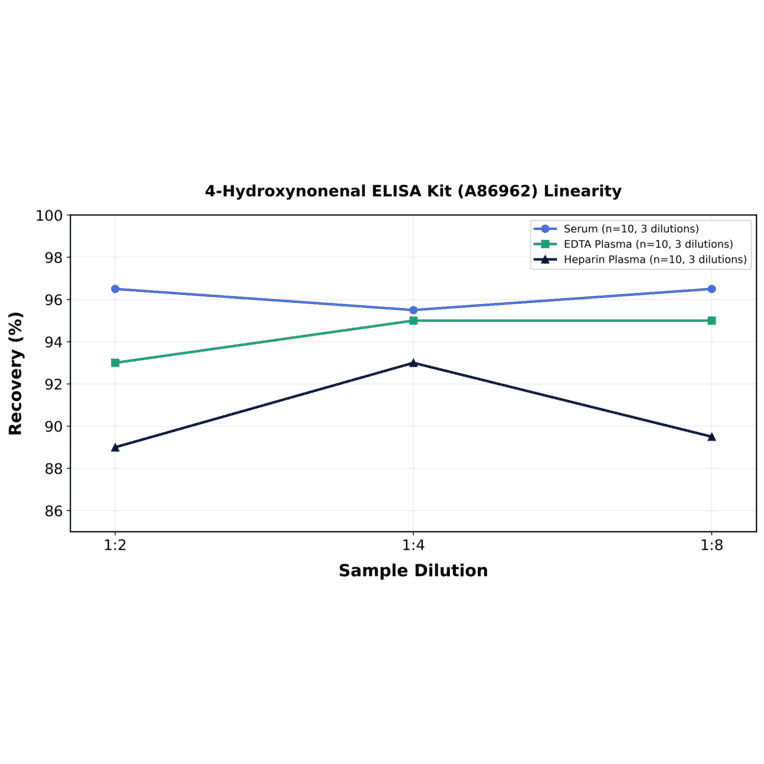
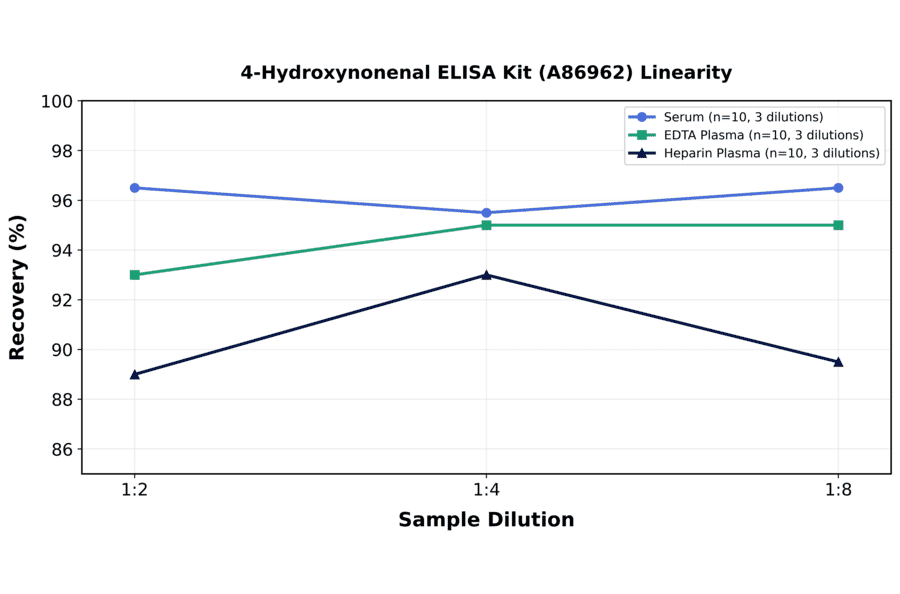
| Sample Type | n | 1:2 | 1:4 | 1:8 |
|---|---|---|---|---|
| Serum | 10 | 88-105% | 87-104% | 91-102% |
| EDTA Plasma | 10 | 86-100% | 89-101% | 93-97% |
| Heparin Plasma | 10 | 80-98% | 90-96% | 80-99% |
| Item | Quantity | Storage |
|---|---|---|
| Pre-Coated 96 Well Microplate | 12 x 8 Well Strips | +4°C |
| Lyopholized Standard | 2 Vials | +4°C |
| Sample Dilution Buffer | 20ml | +4°C |
| Biotinylated Detection Antibody | 60µl | +4°C |
| Antibody Dilution Buffer | 10ml | +4°C |
| HRP-Streptavidin Conjugate | 120µl | +4°C |
| SABC Dilution Buffer | 10ml | +4°C |
| TMB Substrate | 10ml | +4°C |
| Stop Solution | 10ml | +4°C |
| Wash Buffer (25X) | 30ml | +4°C |
| Plate Sealers | 5 Adhesive Strips | - |
| Foil Pouch | 1 Zip-Sealed Pouch | - |
Background: As there are limited data on the association of obesity with liver dysfunction and oxidative stress in patients with acute Dengue, we investigated liver dysfunction associated with obesity, oxidative stress, and inflammatory markers in a large cohort of patients with varying severity of illness.
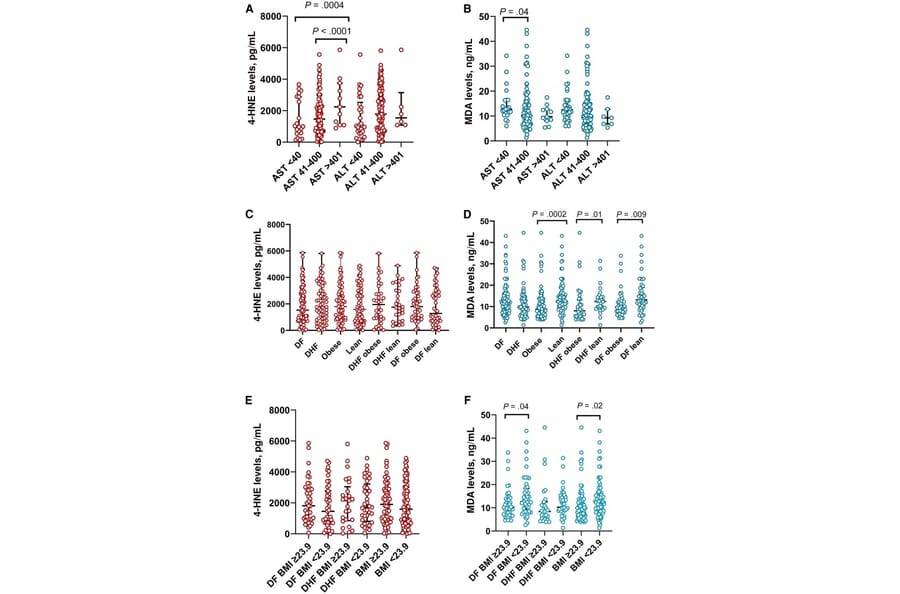
Methods: Five hundred seventy-seven adults with a duration of illness =4 days at time of admission were followed up from admission to discharge. Aspartate transaminase (AST), alanine transaminase (ALT), C-reactive protein, ferritin, 4-hydroxynonenal (4-HNE), and malondialdehyde (MDA) levels were measured, along with the height, weight, and waist circumference.
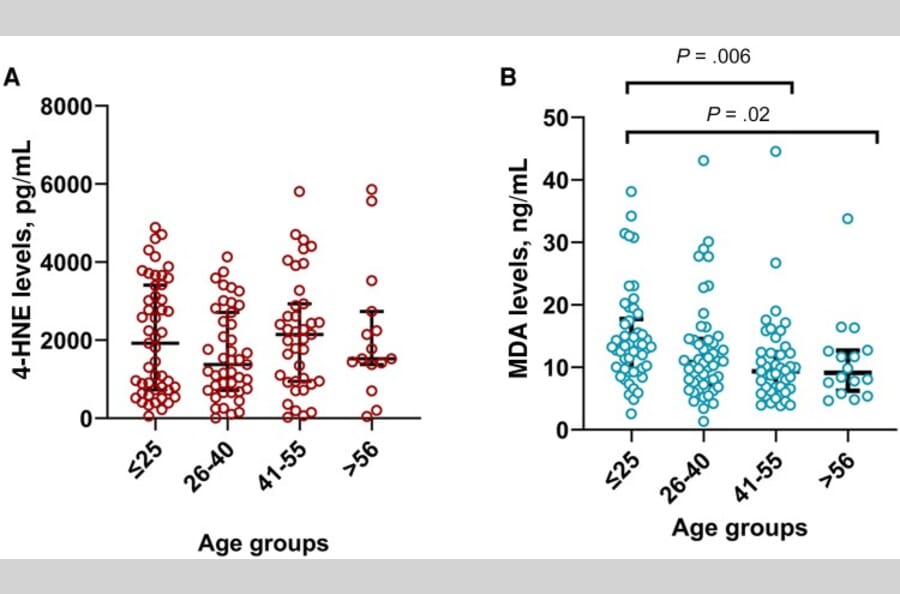
Results: AST, ALT, CRP, and ferritin levels were significantly higher in patients with central obesity (waist circumference of =80 cm in women or =90 cm in men) compared with leaner individuals. ALT and CRP levels were also significantly higher in patients with a body mass index (BMI) of =23.9 kg/m2. 4-HNE levels significantly increased with the rise in AST levels and with ALT levels, although the increase was not significant. In contrast, MDA levels gradually decreased with the rise in AST levels and ALT levels. There were no differences in 4-HNE and MDA levels in relation to clinical disease severity. However, MDA levels were significantly higher in younger individuals and leaner individuals with a normal BMI. Furthermore, MDA levels inversely correlated with serum ferritin levels, while AST, ALT, and CRP levels significantly correlated with ferritin levels.
Conclusions: 4-HNE and MDA appear to play different roles in the pathogenesis of Dengue, which should be further investigated for identification of therapeutic targets for treatment of Dengue.
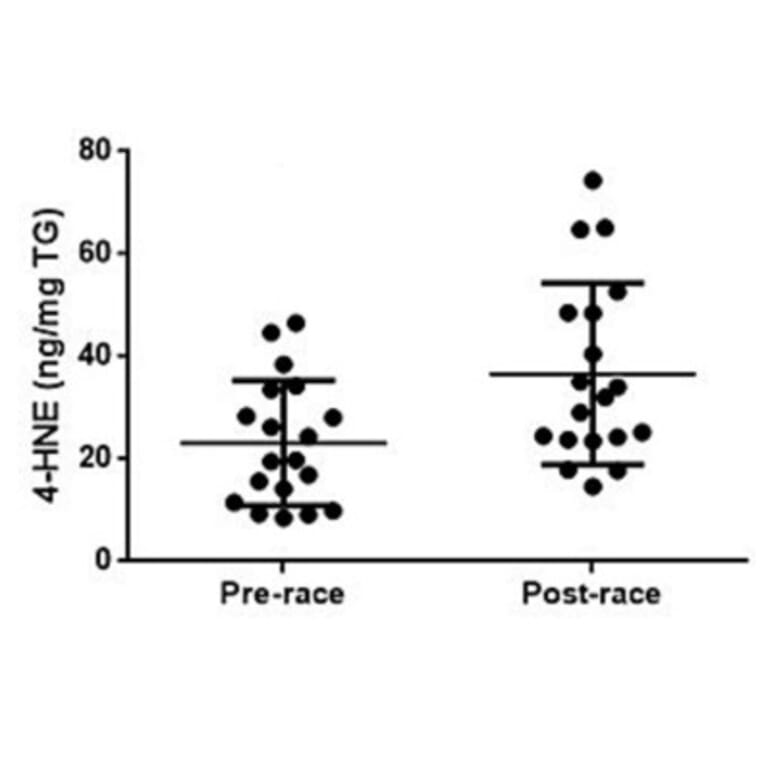
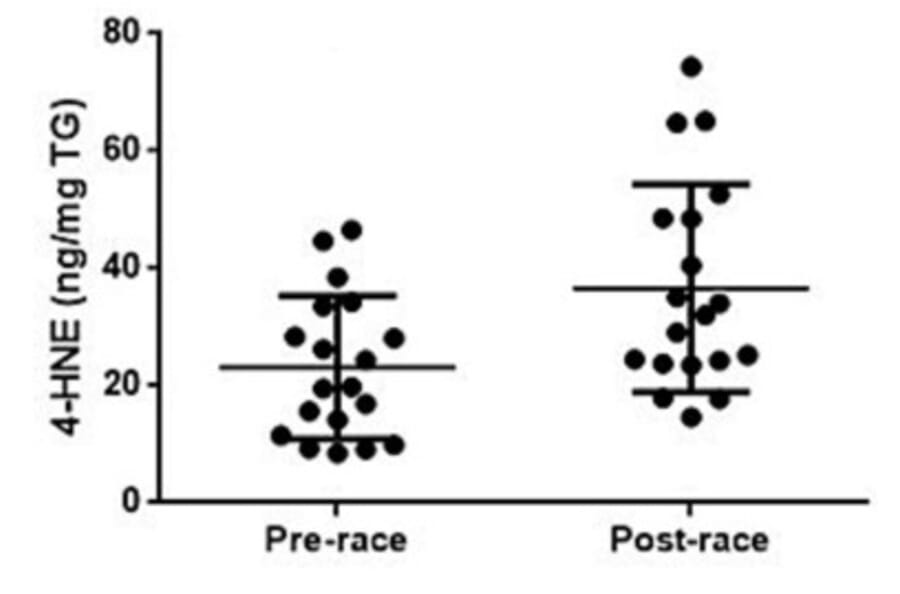
Aims: Following our previous research experiences on the 24-h ultramarathon (UM) race - a highly demanding competition characterized by acute cardiorespiratory and metabolic responses - we herein explored for the first time the metabolic profile of UM runners (n = 17) participating in a 24-h race via an untargeted metabolomic approach to gain further insights into the biochemical changes induced by the ultra-endurance performance.
Materials and methods: Metabolomics analysis was conducted on pre- and post-race plasma samples by high-resolution mass spectrometry in combination with reversed-phase chromatography.
Key findings: The major metabolic changes induced by the 24-h running concerned lipid metabolism, with an increase in medium- and long-chain fatty acids as energy sources for muscle contraction during the prolonged physical activity. A significant accumulation of oxidized metabolites from linoleic and arachidonic acids was also detected, which are potent mediators of cellular responses associated with oxidative/inflammatory processes that could be of clinical relevance for athletes' health. Notably, some metabolites presented positive correlations with athletic performance. Higher pre-race levels of 5-methyltetrahydrofolic acid (5-MTHF), as well as higher post-race levels of 5-MTHF, ß-alanine, and creatine, were associated with a greater distance covered in 24 h. This evidence may suggest that nutritional supplementation can play an important role before and during the race to sustain athletes' capacity and exercise efficiency throughout such challenging sporting events.
Significance: Overall, this study confirms that the metabolomic approach could be a helpful tool to the sport and health management of athletes, and to the identification of possible biomarkers of performance.