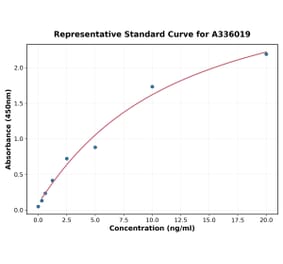

| Sample Type | n | Range | Average |
|---|---|---|---|
| Serum | 5 | 80% - 102% | 91% |
| EDTA Plasma | 5 | 81% - 101% | 91% |
| Heparin Plasma | 5 | 80% - 89% | 84% |
| Sample Type | 1:2 | 1:4 | 1:8 | 1:16 |
|---|---|---|---|---|
| Serum (n=5) | 87-91% | 87-107% | 74-101% | 92-97% |
| EDTA Plasma (n=5) | 90-105% | 84-101% | 90-101% | 79-108% |
| Heparin Plasma (n=5) | 84-95% | 92-105% | 82-105% | 89-91% |
| Item | Quantity | Storage |
|---|---|---|
| Pre-Coated 96 Well Microplate | 12 x 8 Well Strips | -20°C |
| Lyopholized Standard | 2 Vials | -20°C |
| Detection Solution A | 120μl | -20°C |
| Detection Solution B | 120µl | -20°C |
| Wash Buffer (30X) | 20ml | +4°C |
| Sample Dilution Buffer | 45ml | -20°C |
| TMB Substrate | 9ml | +4°C |
| Stop Solution | 6ml | +4°C |
| Plate Sealers | 5 Adhesive Strips | - |
Objective: Osteoarthritis (OA) is driven by biomechanical and biochemical inflammatory processes, including CD4+ T cell infiltration and activation. However, the role of CD4+ T cell subsets interacting with neighboring cells shaping the local inflammatory milieu have remained largely unexplored. This study aimed to investigate in vitro whether interaction of chondrocyte and CD4+ T cells modulate cytokine and metalloproteinase production in OA, and to determine if this modulation differ depending on CD4+ T cell subsets.
Method: Nineteen patients with knee OA undergoing knee replacement were enrolled. From peripheral blood CD4+ T cells were isolated and differentiated into subsets (Th1, Th2, Th17, Treg) using a novel developed protocol. T cell differentiation was validated by flow cytometry. Chondrocytes were mono- and co-cultured with T cell subsets and in culture supernatant cytokine and metalloproteinase levels were quantified using ELISA and multiplex assays.
Results: Compared to monocultures levels MMP-1/3/9/13 and IL-6 were elevated in all co-cultures of chondrocytes and CD4+ T cell subsets, with the highest levels in Th17 co-cultures. GM-CSF, IL-9, IL-17 were specifically elevated in Th17 co-cultures and IFN-? in Th1 co-cultures. TNF-a production was significantly reduced only in Treg co-culture compared to monoculture approach.
Conclusion: This study indicates that chondrocytes can interact with CD4+ T cell subsets in OA, modulating the production of metalloproteinases and cytokines to varying degrees, depending on the CD4+ T cell subset. Our findings can open new avenues in OA treatment using T cell-based or T cell subset-targeted therapies to modulate inflammatory patterns in affected OA joints.