
| Sample Type | n | Range | Average |
|---|---|---|---|
| Serum | 10 | 92% - 104% | 92% |
| EDTA Plasma | 10 | 92% - 100% | 93% |
| Heparin Plasma | 10 | 90% - 105% | 97% |
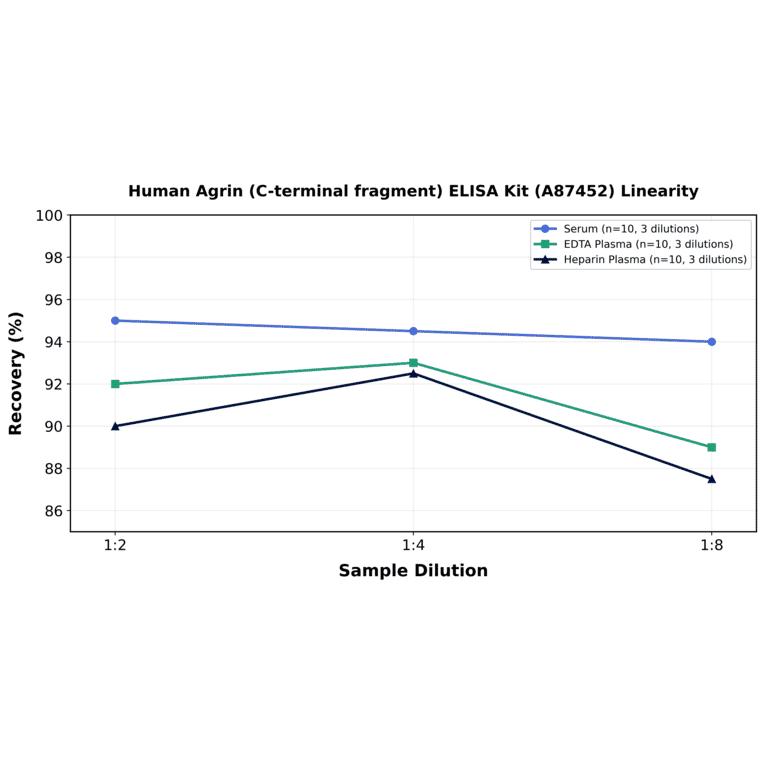
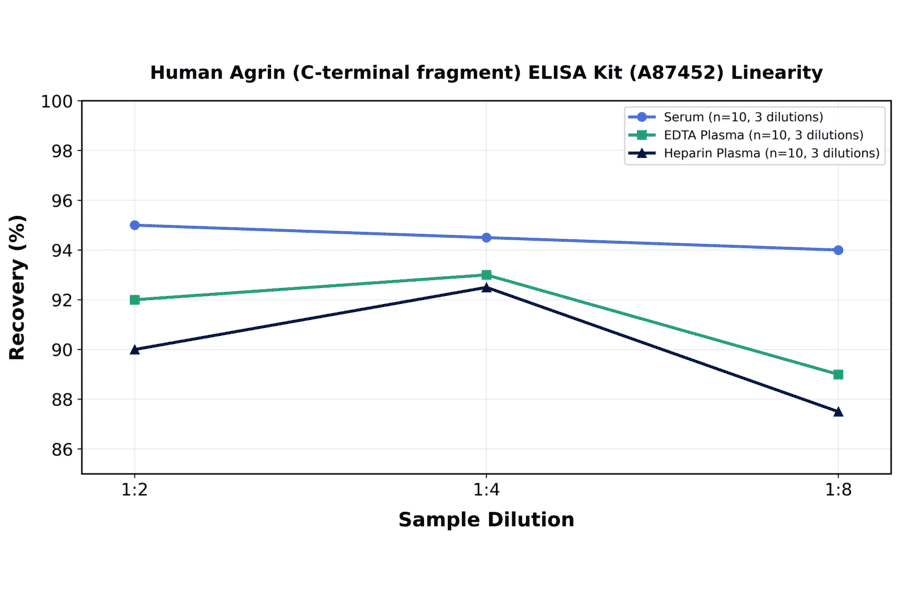
| Sample Type | n | 1:2 | 1:4 | 1:8 |
|---|---|---|---|---|
| Serum | 10 | 88-102% | 85-104% | 86-102% |
| EDTA Plasma | 10 | 86-98% | 85-101% | 82-96% |
| Heparin Plasma | 10 | 83-97% | 85-100% | 80-95% |
| Item | Quantity | Storage |
|---|---|---|
| Pre-Coated 96 Well Microplate | 12 x 8 Well Strips | +4°C |
| Lyopholized Standard | 2 Vials | +4°C |
| Sample Dilution Buffer | 20ml | +4°C |
| Biotinylated Detection Antibody | 120µl | +4°C |
| Antibody Dilution Buffer | 10ml | +4°C |
| HRP-Streptavidin Conjugate | 120µl | +4°C |
| SABC Dilution Buffer | 10ml | +4°C |
| TMB Substrate | 10ml | +4°C |
| Stop Solution | 10ml | +4°C |
| Wash Buffer (25X) | 30ml | +4°C |
| Plate Sealers | 5 Adhesive Strips | - |
| Foil Pouch | 1 Zip-Sealed Pouch | - |
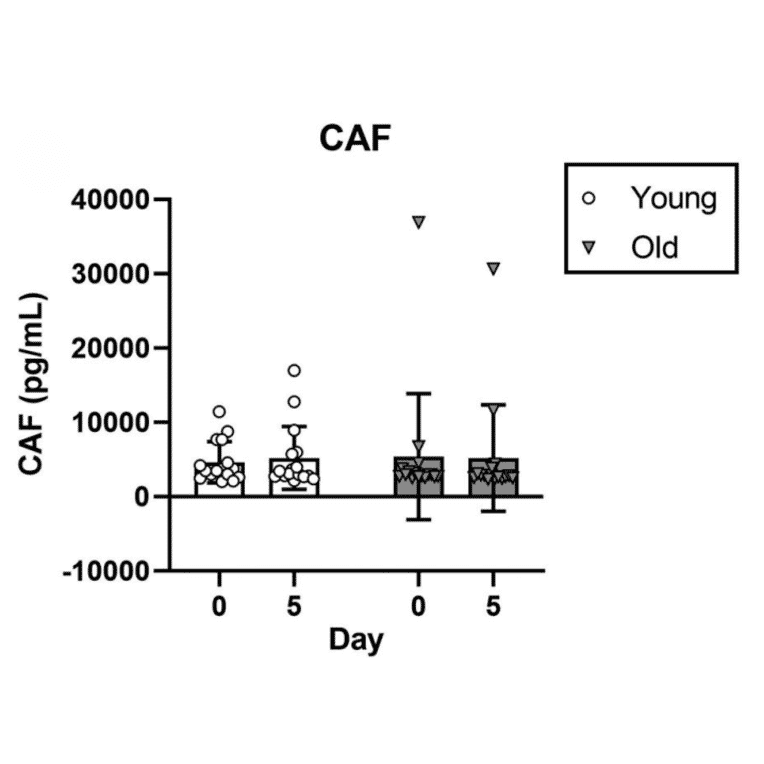
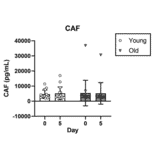
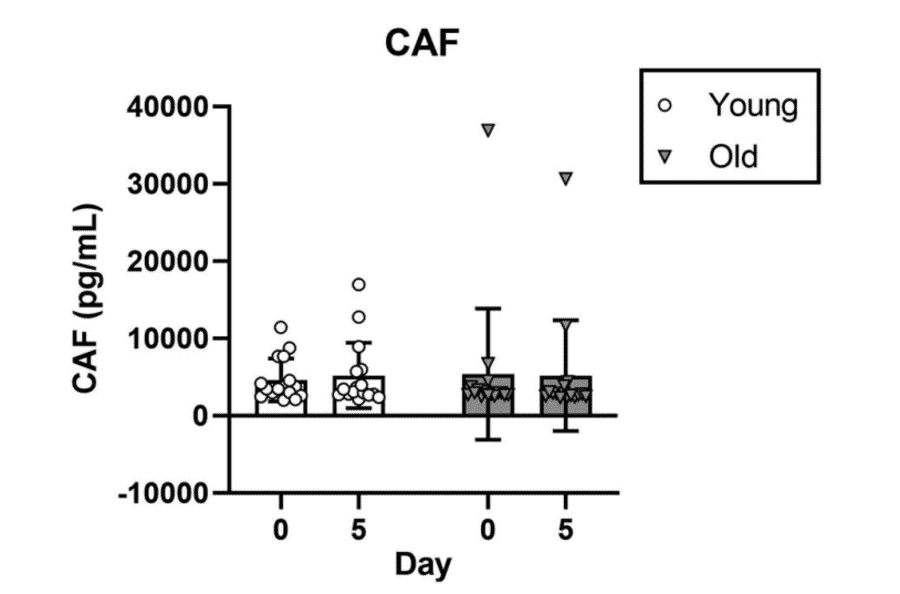
Disuse induces a disproportionate loss of muscle force compared with muscle mass, with unclear effects on voluntary muscle activation (VA) and peripheral contractility. Furthermore, the effect of neuromuscular electrical stimulation (NMES) as a disuse countermeasure remains uncertain. We investigated the effects of NMES during bed rest on neuromechanical function to improve our understanding of the mechanisms underlying disuse-induced reductions in muscular force. Young (n = 16, 25 years old) and old (n = 16, 71 years old) adults underwent 5 days of bed rest. One leg received NMES (3 × 30 min/day), while the other served as the control (CON). Maximal isometric knee-extensor strength (MVIC), VA and peripheral muscle contractility were assessed before and after bed rest using the interpolated twitch technique, along with biomarkers of neuromuscular junction instability (C-terminal agrin fragment (CAF)) and muscle damage (creatine kinase (CK)). MVIC decreased in both age groups, regardless of NMES (young: CON, -21.7 Nm and NMES, -23.8 Nm; old: CON, -18.5 Nm and NMES, -16.4 Nm). VA was preserved with NMES, while decreasing in CON legs (young, -8.1%; old, -5.6%) following bed rest. Peripheral contractility (resting doublet twitch force) was reduced in CON and NMES legs in both age groups (young: CON, -4.0 Nm and NMES, -11.5 Nm; old: CON, -5.9 Nm and NMES, -10.8 Nm), with a greater decrease in NMES legs. CAF remained unchanged, whereas CK levels increased in young participants, albeit remaining within the normal range. In conclusion, a decline in neuromechanical function was observed after 5 days of bed rest in young and old adults. Although NMES appeared to preserve VA, peripheral muscle contractility was altered, resulting in reduced MVIC.
It is well known that contracting the upper limbs can affect spinal reflexes of the lower limb muscle, via intraneuronal networks within the central nervous system. However, it remains unknown whether neuromuscular electrical stimulation (NMES), which can generate muscle contractions without central commands from the cortex, can also play a role in such inter-limb facilitation. Therefore, the objective of this study was to compare the effects of unilateral upper limb contractions using NMES and voluntary unilateral upper limb contractions on the inter-limb spinal reflex facilitation in the lower limb muscles. Spinal reflex excitability was assessed using transcutaneous spinal cord stimulation (tSCS) to elicit responses bilaterally in multiple lower limb muscles, including ankle and thigh muscles. Five interventions were applied on the right wrist flexors for 70 s: (1) sensory-level NMES; (2) motor-level NMES; (3) voluntary contraction; (4) voluntary contraction and sensory-level NMES; (5) voluntary contraction and motor-level NMES. Results showed that spinal reflex excitability of ankle muscles was facilitated bilaterally during voluntary contraction of the upper limb unilaterally and that voluntary contraction with motor-level NMES had similar effects as just contracting voluntarily. Meanwhile, motor-level NMES facilitated contralateral thigh muscles, and sensory-level NMES had no effect. Overall, our results suggest that inter-limb facilitation effect of spinal reflex excitability in lower limb muscles depends, to a larger extent, on the presence of the central commands from the cortex during voluntary contractions. However, peripheral input generated by muscle contractions using NMES might have effects on the spinal reflex excitability of inter-limb muscles via spinal intraneuronal networks.