
Human ATP5A ELISA Kit (A310691) has been discontinued and is no longer available.
View all available products.
| Item | Quantity | Storage |
|---|---|---|
| Pre-Coated 96 Well Microplate | 12 x 8 Well Strips | +4°C |
| Standard Solution | 500µl | +4°C |
| Standard Diluent | 3ml | +4°C |
| Biotinylated Detection Antibody | 1ml | +4°C |
| Streptavidin-HRP | 6ml | +4°C |
| Wash Buffer (25X) | 20ml | +4°C |
| Substrate Solution A | 6ml | +4°C |
| Substrate Solution B | 6ml | +4°C |
| Stop Solution | 6ml | +4°C |
| Plate Sealers | 5 Adhesive Strips | - |
| Foil Pouch | 1 Zip-Sealed Pouch | - |
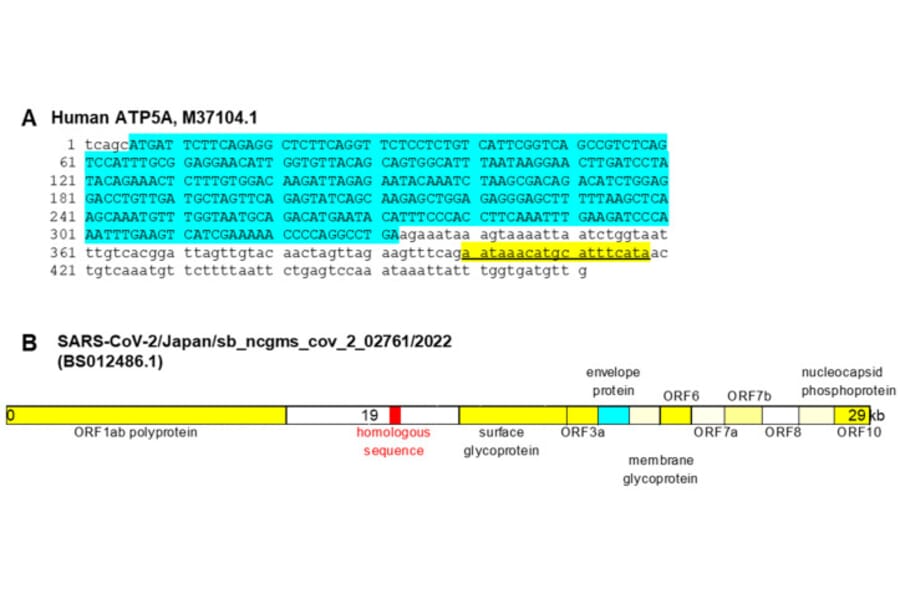
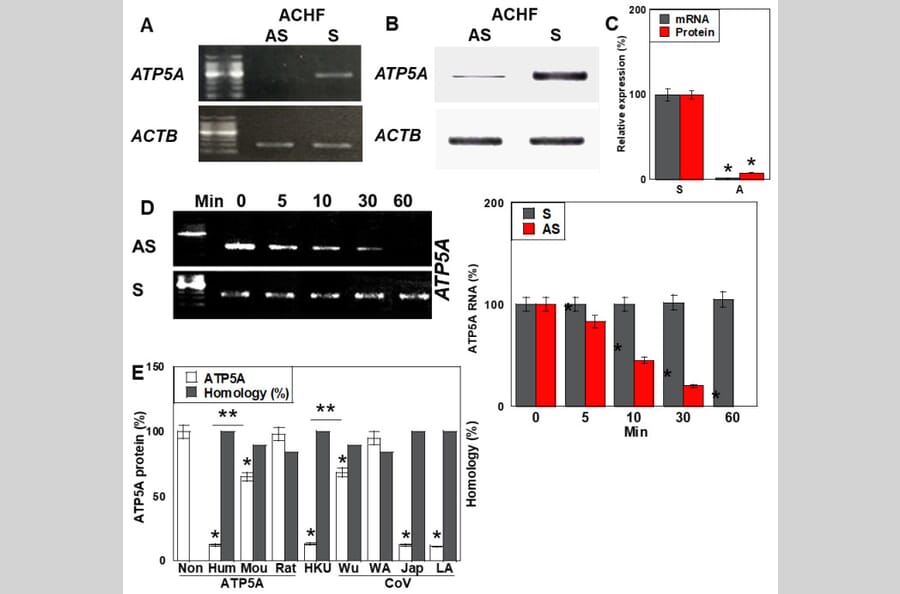
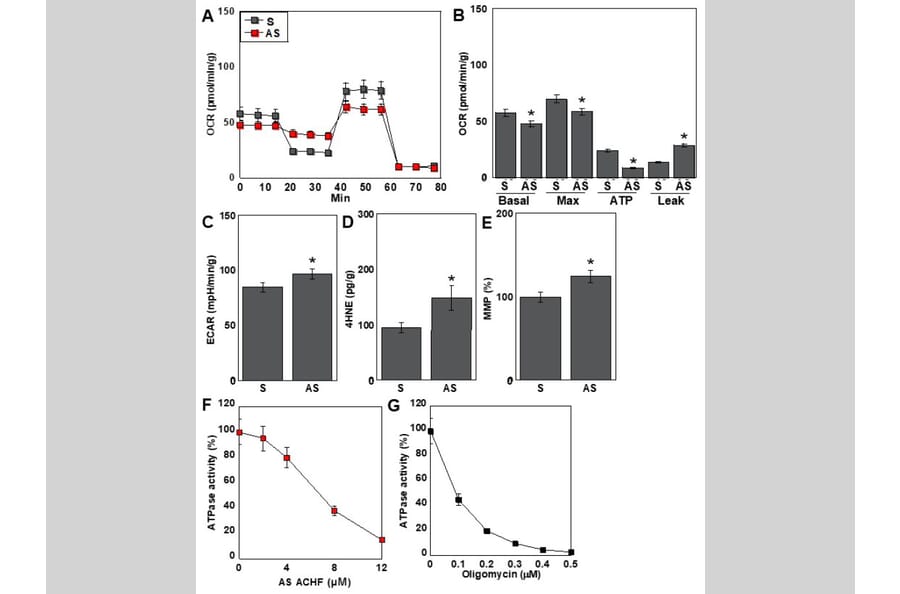
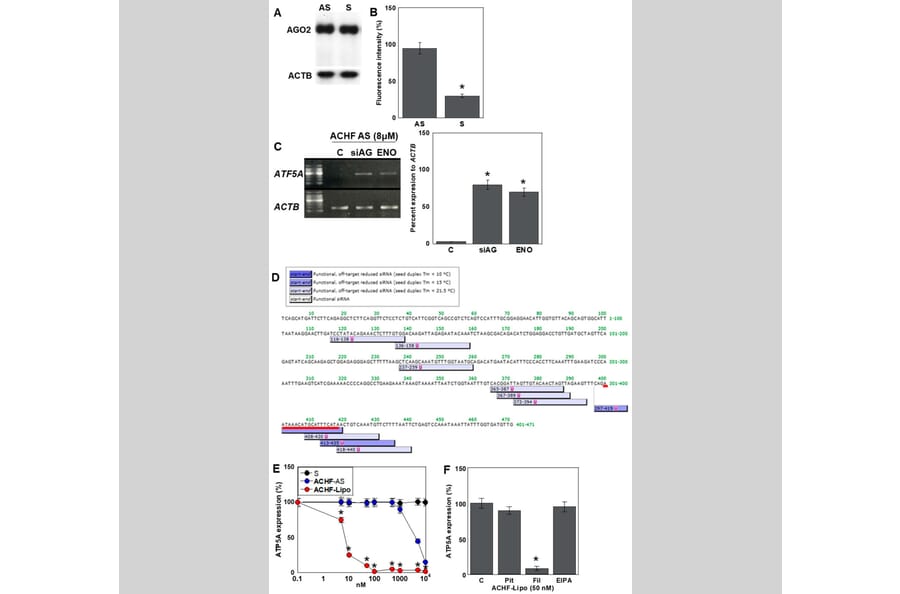
Myocardial injury is a critical determinant of prognosis in severe acute respiratory syndrome coronavirus 2 (SARS-CoV-2) infection; however, its underlying mechanisms remain incompletely understood. In this study, we examined the effects of SARS-CoV-2-derived RNA fragments on human cardiomyocytes. We identified a 19-nucleotide sequence within the viral genome that shares complete sequence homology with the human F1F0 ATP synthase subunit alpha gene (ATP5A). This sequence was found to associate with Argonaute 2 (AGO2) and downregulate ATP5A expression via a mechanism analogous to RNA interference. Consequently, oxidative phosphorylation was suppressed in cardiomyocytes, leading to impaired myocardial maturation and the emergence of heart failure-like phenotypes. Notably, exosome-mimetic liposomal delivery of this RNA fragment to cardiomyocytes reproduced the ATP5A-suppressive effect. These findings suggest that SARS-CoV-2-derived RNA fragments may contribute to myocardial injury through the siRNA-like modulation of mitochondrial gene expression. Further validation in animal models and patient-derived materials is warranted.