| Sample Type | n | Range | Average |
|---|---|---|---|
| Serum | 10 | 85% - 101% | 97% |
| EDTA Plasma | 10 | 95% - 105% | 98% |
| Heparin Plasma | 10 | 91% - 103% | 96% |
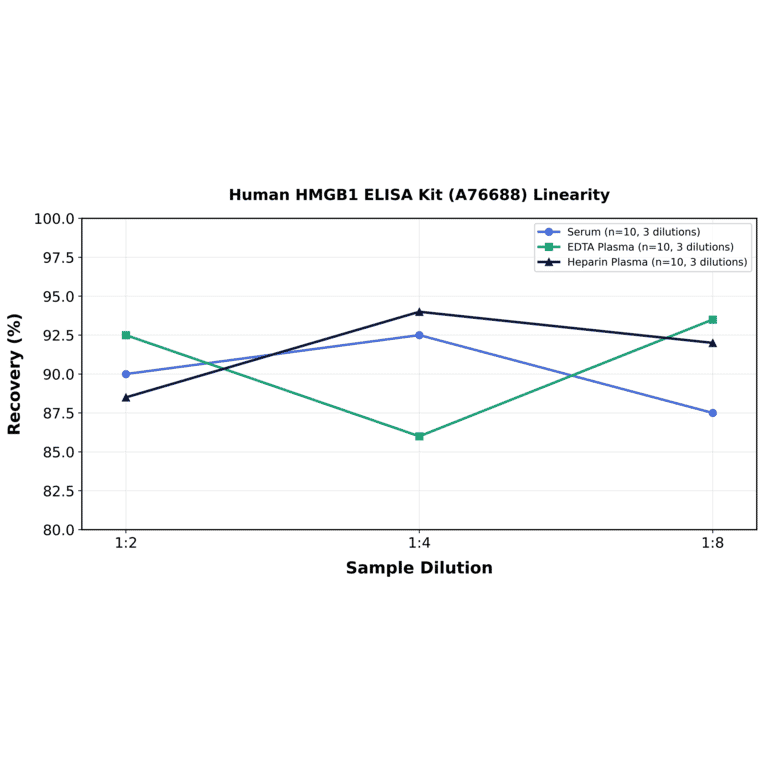
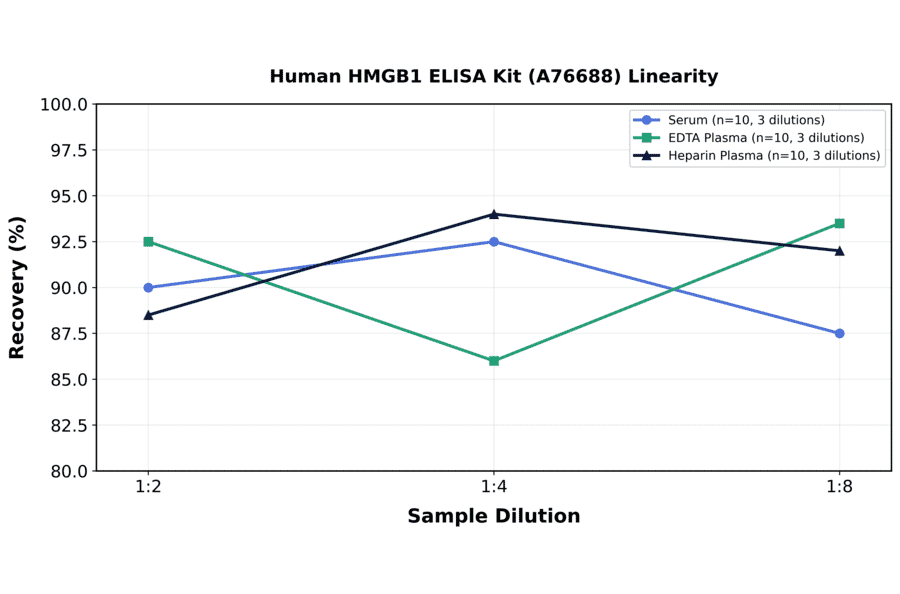
| Sample Type | n | 1:2 | 1:4 | 1:8 |
|---|---|---|---|---|
| Serum | 10 | 83-97% | 85-100% | 80-95% |
| EDTA Plasma | 10 | 86-99% | 82-90% | 87-100% |
| Heparin Plasma | 10 | 81-96% | 87-101% | 80-104% |
| Item | Quantity | Storage |
|---|---|---|
| Pre-Coated 96 Well Microplate | 12 x 8 Well Strips | +4°C |
| Lyopholized Standard | 2 Vials | +4°C |
| Sample Dilution Buffer | 20ml | +4°C |
| Biotinylated Detection Antibody | 120µl | +4°C |
| Antibody Dilution Buffer | 10ml | +4°C |
| HRP-Streptavidin Conjugate | 120µl | +4°C |
| SABC Dilution Buffer | 10ml | +4°C |
| TMB Substrate | 10ml | +4°C |
| Stop Solution | 10ml | +4°C |
| Wash Buffer (25X) | 30ml | +4°C |
| Plate Sealers | 5 Adhesive Strips | - |
| Foil Pouch | 1 Zip-Sealed Pouch | - |
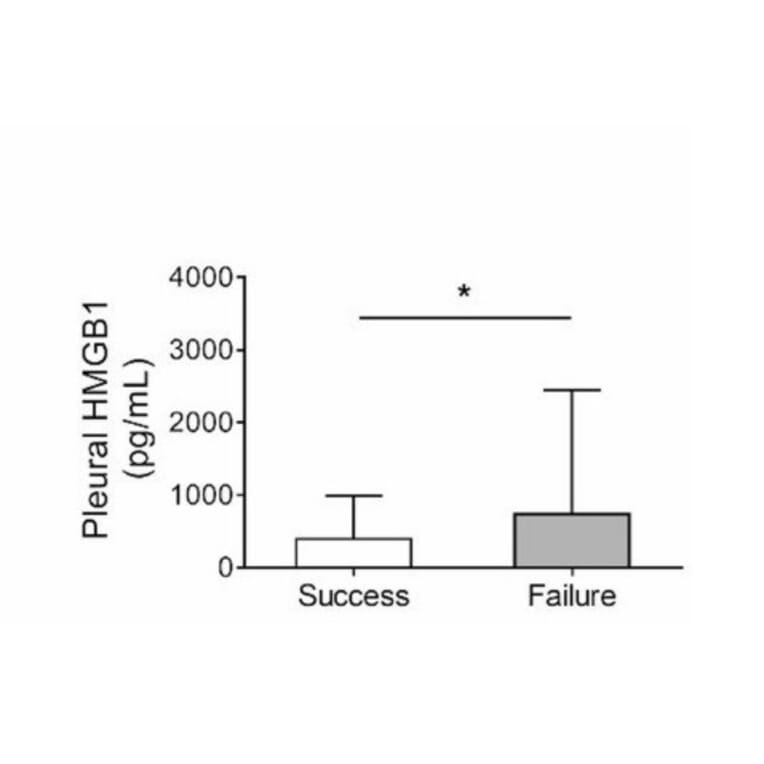
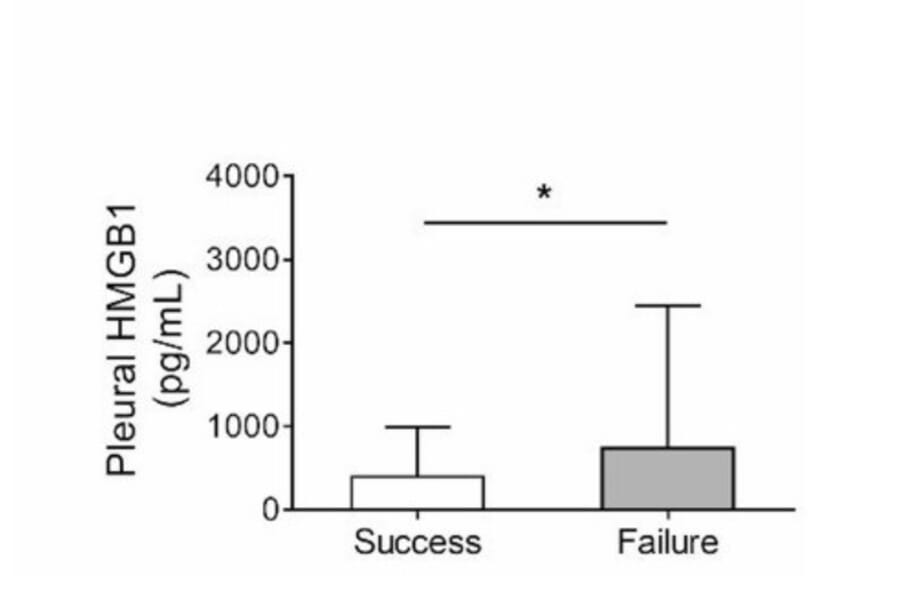
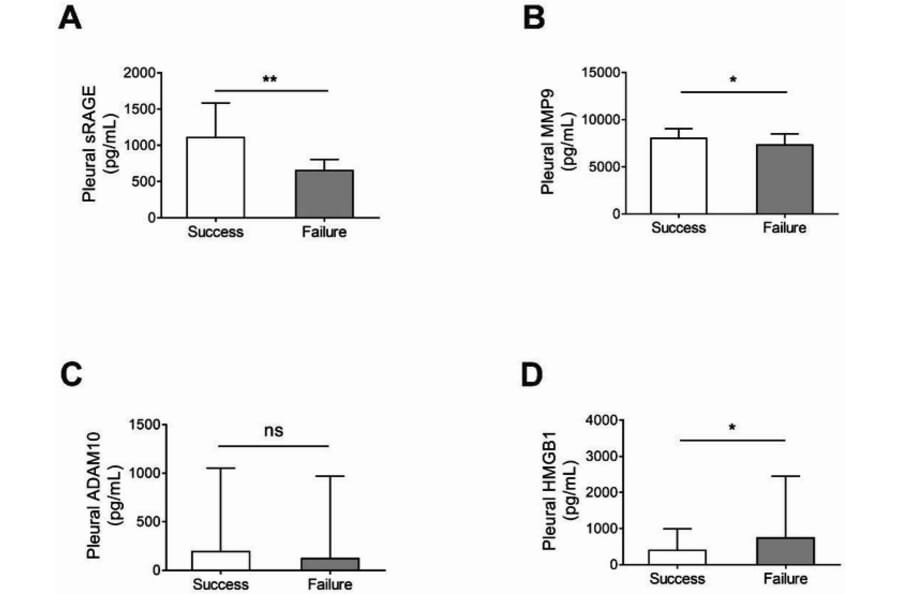
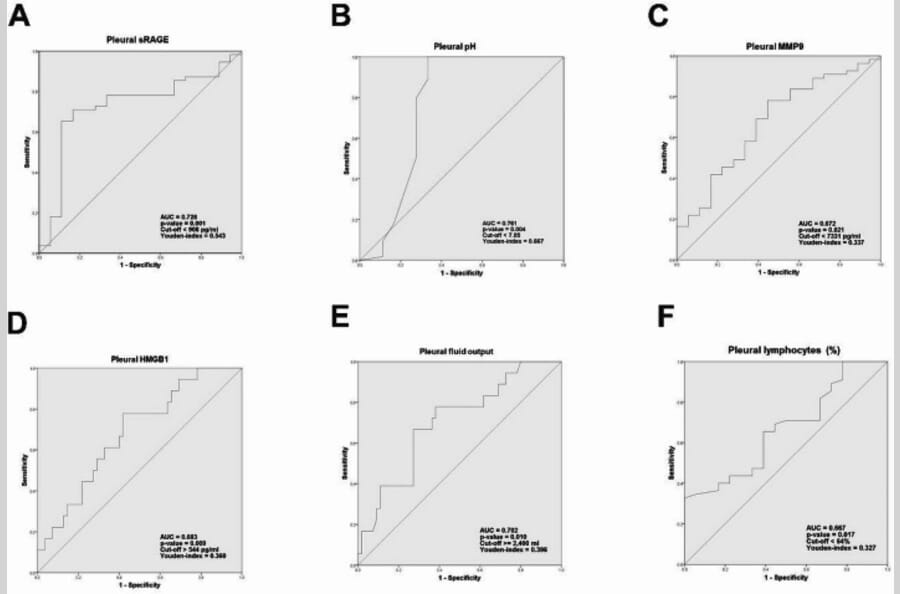
Symptomatic malignant pleural effusions (MPE) are treated with chemical pleurodesis to prevent recurrence. The serum soluble receptor for advanced glycation end products (sRAGE) has been linked to lung cancer progression but its role in predicting talc pleurodesis failure is unclear. A prospective cohort study was conducted from November 2023 to December 2024, encompassing subjects with confirmed MPE. Pleural fluid samples were collected prior to intercostal drainage (ICD) insertion for the measurement of sRAGE, ADAM10, MMP9, and HMGB1 levels. Participants were monitored for 90-day post-pleurodesis failure, pleural interventions, and survival. Among seventy-three adults (median age 66 [IQR 53-74 years]) with MPE who received pleurodesis, lung adenocarcinoma was the most common. Talc pleurodesis failure (24.7%) was associated with greater pleural fluid output, multiple pleurodesis attempts, longer ICD retention, and lower pH and lymphocyte fraction. Pleural sRAGE and MMP9 levels were significantly diminished (p = 0.0033 and p = 0.029, respectively), whereas HMGB1 levels were substantially elevated (p = 0.019) in the failure cases. Among biomarkers, pleural sRAGE had the most predictive value for talc pleurodesis failure, followed by HMGB1 and MMP9. However, pleural sRAGE and MMP-9 lacked prognostic significance for 90-day mortality. The present study demonstrated that lower pleural sRAGE is a potential predictive biomarker for talc pleurodesis failure despite inferiority to pleural acidity. Imbalance between sRAGE and HMGB1 in MPE may be associated with the underlying mechanism for talc pleurodesis failure.
Ischemia-reperfusion injury (IRI) continues to be a significant obstacle in liver transplantation and often results in graft dysfunction and suboptimal outcomes after transplantation. The current preservation solutions, such as the University of Wisconsin (UW) solution, provide limited protection against oxidative stress, inflammation, and apoptosis. The present study was undertaken to design and test a bioactive preservation solution supplemented with resveratrol-loaded chitosan nanoparticles (Resv-CNPs) and adipose-derived stem cell conditioned medium (ASC-CM) to achieve hepatoprotection during IRI. Resv-CNPs were synthesized using the ionic gelation method and characterized for encapsulation efficiency, release profile, and antioxidant activity. HepG2 cells were exposed to an in vitro IRI model, which involved 24h cold ischemia in UWCM solution followed by 48h reperfusion. Cell viability was evaluated by MTT assay, and ALT, AST, LDH, HMGB1, IL-1ß, and IL-6 were measured by ELISA. An in vivo rat model was used to validate the hepatic preservation effect after 24h of cold storage in different solutions. Histopathological changes were assessed by H&E staining and Suzuki scoring. Resv-CNPs had an encapsulation efficiency of 46.21±7.12%, and it showed a biphasic release pattern. The drug release from nanoparticles could provide sustained release of resveratrol for up to 72h. Free resveratrol and Resv-CNPs showed excellent DPPH radical scavenging activity. UWCM supplemented with Resv-CNPs dose-dependently increased hepatocyte viability and significantly decreased injury and inflammatory markers compared to free resveratrol and blank nanoparticles in vitro. In vivo, livers preserved with UWCM + Resv-CNPs showed decreased necrosis, reduced liver injury markers, better architecture, and lower Suzuki scores. The incorporation of Resv-CNPs and ASC-CM into the UW solution provided strong antioxidant, anti-inflammatory, and anti-apoptotic protection against hepatic IRI. This next-generation preservation formulation may improve graft quality, extend storage time, and have the potential to enhance transplantation outcomes.