
| Sample Type | n | Range | Average |
|---|---|---|---|
| Serum | 10 | 87% - 105% | 99% |
| EDTA Plasma | 10 | 86% - 101% | 96% |
| Heparin Plasma | 10 | 92% - 100% | 95% |
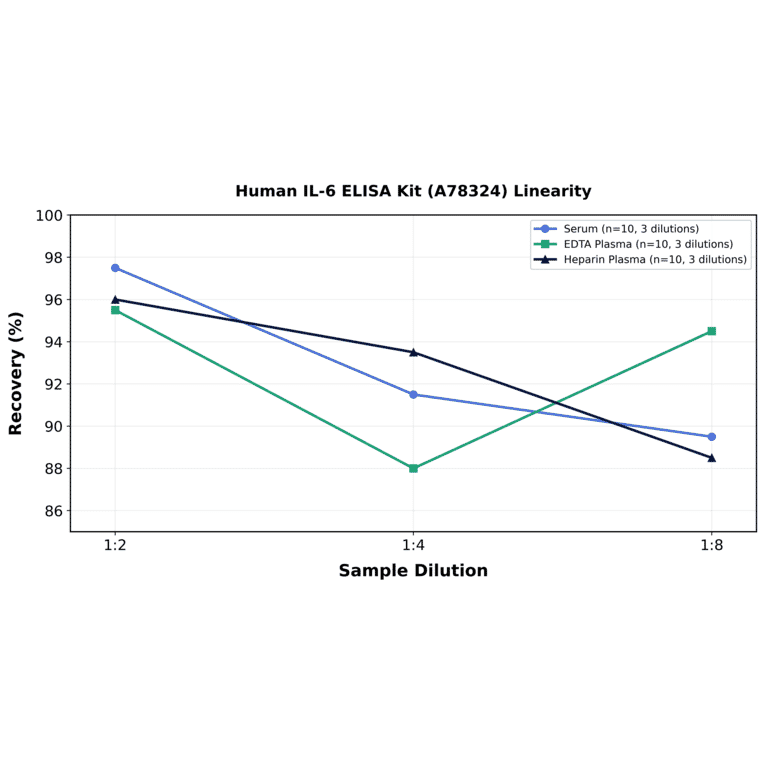
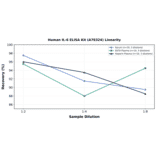
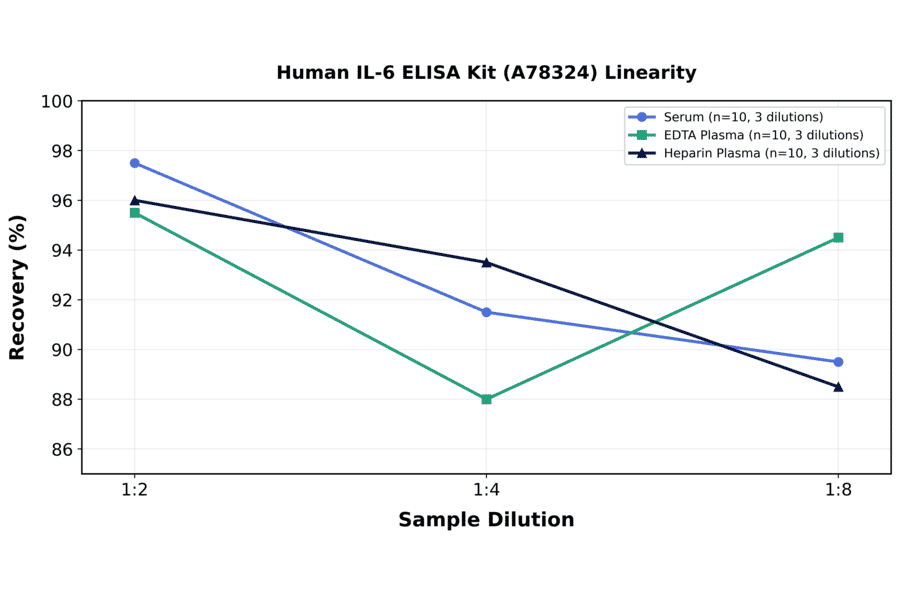
| Sample Type | n | 1:2 | 1:4 | 1:8 |
|---|---|---|---|---|
| Serum | 10 | 91-104% | 82-101% | 81-98% |
| EDTA Plasma | 10 | 87-104% | 82-94% | 89-100% |
| Heparin Plasma | 10 | 90-102% | 87-100% | 84-93% |
| Item | Quantity | Storage |
|---|---|---|
| Pre-Coated 96 Well Microplate | 12 x 8 Well Strips | +4°C |
| Lyopholized Standard | 2 Vials | +4°C |
| Sample Dilution Buffer | 20ml | +4°C |
| Biotinylated Detection Antibody | 120µl | +4°C |
| Antibody Dilution Buffer | 10ml | +4°C |
| HRP-Streptavidin Conjugate | 120µl | +4°C |
| SABC Dilution Buffer | 10ml | +4°C |
| TMB Substrate | 10ml | +4°C |
| Stop Solution | 10ml | +4°C |
| Wash Buffer (25X) | 30ml | +4°C |
| Plate Sealers | 5 Adhesive Strips | - |
| Foil Pouch | 1 Zip-Sealed Pouch | - |
Introduction: Female distance runners are at elevated risk for impaired bone remodeling due to high mechanical loading, potential low energy availability, and sustained inflammatory stress. Collagen peptide (CP) supplementation has been proposed as a nutritional strategy to support type I collagen synthesis and modulate osteoimmune signaling; however, evidence in premenopausal endurance athletes is limited. This pilot randomized, double-blind, placebo-controlled trial examined the effects of four weeks of high-dose CP supplementation on markers of bone metabolism and inflammatory activity in endurance-trained premenopausal women.
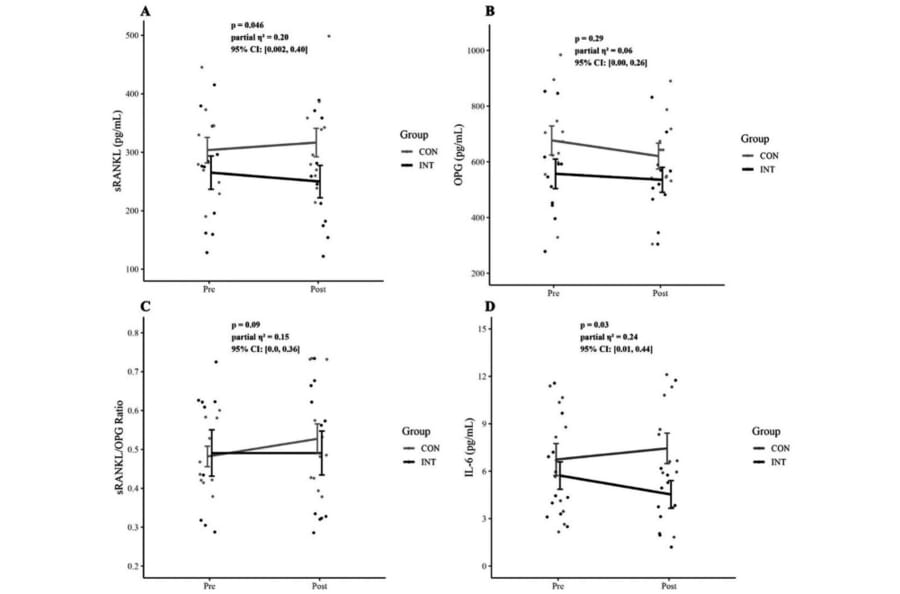
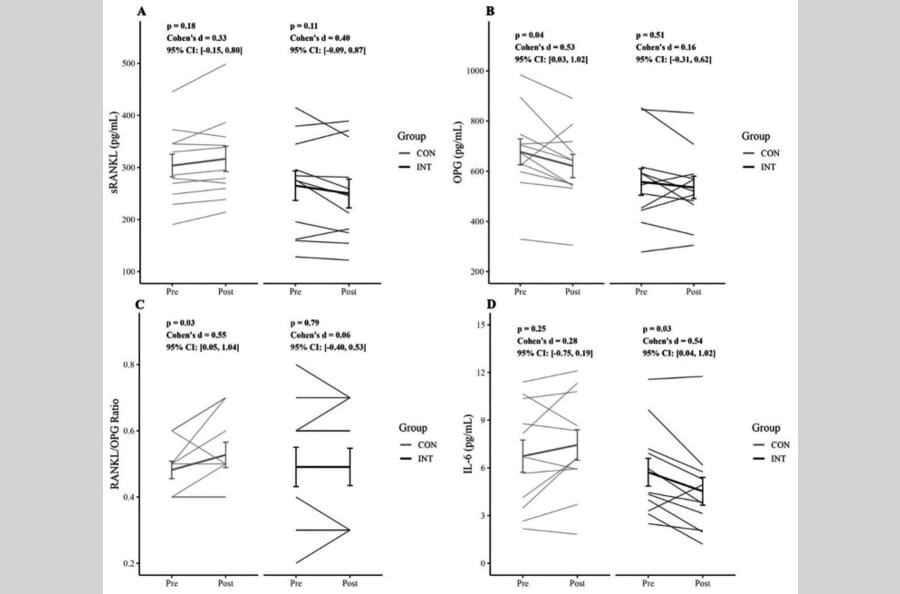
Methods: Twenty-two participants (18-35 years; =35 miles/week [>56km/week]) were randomized to CP (INT; 20 g/day) or isocaloric maltodextrin (CON). Pre- and post-intervention assessments, conducted in the early follicular phase, included serum procollagen type I N-terminal propeptide (P1NP), plasma C-terminal telopeptide of type I collagen (CTX-1), serum soluble receptor activator of nuclear factor-?B ligand (sRANKL), osteoprotegerin (OPG), the sRANKL/OPG ratio, and interleukin-6 (IL-6). Repeated-measures ANCOVAs were performed, adjusting for accumulated running distance and vitamin D status.
Results: A significant group × time interaction was observed for P1NP (p = 0.04), with increases in INT and no change in CON. No significant interaction was observed for CTX-1 (p = 0.13). Significant interactions were also observed for sRANKL (p = 0.046) and IL-6 (p = 0.03). No significant interaction effects were detected for sRANKL, OPG, or the sRANKL/OPG ratio.
Discussion: Short-term CP supplementation increased a marker of bone formation, altered osteoclast-related signaling, and reduced IL-6 in endurance-trained premenopausal women. These findings support the potential for CP-mediated modulation of bone turnover and inflammatory activity and warrant further investigation in larger, adequately powered trials incorporating structural bone outcomes.
Background: Patients with pancreatic cancer (PC) commonly present with reduced aerobic fitness, sarcopenia, and malnutrition, which may increase perioperative risk and compromise access to chemotherapy treatments. Although exercise-based prehabilitation can improve physical fitness, its implementation is often limited by short diagnostic-to-surgery intervals and treatment-related toxicity.
Methods: We conducted a pilot prospective pretest-posttest feasibility study in Torino, Italy. Patients with PC undergoing neoadjuvant chemotherapy prior to surgery were offered a 4-week, partially supervised, home-based bimodal exercise prehabilitation program (single-arm design) combining remotely monitored high-intensity interval training (HIIT) on a cycle ergometer with functional and resistance exercises. The primary outcome was adherence to prescribed exercise frequency, intensity, and duration, objectively assessed via remote monitoring. Secondary outcomes included cardiorespiratory fitness (CPET), muscle function, body composition, fatigue, quality of life, and circulating inflammatory markers.
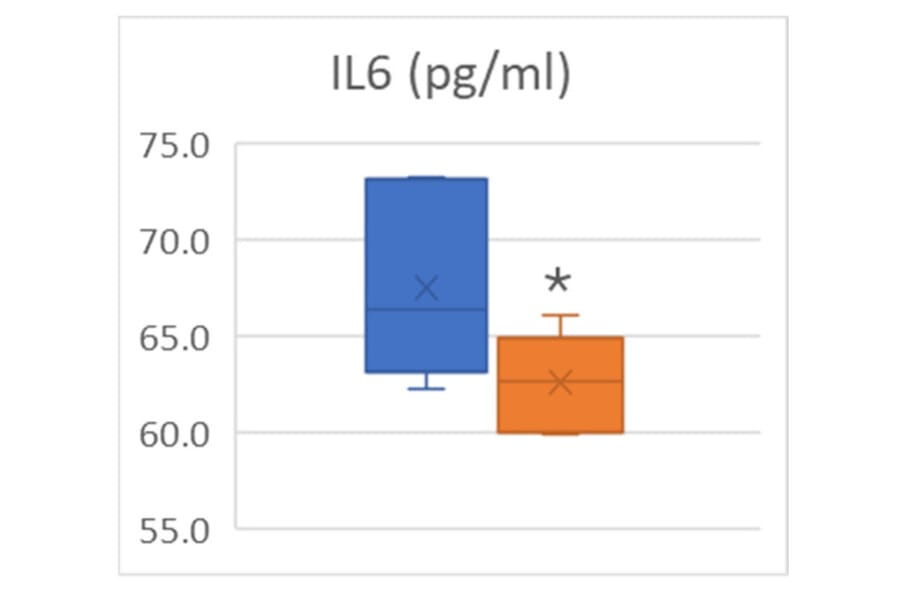
Results: From July 2022 to February 2024, 23 patients were screened; 15 were eligible and 10 enrolled. Four participants discontinued the intervention (two due to asthenia/fatigue, one due to chemotherapy-related adverse events, and one for organizational reasons), leaving six participants who completed the program. Among completers, fatigue and quality of life did not change meaningfully. Aerobic capacity and muscle function outcomes were generally stable, with few pre-post changes exceeding the minimum clinically important difference (MCID) thresholds used. Body composition markers and the assessed circulating cytokines/chemokines remained unchanged except for IL-6 levels, which decreased significantly (p < 0.05).
Conclusions: A partially supervised, home-based HIIT-based prehabilitation program is feasible for a subset of PC patients undergoing neoadjuvant therapy, but a substantial attrition rate suggests the need for more flexible symptom-adapted prescriptions and enhanced supportive strategies.