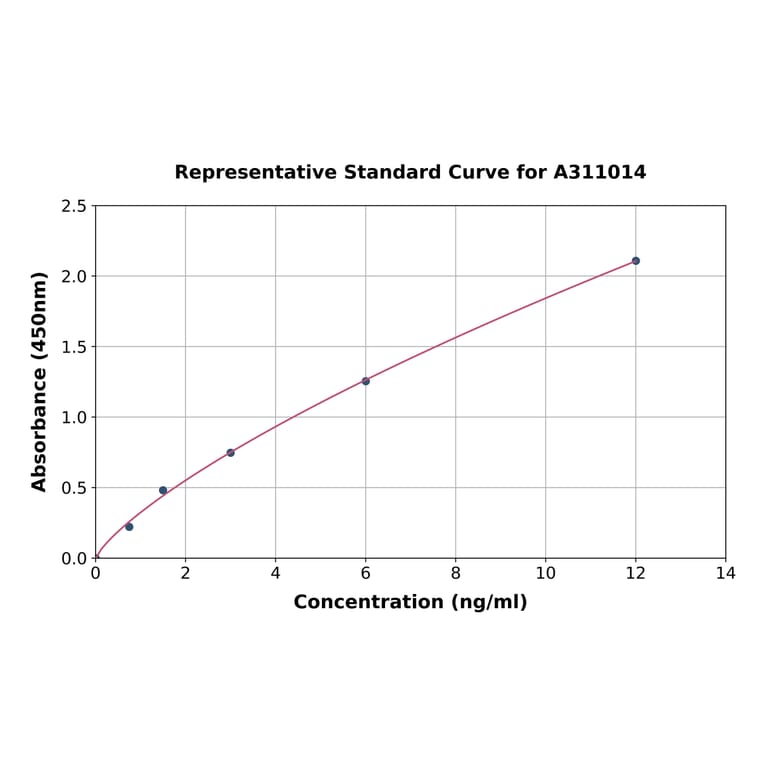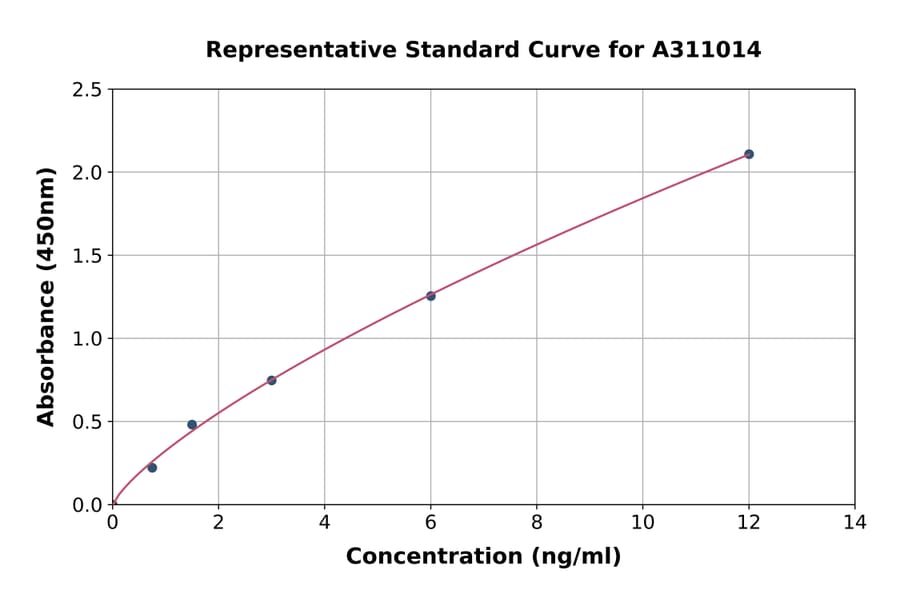

Human MADH7 / SMAD7 ELISA Kit (A311014) has been discontinued and is no longer available.
View all available products.
| Item | Quantity | Storage |
|---|---|---|
| Pre-Coated 96 Well Microplate | 12 x 8 Well Strips | +4°C |
| Standard Solution | 500µl | +4°C |
| Standard Diluent | 3ml | +4°C |
| Biotinylated Detection Antibody | 1ml | +4°C |
| Streptavidin-HRP | 6ml | +4°C |
| Wash Buffer (25X) | 20ml | +4°C |
| Substrate Solution A | 6ml | +4°C |
| Substrate Solution B | 6ml | +4°C |
| Stop Solution | 6ml | +4°C |
| Plate Sealers | 5 Adhesive Strips | - |
| Foil Pouch | 1 Zip-Sealed Pouch | - |
MicroRNAs (miRNAs) are key regulators of bone regeneration. We investigated the role of miR-21 in humeral fracture (HF) healing, focusing on its interaction with the SMAD7/Wnt/ß-catenin signaling axis. Serum and tissue levels of miR-21 were analyzed in HF patients and healthy controls using qRT-PCR. A rat HF model was established, and agomiR-21 was administered to evaluate its effect on fracture healing. Histological analysis using hematoxylin and eosin (H&E) staining was performed to assess bone tissue morphology and fracture healing. In vitro, MC3T3-E1 osteoblasts were transfected with miR-21 mimics to assess cell viability (CCK-8), proliferation (EdU), apoptosis (flow cytometry), migration (Transwell assay), and osteogenic differentiation (Western blot). The downstream target of miR-21 was identified using bioinformatics and validated via luciferase reporter and RNA immunoprecipitation assays. Rescue experiments involving SMAD7 overexpression and Wnt/ß-catenin inhibitors (DKK1) were conducted to explore the mechanism of action. Serum analysis revealed reduced ß-catenin and phosphorylated GSK3ß (p-GSK3ß) levels in humeral fracture (HF) patients compared to healthy controls, indicating suppressed Wnt/ß-catenin signaling. In MC3T3-E1 cells, miR-21 overexpression enhanced osteogenic markers and increased total ß-catenin, active ß-catenin, and p-GSK3ß levels, confirming activation of the Wnt/ß-catenin pathway. Dual-luciferase and expression analyses demonstrated that miR-21 directly targets SMAD7, a known Wnt pathway inhibitor. Co-transfection with SMAD7 reversed the effects of miR-21 on ß-catenin activation, ALP activity, and osteogenic gene expression. Additionally, miR-21 knockdown impaired osteogenesis, further supporting its regulatory role. Importantly, in vivo, agomiR-21 treatment enhanced osteoblast activity and significantly promoted bone healing in a rat fracture model, reinforcing the therapeutic potential of miR-21-mediated SMAD7 suppression and Wnt/ß-catenin pathway activation in bone regeneration. miR-21 promotes bone regeneration after humeral fracture by enhancing osteoblast function and activating Wnt/ß-catenin signaling through direct inhibition of SMAD7.