
| Sample Type | n | Range | Average |
|---|---|---|---|
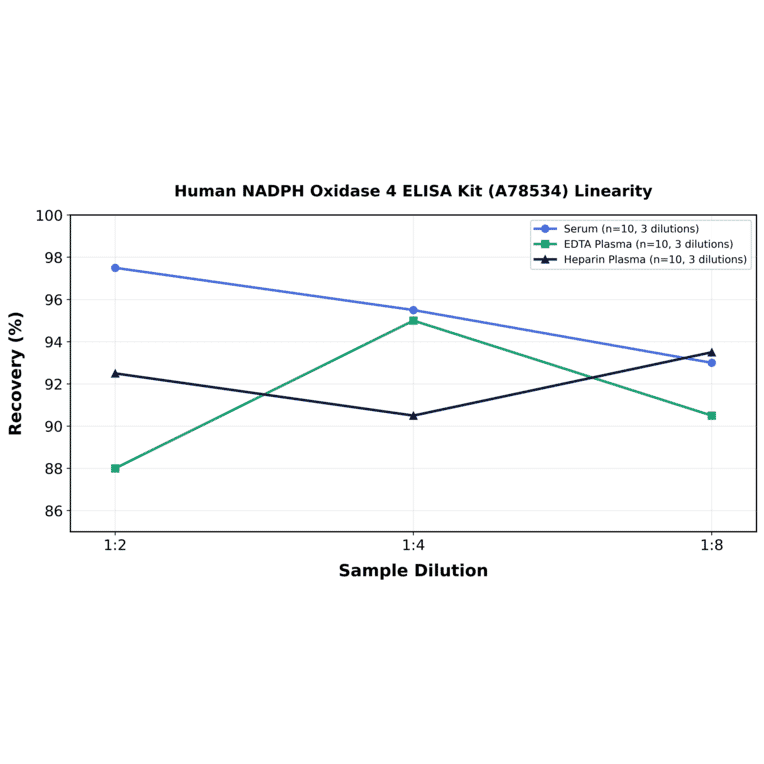
| Serum | 10 | 88% - 104% | 92% |
| EDTA Plasma | 10 | 85% - 105% | 98% |
| Heparin Plasma | 10 | 85% - 104% | 93% |
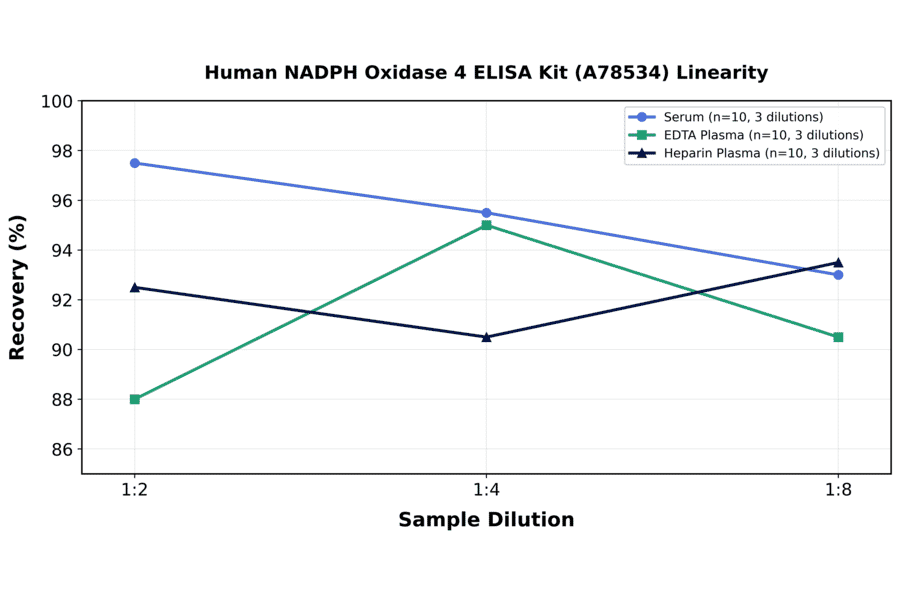
| Sample Type | n | 1:2 | 1:4 | 1:8 |
|---|---|---|---|---|
| Serum | 10 | 92-103% | 86-105% | 87-99% |
| EDTA Plasma | 10 | 82-94% | 89-101% | 84-97% |
| Heparin Plasma | 10 | 86-99% | 81-100% | 87-100% |
| Item | Quantity | Storage |
|---|---|---|
| Pre-Coated 96 Well Microplate | 12 x 8 Well Strips | +4°C |
| Lyopholized Standard | 2 Vials | +4°C |
| Sample Dilution Buffer | 20ml | +4°C |
| Biotinylated Detection Antibody | 120µl | +4°C |
| Antibody Dilution Buffer | 10ml | +4°C |
| HRP-Streptavidin Conjugate | 120µl | +4°C |
| SABC Dilution Buffer | 10ml | +4°C |
| TMB Substrate | 10ml | +4°C |
| Stop Solution | 10ml | +4°C |
| Wash Buffer (25X) | 30ml | +4°C |
| Plate Sealers | 5 Adhesive Strips | - |
| Foil Pouch | 1 Zip-Sealed Pouch | - |
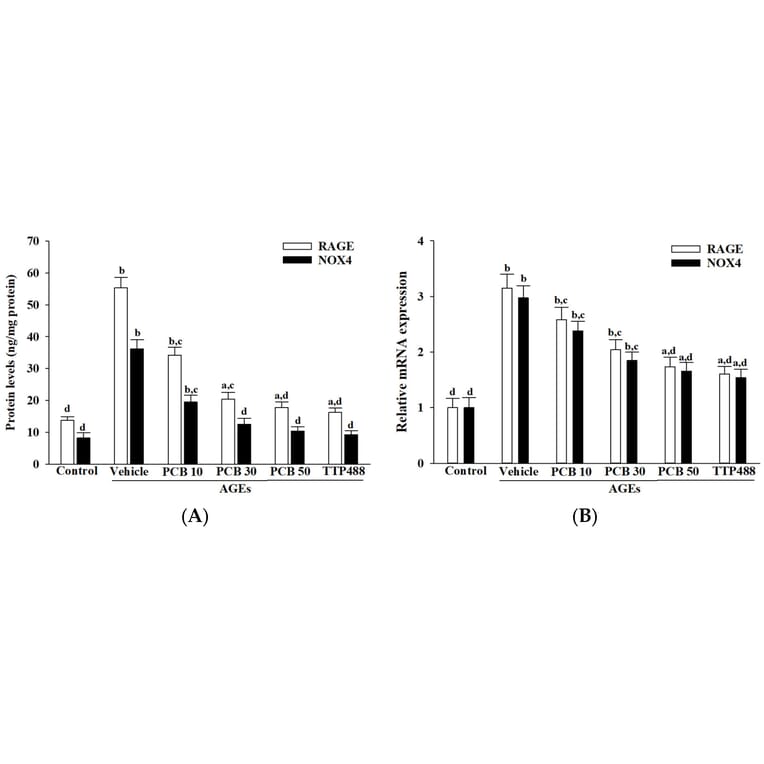
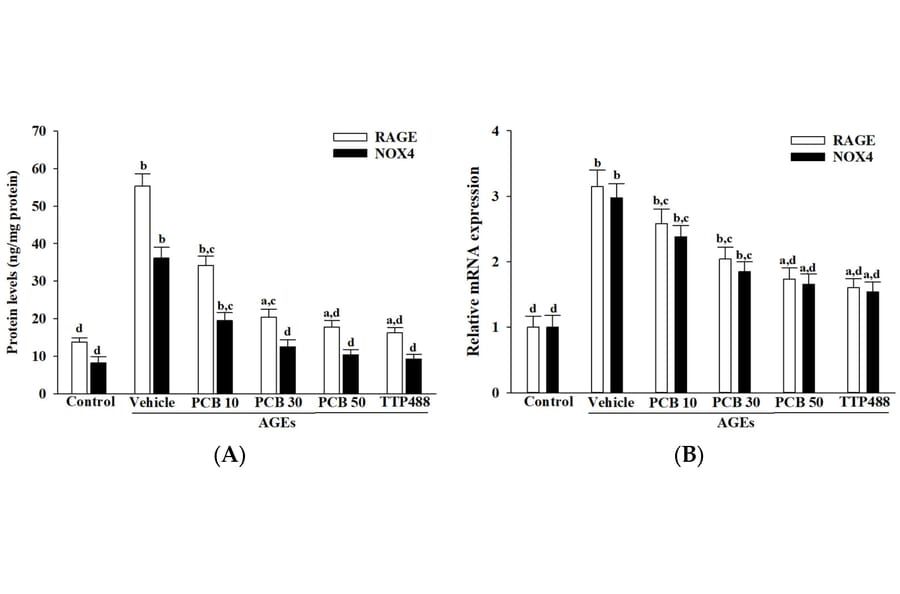
Background/Objectives: Neurodegeneration associated with diabetes and metabolic dysfunction involves interconnected processes, including advanced glycation end product (AGE)-related signaling, RAGE/NOX4-dependent oxidative stress, dysregulated endoplasmic reticulum (ER) stress, and mitochondrial apoptosis. Phycocyanobilin (PCB), a tetrapyrrolic chromophore of C-phycocyanin, has been proposed to exert pleiotropic cytoprotective effects; however, its actions within glycation-associated neuronal stress pathways remain incompletely defined. Methods: Differentiated SH-SY5Y neurons were exposed to AGEs (300 µg/mL) for a 24 h period to examine whether PCB modulates neuronal injury along the RAGE-NOX4-oxidative-stress-ER-stress-mitochondrial axis. The selective RAGE antagonist TTP488 (100 µmol/L) was included as a pharmacological reference. Neuronal viability, neurite integrity, intracellular and mitochondrial reactive oxygen species, ER stress signaling, and apoptotic markers were assessed using complementary biochemical, molecular, and functional assays. Results: PCB pretreatment (10-50 µmol/L) significantly improved neuronal viability, preserved neurite structure, and reduced oxidative stress under the AGE challenge. These effects were accompanied by attenuation of AGEs-induced upregulation of RAGE and NOX4 expression, suppression of PERK-eIF2a-ATF4-CHOP signaling, restoration of mitochondrial apoptotic balance, inhibition of caspase activation, and reduced DNA fragmentation. The overall protective profile of PCB was comparable to that observed with TTP488 at the level of downstream pathway modulation. Conclusions: These findings suggest that PCB mitigates glycation-associated neuronal injury through coordinated regulation of oxidative, ER stress, and mitochondrial apoptotic pathways linked to RAGE/NOX4 signaling, supporting further investigation of PCB as a functional food-derived bioactive in metabolic stress-related neurodegeneration.