
| Sample Type | n | Range | Average |
|---|---|---|---|
| Serum | 10 | 85% - 105% | 94% |
| EDTA Plasma | 10 | 86% - 105% | 95% |
| Heparin Plasma | 10 | 90% - 97% | 92% |
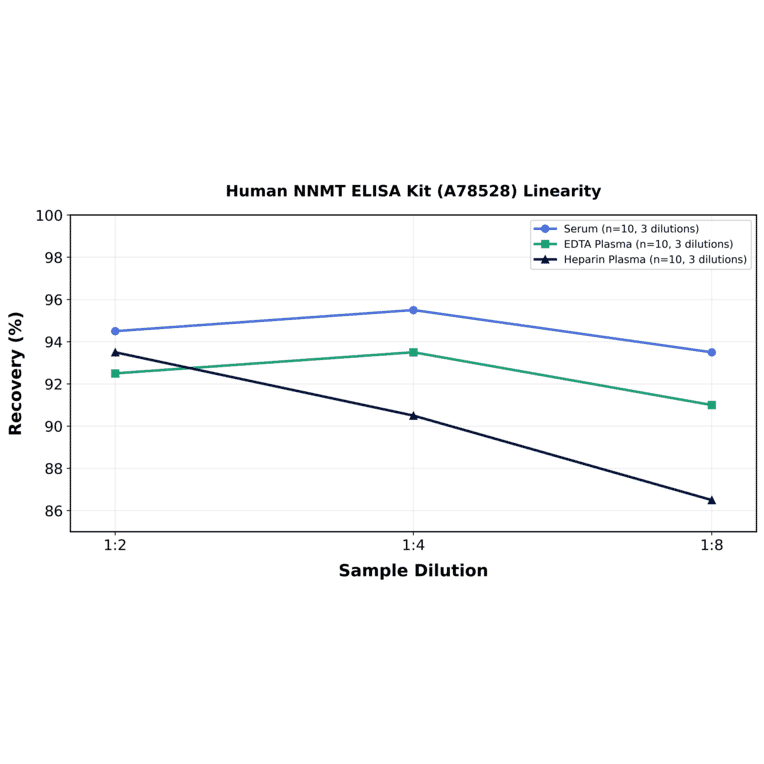
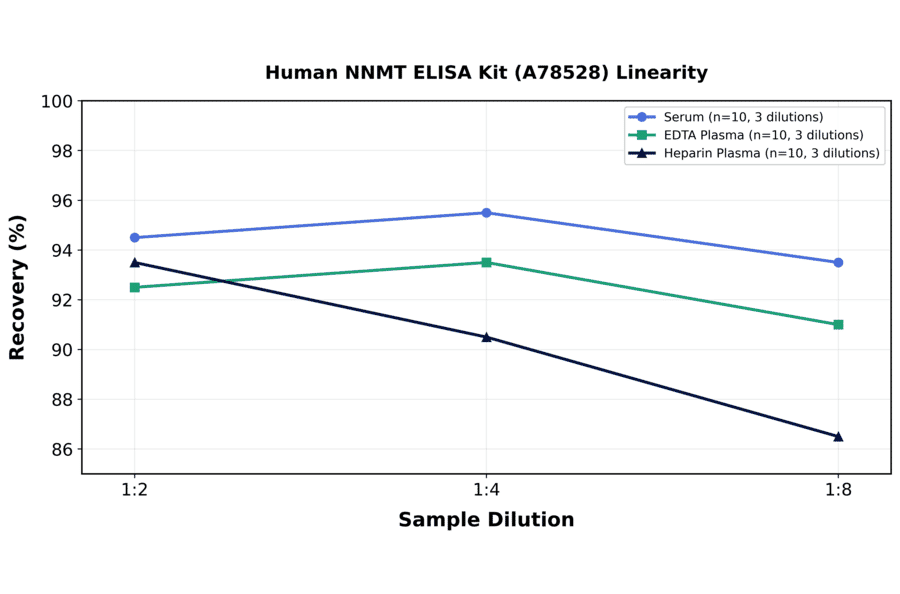
| Sample Type | n | 1:2 | 1:4 | 1:8 |
|---|---|---|---|---|
| Serum | 10 | 86-103% | 86-105% | 85-102% |
| EDTA Plasma | 10 | 84-101% | 87-100% | 83-99% |
| Heparin Plasma | 10 | 88-99% | 84-97% | 81-92% |
| Item | Quantity | Storage |
|---|---|---|
| Pre-Coated 96 Well Microplate | 12 x 8 Well Strips | +4°C |
| Lyopholized Standard | 2 Vials | +4°C |
| Sample Dilution Buffer | 20ml | +4°C |
| Biotinylated Detection Antibody | 120µl | +4°C |
| Antibody Dilution Buffer | 10ml | +4°C |
| HRP-Streptavidin Conjugate | 120µl | +4°C |
| SABC Dilution Buffer | 10ml | +4°C |
| TMB Substrate | 10ml | +4°C |
| Stop Solution | 10ml | +4°C |
| Wash Buffer (25X) | 30ml | +4°C |
| Plate Sealers | 5 Adhesive Strips | - |
| Foil Pouch | 1 Zip-Sealed Pouch | - |
Diabetic kidney disease (DKD) is the leading cause of kidney failure among diabetic patients. At the time of clinical diagnosis, kidney function has already significantly deteriorated, limiting treatment options. We developed a novel approach using tandem mass tags (TMT) labelling to identify kidney proteins in plasma samples and putative protein biomarker signatures that distinguish patients with DKD or reduced kidney function from control individuals. Plasma samples from 28 patients from the NC A&T Men's Minority Health Initiative Cohort included 7 healthy controls, 7 patients with diabetes and microalbuminuria (DM), and 2 patients with DKD. In addition, our sample set included 12 individuals with DM but no detectable microalbuminuria. Plasma samples were depleted, and analysed using TMT labelling with kidney lysate as a reference sample to identify potentially kidney-derived proteins in plasma that could indicate early kidney cell damage and protein leakage. A total of 424 proteins were identified in the plasma samples. Of these, the Human Protein Atlas labels 375 as proteins expressed in the kidney and 4 proteins as kidney-enriched. We identified 13 proteins whose abundance levels were different between patients with kidney injury and controls (P < .05). Using sparse partial least squares discriminant analysis, we identified a biomarker signature of four plasma proteins that confidently distinguish samples from individuals with kidney injury and control individuals. Interestingly, samples from DM patients without any detectable kidney dysfunction align between the controls and individuals with kidney damage, suggesting that some of these individuals are more similar in their biomarker signature to DKD patients and may be progressing to microalbuminuria.