
| Sample Type | n | Range | Average |
|---|---|---|---|
| Serum | 10 | 89% - 105% | 97% |
| EDTA Plasma | 10 | 88% - 105% | 95% |
| Heparin Plasma | 10 | 86% - 104% | 94% |
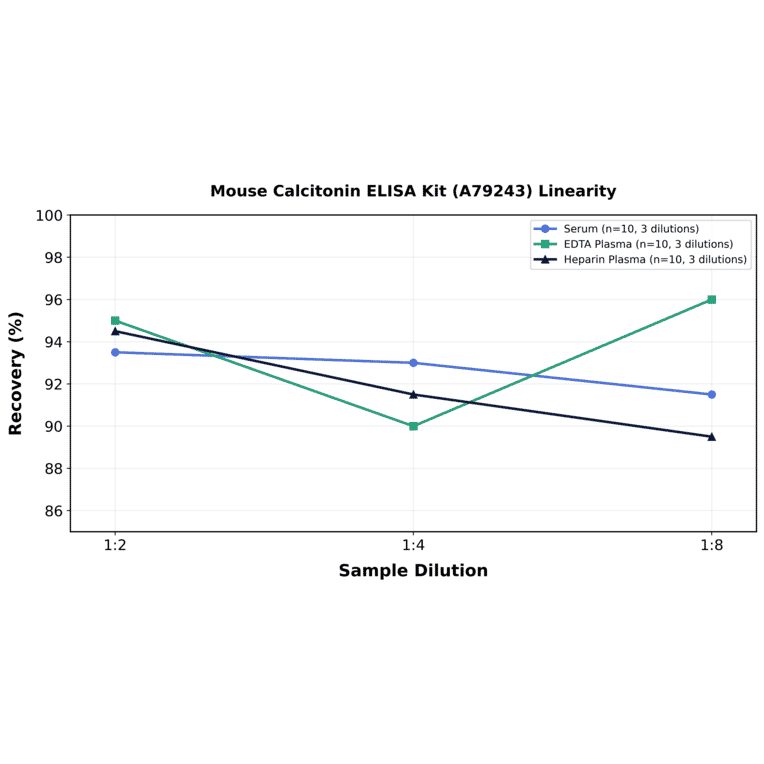
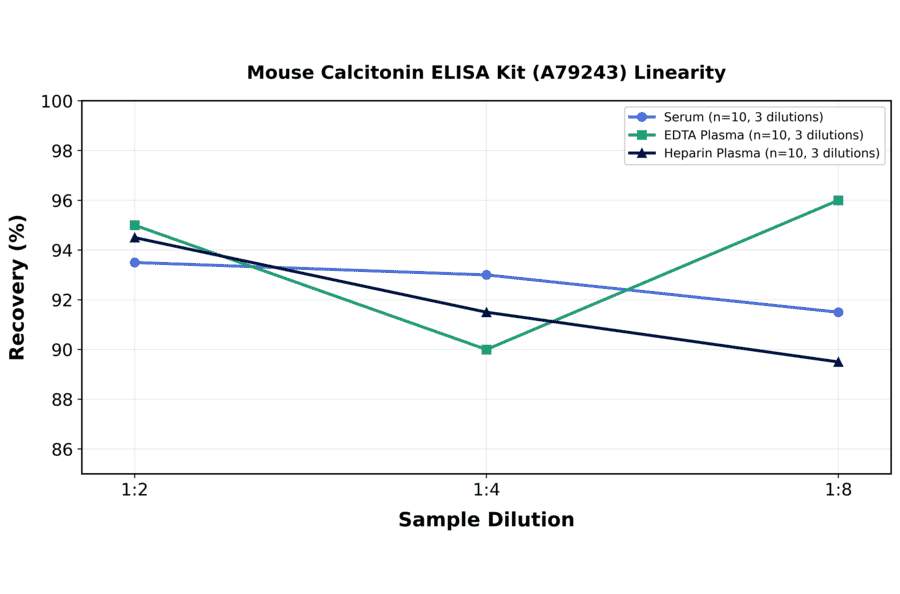
| Sample Type | n | 1:2 | 1:4 | 1:8 |
|---|---|---|---|---|
| Serum | 10 | 85-102% | 88-98% | 84-99% |
| EDTA Plasma | 10 | 89-101% | 84-96% | 93-99% |
| Heparin Plasma | 10 | 87-102% | 83-100% | 80-99% |
| Item | Quantity | Storage |
|---|---|---|
| Pre-Coated 96 Well Microplate | 12 x 8 Well Strips | +4°C |
| Lyopholized Standard | 2 Vials | +4°C |
| Sample Dilution Buffer | 20ml | +4°C |
| Biotinylated Detection Antibody | 120µl | +4°C |
| Antibody Dilution Buffer | 10ml | +4°C |
| HRP-Streptavidin Conjugate | 120µl | +4°C |
| SABC Dilution Buffer | 10ml | +4°C |
| TMB Substrate | 10ml | +4°C |
| Stop Solution | 10ml | +4°C |
| Wash Buffer (25X) | 30ml | +4°C |
| Plate Sealers | 5 Adhesive Strips | - |
| Foil Pouch | 1 Zip-Sealed Pouch | - |
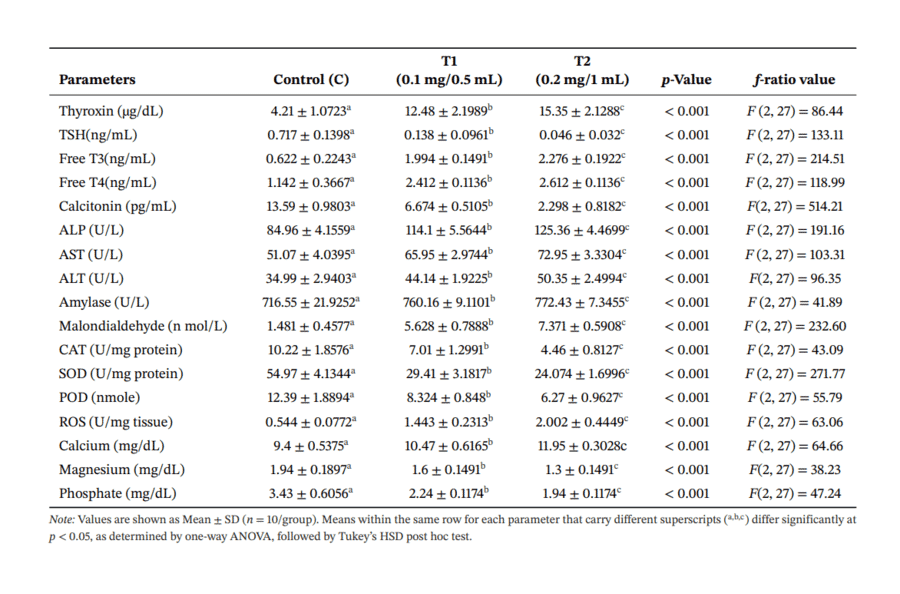
Background: Polystyrene microplastics (PS-MPs) are pervasive pollutants impacting animals across ecosystems, including livestock and wildlife, through contaminated food, water, and air. MPs may disrupt endocrine function, particularly affecting the thyroid gland, which is essential for metabolism and development.
Objectives: This study investigates the effects of PS-MPs on thyroid function in mice, offering insights relevant to veterinary care by examining changes in gene expression and biochemical markers.
Methods: PS-MPs of 5 µm diameter were prepared in distilled water after probe sonication. Sixty male Swiss albino mice were divided into three groups: a control group and two treatment groups receiving 0.1 mg and 0.2 mg PS-MPs via oral gavage for 28 days. Mice were anesthetised, and thyroid tissues were collected for histopathological, biochemical, and gene expression analyses. Biochemical tests included catalase, superoxide dismutase, reactive oxygen species, and hormone levels. Histopathology and gene expression (TSHR and TPO) of thyroid-related genes were examined to assess PS-MPs induced effects.
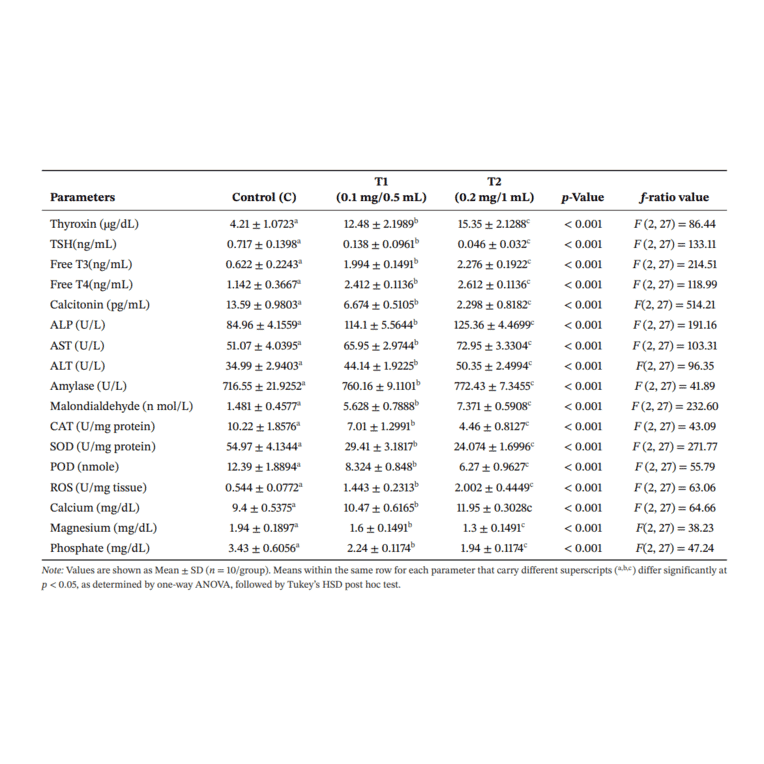
Results: Exposure to PS-MPs in mice led to significant increases in calcium, thyroxin, free T3, free T4, ALP, AST, ALT, and amylase levels, alongside elevated oxidative stress markers. Conversely, the levels of TSH, calcitonin, magnesium and phosphate decreased. Histopathological analysis showed abnormal thyroid follicle development, decrease parafollicular cells, with colloid loss, haemorrhage, and necrosis. Gene expression analysis revealed a marked reduction in TSHR and TPO levels in PS-MPs treated groups, indicating thyroid dysfunction. These findings highlight the profound impact of PS-MPs on thyroid gland function in mice.
Conclusion: These findings underscore the potential risks that PS-MPs pose to thyroid health, with potential consequences for other veterinary species. As environmental contamination rises, veterinarians may encounter more endocrine disorders linked to PS-MPs, emphasising the need for further research and preventive measures.