
| Sample Type | n | Range | Average |
|---|---|---|---|
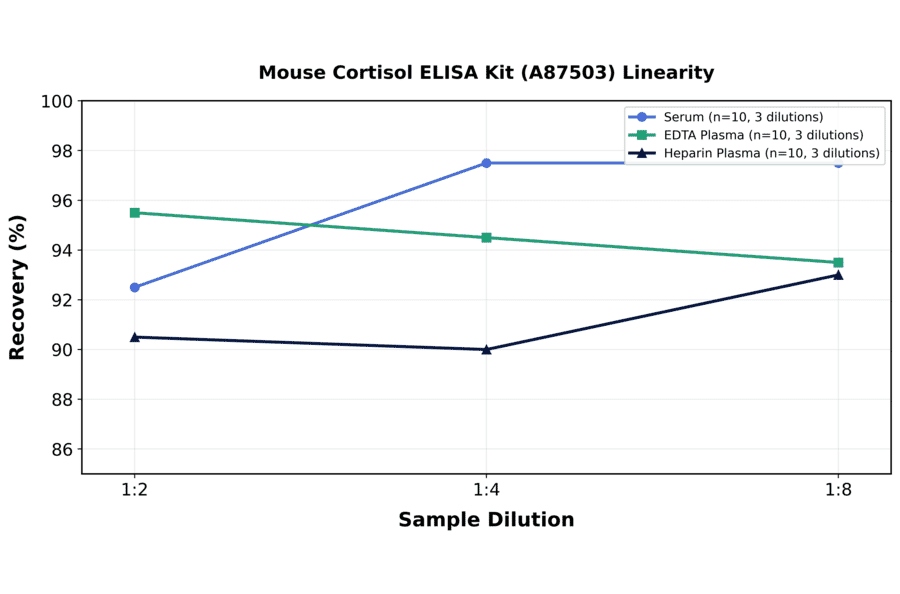
| Serum | 10 | 87% - 105% | 99% |
| EDTA Plasma | 10 | 88% - 105% | 95% |
| Heparin Plasma | 10 | 87% - 99% | 91% |
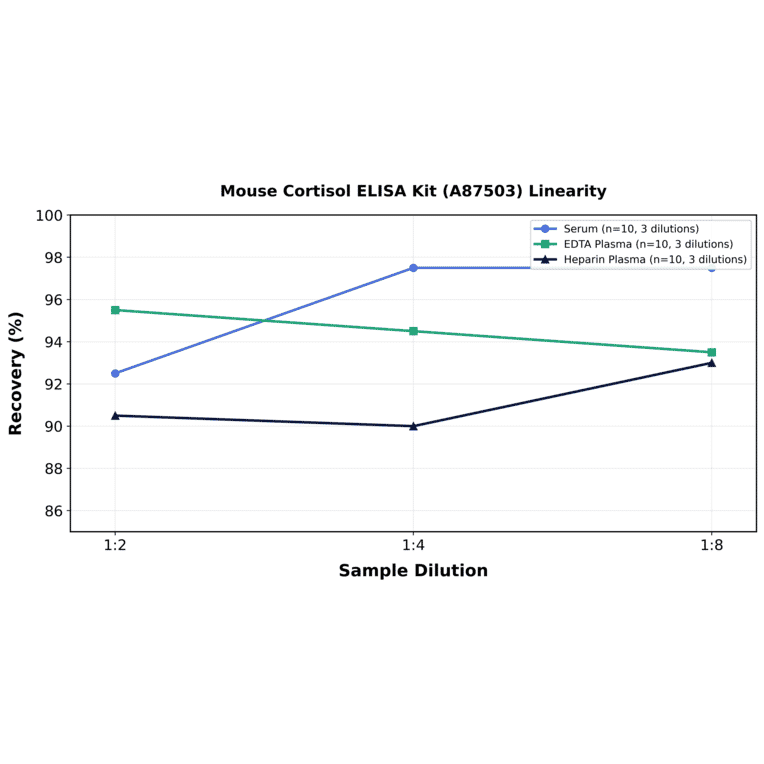
| Sample Type | n | 1:2 | 1:4 | 1:8 |
|---|---|---|---|---|
| Serum | 10 | 88-97% | 94-101% | 90-105% |
| EDTA Plasma | 10 | 90-101% | 89-100% | 86-101% |
| Heparin Plasma | 10 | 83-98% | 84-96% | 87-99% |
| Item | Quantity | Storage |
|---|---|---|
| Pre-Coated 96 Well Microplate | 12 x 8 Well Strips | +4°C |
| Lyopholized Standard | 2 Vials | +4°C |
| Sample Dilution Buffer | 20ml | +4°C |
| Biotinylated Detection Antibody | 60µl | +4°C |
| Antibody Dilution Buffer | 10ml | +4°C |
| HRP-Streptavidin Conjugate | 120µl | +4°C |
| SABC Dilution Buffer | 10ml | +4°C |
| TMB Substrate | 10ml | +4°C |
| Stop Solution | 10ml | +4°C |
| Wash Buffer (25X) | 30ml | +4°C |
| Plate Sealers | 5 Adhesive Strips | - |
| Foil Pouch | 1 Zip-Sealed Pouch | - |
Introduction: Rising numbers of binge eating disorder (BED) cases and excessive associated economic costs, together with the absence of efficient treatment strategies, highlight the importance of research in this area. To date, numerous studies have investigated the role of aberrant motivation in compulsive, maladaptive feeding behaviors. However, other aspects of maladaptive preference toward foods, possibly involving risk-based decision-making processes, are not yet fully elucidated.
Methods: In this research, two types of environmental stressors-food-related and non-food-related-are explored in their ability to model compulsive behavior toward palatable food in mice.
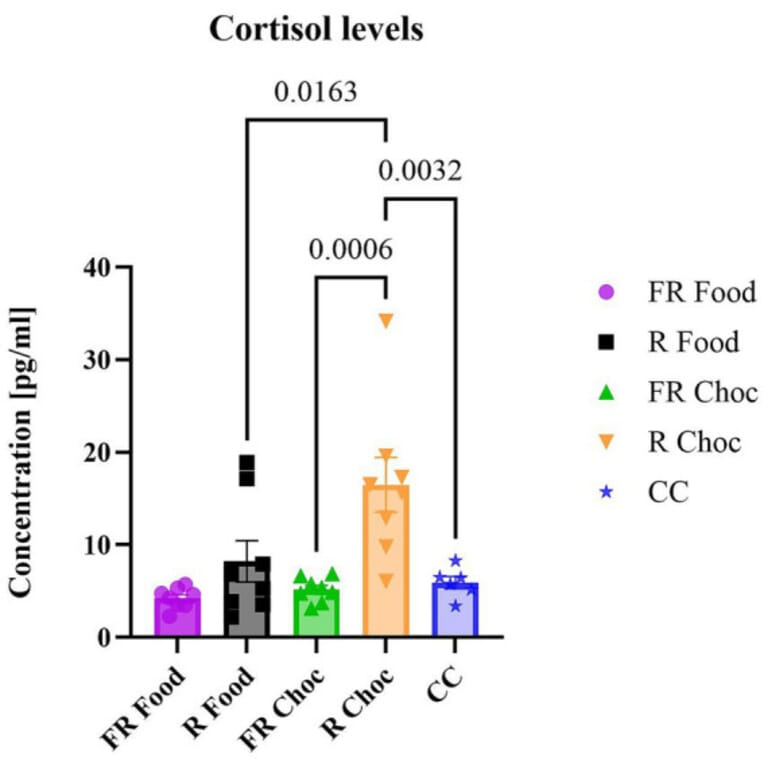
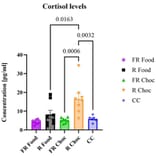
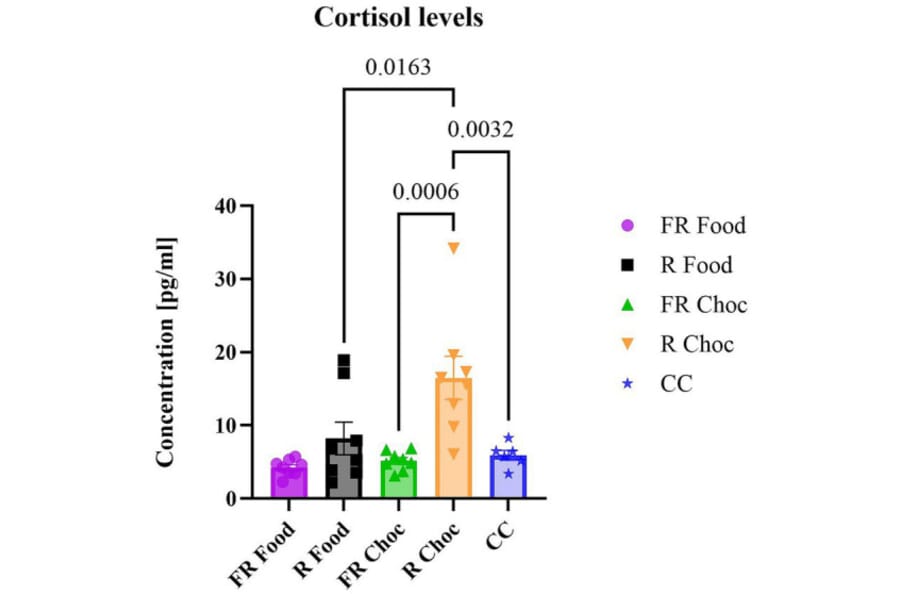
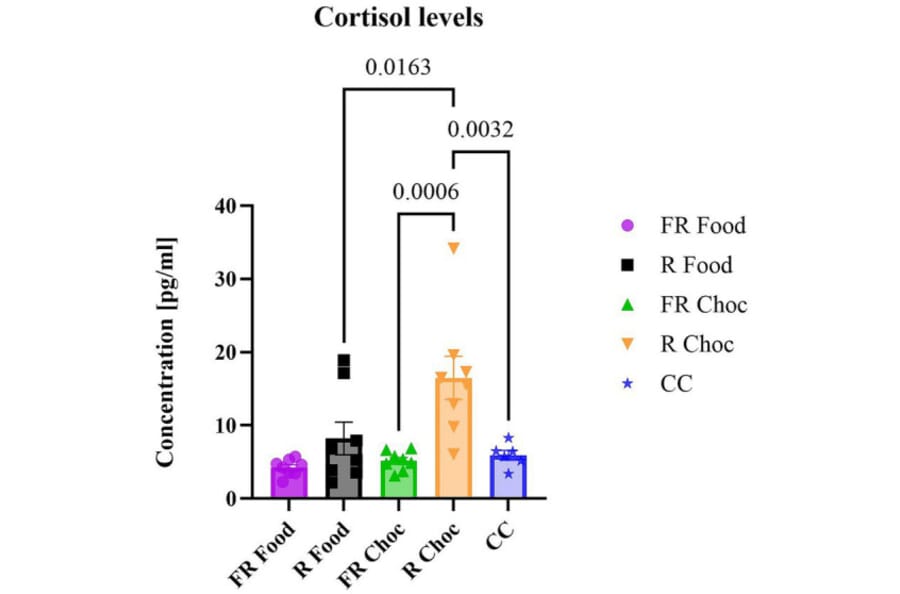
Results and discussion: Results from the behavioral experiments suggest that both types of stressors, when paired with the availability of highly palatable food, can produce aberrant motivation toward such food. These findings were subsequently supported by data obtained from cortisol concentration analysis in subjects.