
| Sample Type | n | Range | Average |
|---|---|---|---|
| Serum | 10 | 87% - 97% | 92% |
| EDTA Plasma | 10 | 86% - 97% | 92% |
| Heparin Plasma | 10 | 86% - 99% | 93% |
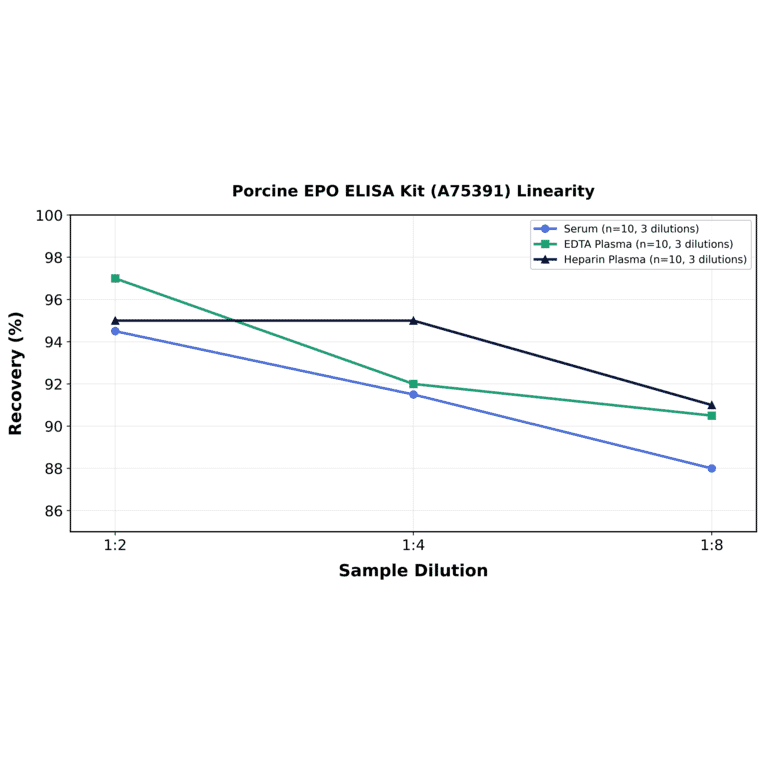
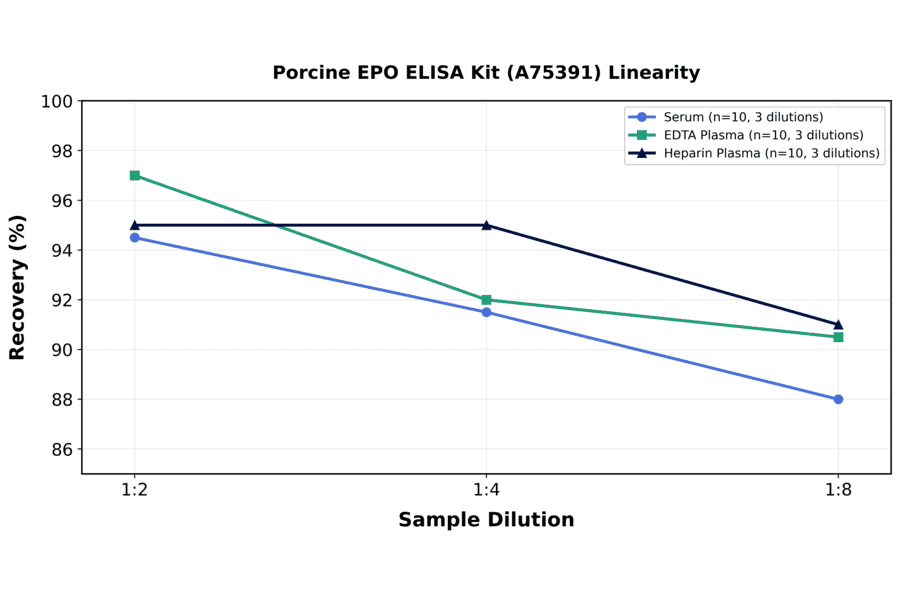
| Sample Type | n | 1:2 | 1:4 | 1:8 |
|---|---|---|---|---|
| Serum | 10 | 85-104% | 82-101% | 81-95% |
| EDTA Plasma | 10 | 90-104% | 83-101% | 85-96% |
| Heparin Plasma | 10 | 87-103% | 89-101% | 82-100% |
| Item | Quantity | Storage |
|---|---|---|
| Pre-Coated 96 Well Microplate | 12 x 8 Well Strips | +4°C |
| Lyopholized Standard | 2 Vials | +4°C |
| Sample Dilution Buffer | 20ml | +4°C |
| Biotinylated Detection Antibody | 120µl | +4°C |
| Antibody Dilution Buffer | 10ml | +4°C |
| HRP-Streptavidin Conjugate | 120µl | +4°C |
| SABC Dilution Buffer | 10ml | +4°C |
| TMB Substrate | 10ml | +4°C |
| Stop Solution | 10ml | +4°C |
| Wash Buffer (25X) | 30ml | +4°C |
| Plate Sealers | 5 Adhesive Strips | - |
| Foil Pouch | 1 Zip-Sealed Pouch | - |
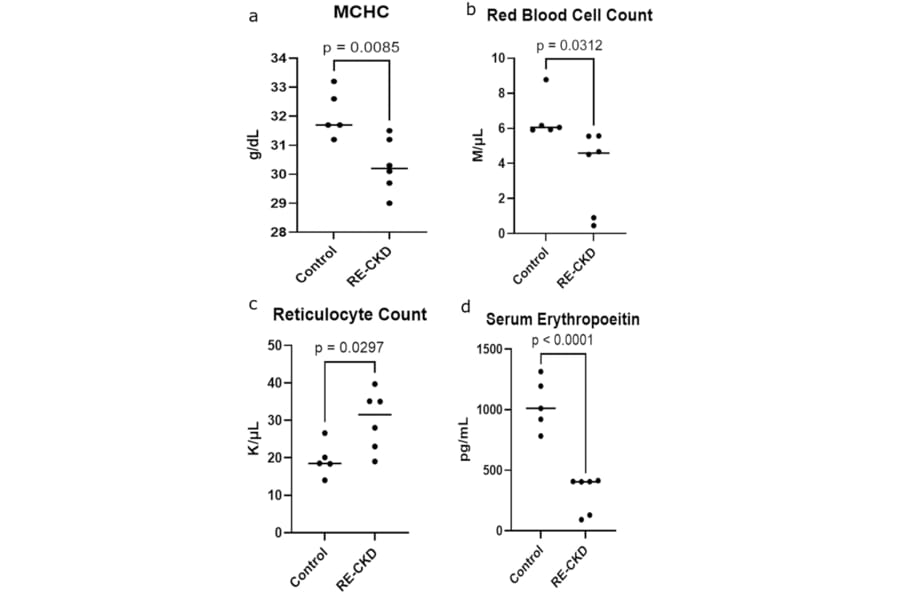
Chronic kidney disease (CKD) is on the rise, and over 50% of patients die from cardiac causes. Patients develop heart failure due to unelucidated reno-cardiac interactions, termed type 4 cardiorenal syndrome (CRS4). The aim of this study is to establish and characterize a reliable model of CRS4 in swine with marked cardiac diastolic dysfunction. Yorkshire pigs (19.9 ± 1.7 kg, 4 females and 5 males) underwent staged renal artery embolization using autologous clot. Echocardiogram, aortic pressure (AoP), renal angiogram, and blood samples were assessed monthly. At 4 mo, animals were euthanized after measuring glomerular filtration rate (GFR) and left ventricular (LV) pressure-volume parameters. Heart and kidneys were collected for postmortem analyses. Size-matched swine (n = 5; 43.7 ± 9.8 kg) served as controls. After three dose-titrated renal embolization, serum creatinine (SCr) and AoP increased by wk 10. At 4 mo, SCr (2.03 ± 0.45 vs. 1.34 ± 0.17 mg/dL, P = 0.013) and AoP (158 ± 16 vs. 121 ± 8 mmHg, P = 0.001) were higher, and GFR was lower (12 ± 3 vs. 131 ± 7 mL/min, P < 0.001) than size-matched controls. Although the LV ejection fraction was similar, the slope of the end-diastolic pressure-volume relationship was steeper in pigs after renal embolization (0.36 ± 0.09 vs. 0.17 ± 0.06, P = 0.003), indicating increased LV stiffness. LV mass index (2.73 ± 0.19 vs. 2.50 ± 0.13 g/kg, P = 0.043) and wall-thickness (11.4 ± 0.8 vs. 8.9 ± 1.2 mm, P = 0.003) increased. These were accompanied by histologically increased fibrosis, cardiomyocyte hypertrophy, and vascular rarefaction. Repeat titrated renal embolization resulted in a model that exhibits advanced CKD and cardiac abnormalities consistent with CRS4.NEW & NOTEWORTHY Cardiac pathological changes consistent with heart failure with preserved ejection fraction can be induced in a large animal model by serial and titrated renal embolization of kidneys with autologous clot, leading to severe renal dysfunction and impaired cardiac diastolic function.