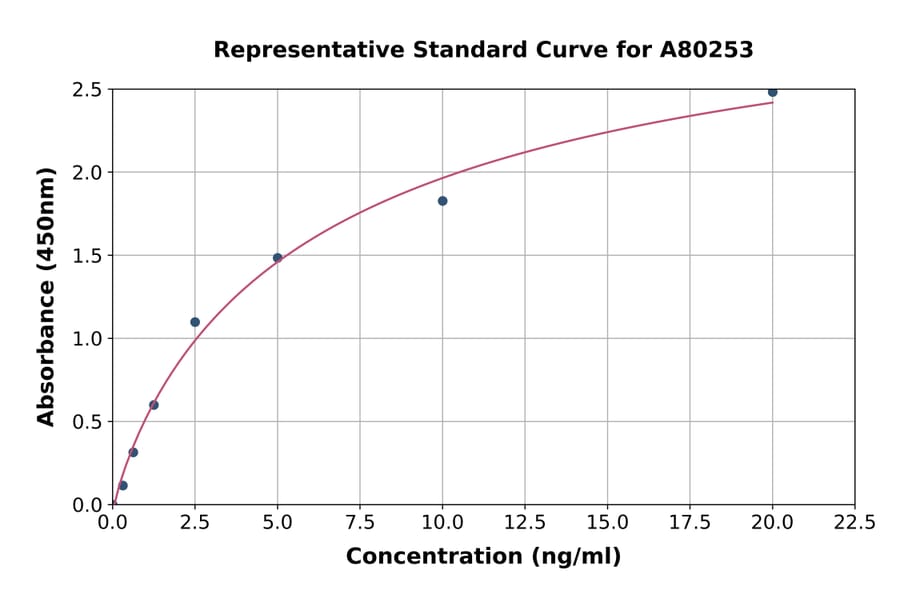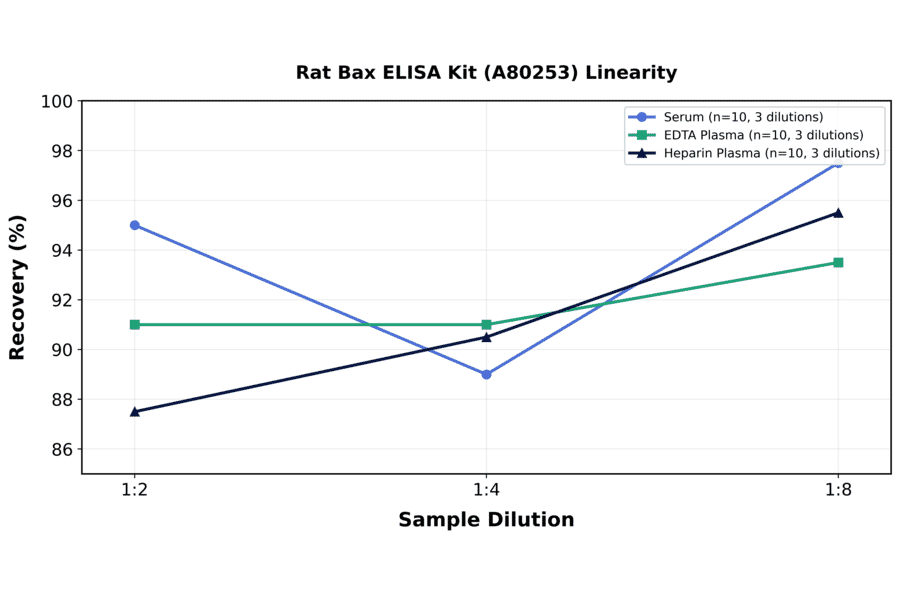

| Sample Type | n | Range | Average |
|---|---|---|---|
| Serum | 10 | 90% - 105% | 97% |
| EDTA Plasma | 10 | 89% - 103% | 99% |
| Heparin Plasma | 10 | 91% - 104% | 98% |
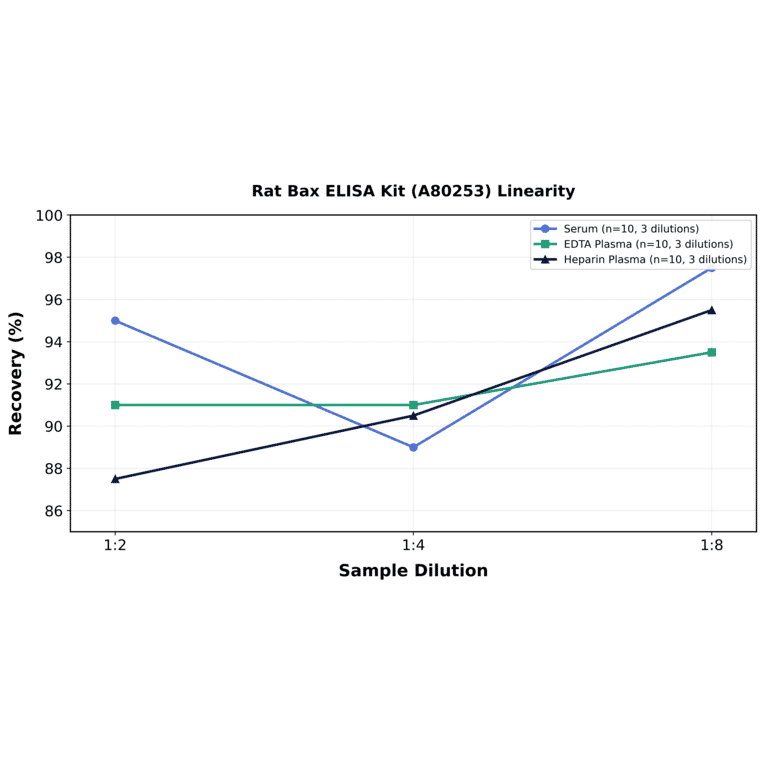
| Sample Type | n | 1:2 | 1:4 | 1:8 |
|---|---|---|---|---|
| Serum | 10 | 85-105% | 85-93% | 91-104% |
| EDTA Plasma | 10 | 82-100% | 86-96% | 86-101% |
| Heparin Plasma | 10 | 80-95% | 82-99% | 90-101% |
| Item | Quantity | Storage |
|---|---|---|
| Pre-Coated 96 Well Microplate | 12 x 8 Well Strips | +4°C |
| Lyopholized Standard | 2 Vials | +4°C |
| Sample Dilution Buffer | 20ml | +4°C |
| Biotinylated Detection Antibody | 120µl | +4°C |
| Antibody Dilution Buffer | 10ml | +4°C |
| HRP-Streptavidin Conjugate | 120µl | +4°C |
| SABC Dilution Buffer | 10ml | +4°C |
| TMB Substrate | 10ml | +4°C |
| Stop Solution | 10ml | +4°C |
| Wash Buffer (25X) | 30ml | +4°C |
| Plate Sealers | 5 Adhesive Strips | - |
| Foil Pouch | 1 Zip-Sealed Pouch | - |
This study investigated the synergistic effect of early bone marrow-derived mesenchymal stem cells (BM-MSC) transplantation and endurance training on exercise-induced ventricular ectopy, myocardial infarction-induced injury and cardiac function in rats. 90 male Wistar rats (7-8 weeks) randomly distributed following groups, 1: Healthy control (HC, n = 15), 2: Sham (Sham, n = 15), 3 Myocardial infarction (MI, n = 15), 4: Myocardial infarction with BM-MSC transplantation (MI-SC, n = 15), 5: Myocardial infarction with Endurance training (MI-ET, n = 15) and 6: Myocardial infarction with Endurance training and BM-MSC transplantation (MI-ET + SC, n = 15). Myocardial infarction was induced by permanent obstruction of the cardiac left anterior descending artery. One day after MI induction, 1 × 10⁶ BM-MSC were injected via a caudal vein in MI-SC and MI-ET + SC groups, and training rat subjects were to run on a rodent treadmill for 10 weeks. BM-MSC alone decreased serum LDH, CK-MB, left ventricular Bax, and infarction size, and promoted serum IL-10, cardiac function and exercise capacities. These effects would be stronger if cell therapy was combined with exercise training. Cell therapy insignificantly decreased TNF-a and promoted left ventricular Bcl-2, but cell therapy with exercise training significantly reduced TNF-a and promoted Bcl-2. Despite the greater reduction of cardiac arrhythmia after exercise in the MI-ET + SC group, there was no significant difference between the treatment groups. The results of this study showed that exercise training and BM-MSC transplantation synergistically promoted myocardial infarction-induced injury healing and reduced ventricular ectopy after exercise in myocardial infarction rats via inflammation and apoptosis reduction.