General Notes
Mouse anti Human CD44v6, clone VFF-18 recognizes a centrally located 14mer epitope encoded by amino acid residues 18-31, within variant exon 6 (v6) of human CD44 (Reinisch et al, 1998). CD44 is a member of a polymorphic family of transmembrane glycoproteins, which exists as a broadly expressed ~80-90 kDa standard form (CD44s), and also as numerous splice variants, due to extensive alternative splicing and post-translational modifications. CD44s is involved in cell adhesion, lymphocyte activation, signal transduction, haematopoiesis, recirculation and homing, and CD44v6 mediates leukocyte to endothelial cell attachment and rolling, as well as homing to sites of inflammation and peripheral organs. As well as its role as a receptor for hyaluronic acid (HA), CD44s also interacts with other ligands including matrix metalloproteinases (MMPs), fibronectin and collagens, and has been linked with cancer of the breast, colon, stomach and squamous cell carcinomas (HNSCC) of the head and neck, as well as being a prognostic marker for non-Hodgkin's lymphoma. The variant isoforms of CD44 (CD44v) are highly expressed on epithelial cells but not leukocytes, and their association with cell transformation and cancer is also well established, supported by numerous immunohistochemical investigations including those looking at HNSCC. Mouse anti Human CD44v6, clone VFF-18 binds to CD44v6 with high affinity when compared with anti-CD44v6 clone 2F10, and is suitable for detecting CD44v6 in inflammatory bowel disease (IBD) (Reinisch et al. 1998).




![Immunohistochemistry - Anti-CD44v6 Antibody [VFF-7] (A281912) - Antibodies.com](https://cdn.antibodies.com/image/catalog/281/A281912_1.jpg?profile=product_alternative)
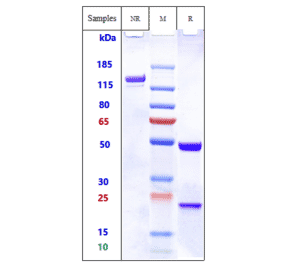
![Immunohistochemistry - Anti-CD44v6 Antibody [CD44v6/1246] (A251483) - Antibodies.com](https://cdn.antibodies.com/image/catalog/250/A250720_1.jpg?profile=product_alternative)
![Immunohistochemistry - Anti-CD44v6 Antibody [CD44V6/2496] (A253874) - Antibodies.com](https://cdn.antibodies.com/image/catalog/250/A250708_1.jpg?profile=product_alternative)
![Immunohistochemistry - Anti-CD44v6 Antibody [CD44V6/2496] - BSA and Azide free (A250708) - Antibodies.com](https://cdn.antibodies.com/image/catalog/253/A253888_1.jpg?profile=product_alternative)
![Immunohistochemistry - Anti-CD44v6 Antibody [CD44v6/1246] - BSA and Azide free (A250720) - Antibodies.com](https://cdn.antibodies.com/image/catalog/253/A253900_1.jpg?profile=product_alternative)