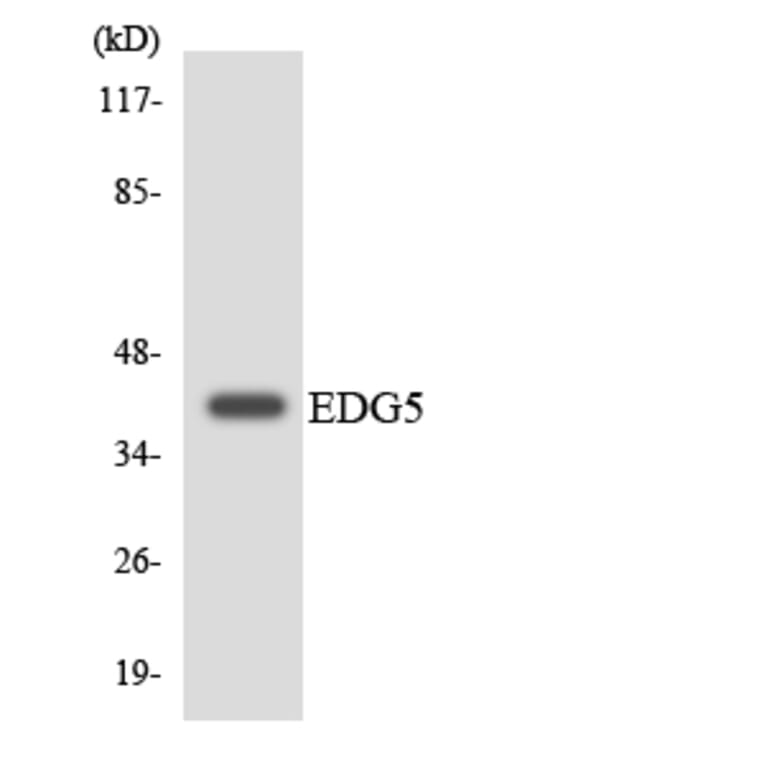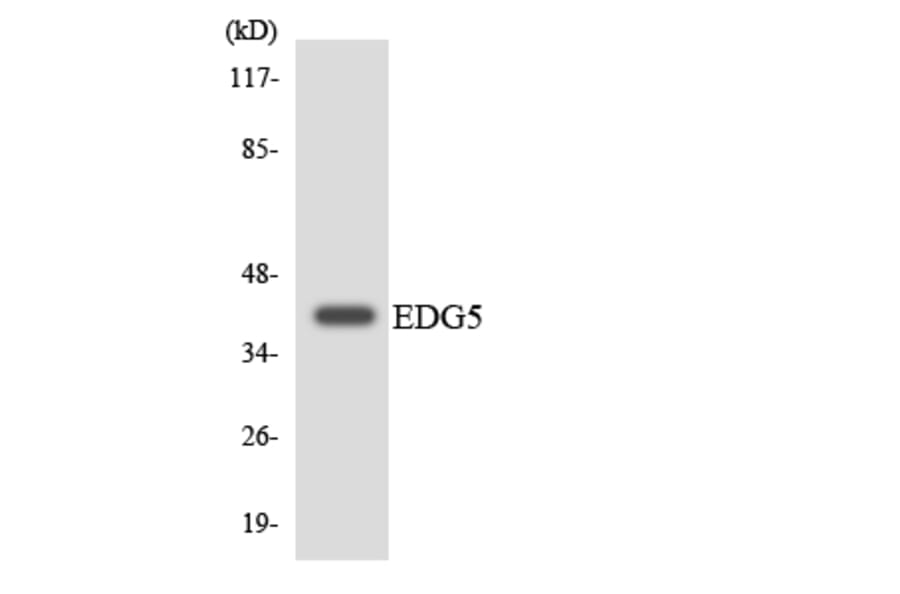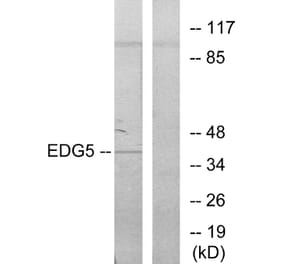

Anti-EDG5 Antibody (A98188) has been discontinued and is no longer available.
View all EDG5 Antibodies.
Unconjugated
Human genetic variants of the orphan G protein-coupled receptor GPR50 are suggested risk factors for neuropsychiatric disorders. However, the function of GPR50 in the central nervous system (CNS) and its link to CNS disorders remain poorly defined. Here, we generated GPR50 knockout (GPR50-KO) mice and show that the absence of GPR50 increases neurite outgrowth, cell motility and migration of isolated neural progenitor cells (NPCs) and hypothalamic radial glial cells (tanycytes). These observations were phenocopied in NPCs and tanycytes from wild-type mice treated with neutralizing antibodies the against the prototypical neurite growth inhibitor Nogo-A. Treatment of NPCs and tanycytes from GPR50-KO cells with neutralizing antibodies had no further, additive, effect. Inhibition of neurite growth by GPR50 occurs through activation of the G12/13 protein-RhoA pathway in a manner similar to, but independent of Nogo-A and its receptors. Collectively, we show that GPR50 acts as an inhibitor of neurite growth and cell migration in the brain by activating the G12/13 protein-RhoA pathway.