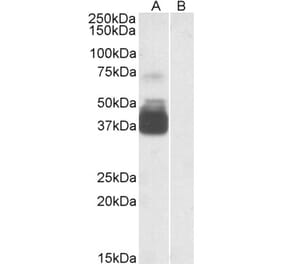
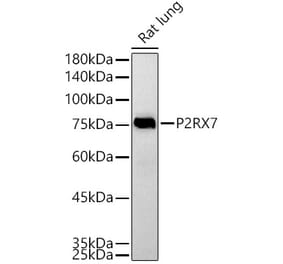
This antibody recognises the P2X purinoceptor 7, also known as P2X7. The P2X7 ATP receptor has a distinctive long C-terminal tail with multiple potential protein and lipid interaction motifs and is highly polymorphic. It is a cation selective ion channel that opens up on binding of extracellular ATP. Sustained activation by extracellular ATP results in the formation of a reversible pore in the plasma membrane that is permeable to hydrophilic solutes of up to 900 Da. Once a pore is opened massive upset of cytoplasmic ion homeostasis occurs and the pore stays open as long as it is bound by ATP. Should ATP stimulation continue the cell will become irreversibly damaged and die. P2X7 plays a key role in the maturation and release of IL-1 and other IL-1 family members during inflammation. As such, P2X7 blockers might be useful as anti-inflammatory agents.
Applications
Flow Cytometry, IF
Dilutions
Flow Cytometry: 1:25 - 1:200, Use 10µl of the suggested working dilution to label 1x10⁶ cells in 100µl.
Reactivity
Mouse
Immunogen
A P2X7-expression construct and a final boost with P2X7-transfected HEK cells.
Host
Rat
Clonality
Monoclonal
Clone ID
Hano43
Isotype
IgG2b
Conjugate
Unconjugated
Purification
Protein G affinity chromatography of tissue culture supernatant.
Concentration
1 mg/ml
Product Form
Liquid
Formulation
Supplied in Phosphate Buffered Saline with 0.09% Sodium Azide.
Storage
Shipped at ambient temperature. Upon delivery aliquot and store at -20°C. When thawed, aliquot the sample as needed. Short term (up to 4 weeks): store at 4°C. Long term: store at -20°C. Avoid freeze / thaw cycles. Storage in frost free freezers is not recommended.
General Notes
Rat anti Mouse P2X7 antibody, clone Hano43 recognizes the P2X purinoceptor 7, also known as P2X7. The P2X7 ATP receptor has a distinctive long C-terminal tail with multiple potential protein and lipid interaction motifs and is highly polymorphic. It is a cation selective ion channel that opens up on binding of extracellular ATP. Sustained activation by extracellular ATP results in the formation of a reversible pore in the plasma membrane that is permeable to hydrophilic solutes of up to 900 Da. Once a pore is opened massive upset of cytoplasmic ion homeostasis occurs and the pore stays open as long as it is bound by ATP. Should ATP stimulation continue the cell will become irreversibly damaged and die. P2X7 plays a key role in the maturation and release of IL-1 and other IL-1 family members during inflammation. As such, P2X7 blockers might be useful as anti-inflammatory agents.
Synonyms
ATP receptor, P2RX7, P2X purinoceptor 7, P2Z receptor, Purinergic receptor