ISO 9001:2015 Certified
Live Customer Support
4.5/5 on Trustpilot
100% Quality Guarantee

Anti-TLR10 Antibody (A283967)

This product is discontinued

Anti-TLR10 Antibody (A283967) has been discontinued and is no longer available.

View all TLR10 Antibodies.

Name
Anti-TLR10 Antibody
Description
Rabbit polyclonal antibody to TLR10.
Specificity
This antibody recognises human CD290, otherwise known as Toll-like receptor 10 (TLR10), a member of the Toll-like receptor family principally expressed in peripheral B lymphocytes and plasmacytoid dendritic cells.CD290 has been shown to interact with MyD88 adaptor protein, and is thought to play a role in the activation of signalling cascades linking the innate and adaptive immune response to pathogens.
Applications
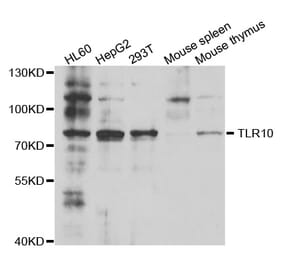
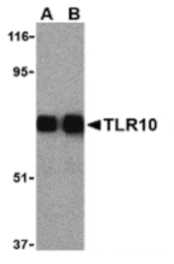
WB
Dilutions
WB: 0.5 µg/ml - 1 µg/ml
Reactivity
Human
Immunogen
Synthetic peptide corresponding to 14 amino acids within human CD290.
Host
Rabbit
Clonality
Polyclonal
Isotype
IgG
Conjugate

Unconjugated

Concentration
1 mg/ml
Product Form
Liquid
Formulation
Supplied in Phosphate Buffered Saline with 0.02% Sodium Azide.
Storage
Shipped at ambient temperature. Upon delivery aliquot and store at -20°C. When thawed, aliquot the sample as needed. Short term (up to 4 weeks): store at 4°C. Long term: store at -20°C. Avoid freeze / thaw cycles. Storage in frost free freezers is not recommended.
General Notes
Rabbit anti Human CD290 antibody recognizes human CD290, otherwise known as Toll-like receptor 10 (TLR10), a member of the Toll-like receptor family principally expressed in peripheral B lymphocytes and plasmacytoid dendritic cells.CD290 has been shown to interact with MyD88 adaptor protein, and is thought to play a role in the activation of signalling cascades linking the innate and adaptive immune response to pathogens.
Synonyms
CD290, Toll-like receptor 10
Disclaimer
This product is for research use only. It is not intended for diagnostic or therapeutic use.

Alternative products to Anti-TLR10 Antibody (A283967)

Proteins predicted to interact with TLR10

Predicted protein interactions based upon String database. Revelancy score correlates with probability of interaction.
99.2% Relevancy Score
98.9% Relevancy Score
96.4% Relevancy Score
95% Relevancy Score
77.9% Relevancy Score
72.6% Relevancy Score
70.6% Relevancy Score
67.2% Relevancy Score
65.4% Relevancy Score