
HRP
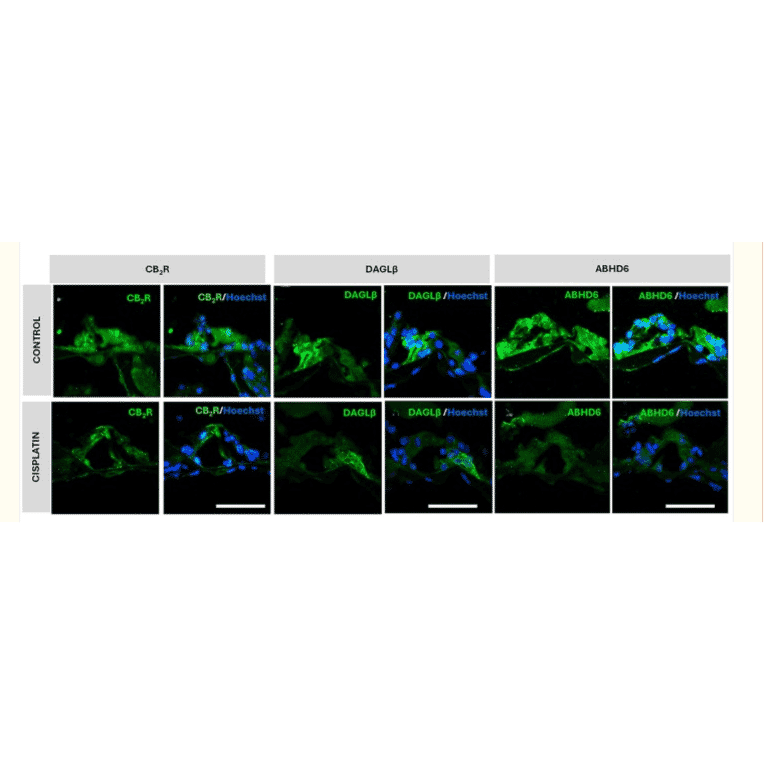
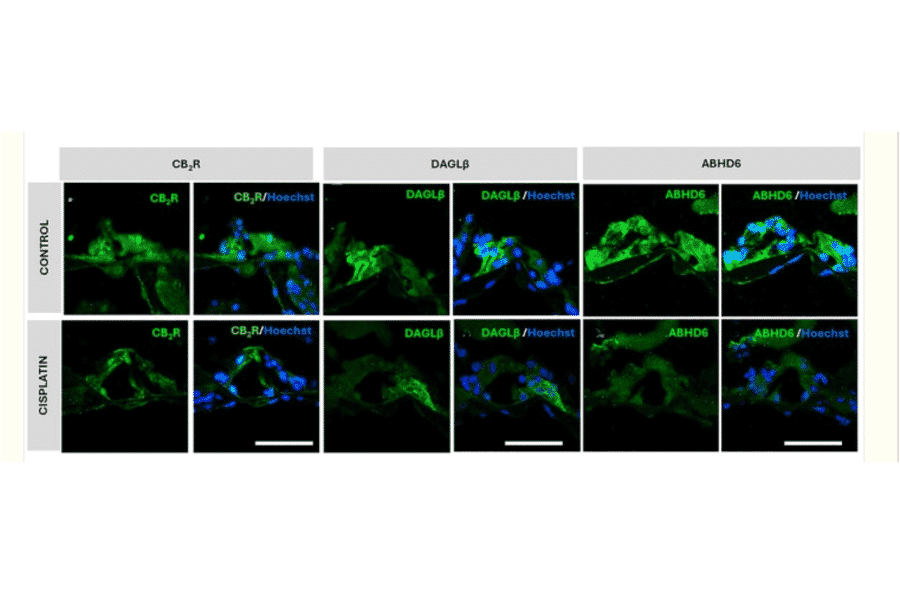
Cisplatin-induced ototoxicity is a detrimental side effect of chemotherapy leading to hearing loss, for which no treatments are currently available. Despite the growing recognition of the endocannabinoid (eCB) system (ECS) as a significant contributor to different physiological and pathological processes, its role in hearing remains poorly investigated. To fill this knowledge gap, we performed a molecular profiling of the ECS in auditory hair cell (HC)-like UB/OC1 cells derived from the mouse organ of Corti (OC), demonstrating the presence of the main eCBs-binding receptors and metabolic enzymes along with the major eCBs (N-arachidonoylethanolamine, AEA, and 2-arachidonoylglycerol, 2-AG) and additional eCB-like compounds. Subsequently, we established an in vitro model of cisplatin-induced ototoxicity, which was characterized by the downregulation of the HC marker myosin 7a (Myo 7a), and activation of nuclear factor kappa-light-chain-enhancer of activated B-cells (NF-?B) associated with caspase-3-mediated cell death. In this model, we observed a downregulation of cannabinoid receptor 2 (CB2R), diacylglycerol lipase ß (DAGLß), and a/ß hydrolase domain-containing protein 6 (ABHD6), indicating a perturbation of the 2-AG metabolic pathway. Furthermore, we validated the observed in vitro alterations in the OC of an in vivo model of cisplatin-induced ototoxicity, thereby strengthening the physiological relevance of our findings. Finally, we demonstrated that pharmacological blockade of CB2R through SR144528 mitigates cisplatin-induced HC damage via inhibition of caspase-3 cleavage in UB/OC1 HC-like cells, thereby providing novel mechanistic insights into the role of CB2R in ototoxicity. Overall, our study demonstrates the involvement of selective elements of the ECS in cisplatin-induced ototoxicity, hence identifying novel potential biomolecular targets for chemotherapy-related side effects.