
Unconjugated
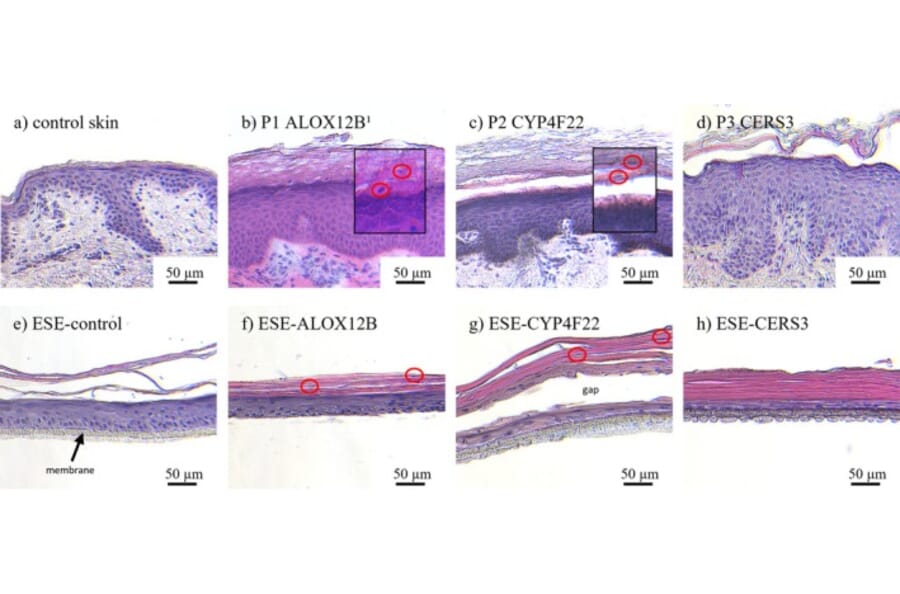
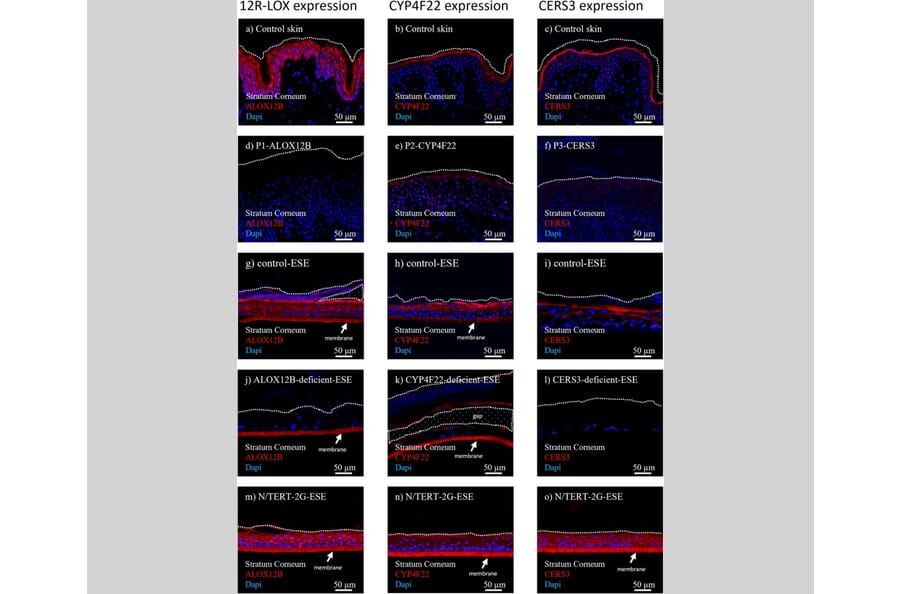
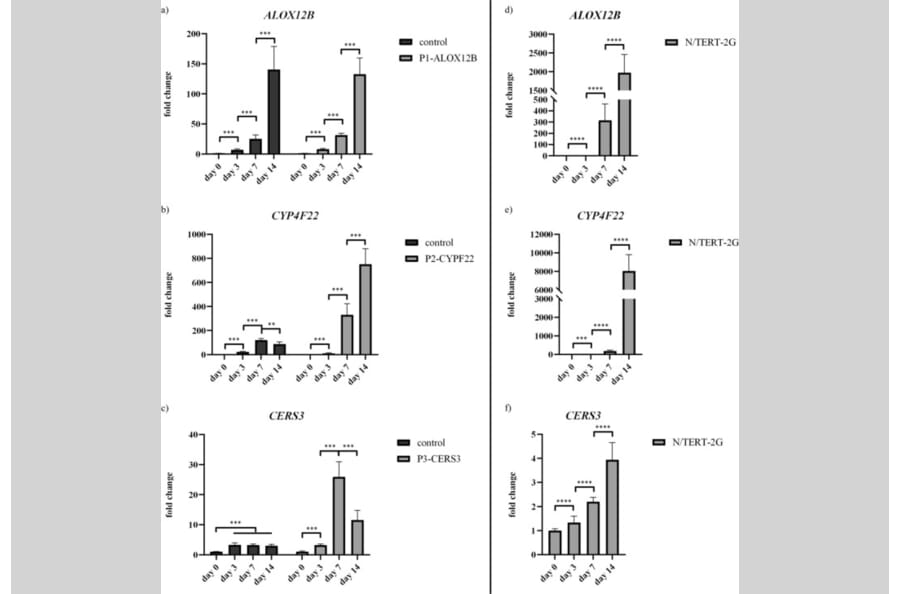
Autosomal recessive nonsyndromic epidermal differentiation disorders (AR-nEDDs), also known as autosomal recessive congenital ichthyosis (ARCI), are rare genetic skin diseases that lack curative treatments and can only be managed symptomatically. Their study is hampered by the limited availability of biological samples and donor tissues. Artificial skin models offer a valuable alternative for experimental research. Here, we generated epidermal skin equivalents (ESE) using primary keratinocytes from patients with AR-nEDDs carrying pathogenic variants in ALOX12B, CYP4F22, and CERS3, as well as immortalized N/TERT-2G cells. Whereas primary cells undergo senescence, N/TERT-2G cells offer a promising alternative to overcome this limitation. Histological staining and qPCR were applied to assess key epidermal proteins and AR-nEDD-related gene expression in patient- and control-derived models. Patient-derived ESE reproduced the major histopathological features and protein expression patterns characteristic of AR-nEDDs. In contrast, N/TERT-2G-based models showed earlier expression of 12R-LOX, CYP4F22, and CERS3 proteins in epidermal layers compared to healthy donor equivalents. These findings suggest that N/TERT-2G cells represent a reproducible platform for future gene-editing approaches of modelling epidermal differentiation disorders. However, as they do not inherently carry pathogenic variants, they are particularly suitable for gene-editing approaches such as CRISPR/Cas9-mediated disease modelling. Conversely, patient-derived keratinocyte models remain indispensable for validating disease mechanisms and evaluating therapeutic strategies.