
| Sample Type | n | Range | Average |
|---|---|---|---|
| Serum | 5 | 80% - 102% | 91% |
| EDTA Plasma | 5 | 81% - 99% | 90% |
| Heparin Plasma | 5 | 80% - 89% | 84% |
| Sample Type | 1:2 | 1:4 | 1:8 | 1:16 |
|---|---|---|---|---|
| Serum (n=5) | 87-91% | 87-107% | 74-101% | 92-97% |
| EDTA Plasma (n=5) | 90-105% | 84-101% | 90-101% | 79-108% |
| Heparin Plasma (n=5) | 84-95% | 92-105% | 82-105% | 89-91% |
| Item | Quantity | Storage |
|---|---|---|
| Pre-Coated 96 Well Microplate | 12 x 8 Well Strips | -20°C |
| Lyopholized Standard | 2 Vials | -20°C |
| Detection Solution A | 70μl | -20°C |
| Detection Solution B | 120µl | -20°C |
| Wash Buffer (30X) | 20ml | +4°C |
| Sample Dilution Buffer | 45ml | -20°C |
| TMB Substrate | 9ml | +4°C |
| Stop Solution | 6ml | +4°C |
| Plate Sealers | 5 Adhesive Strips | - |
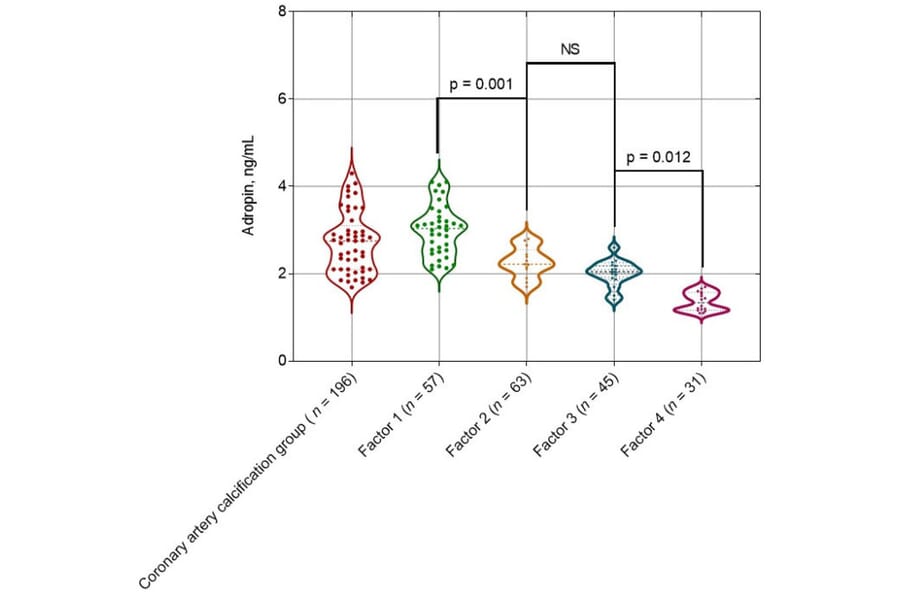
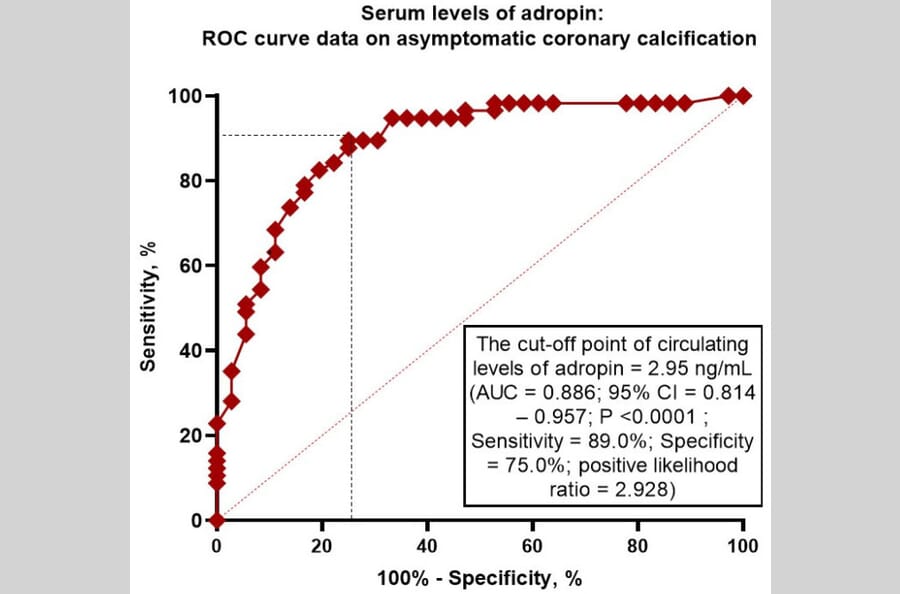
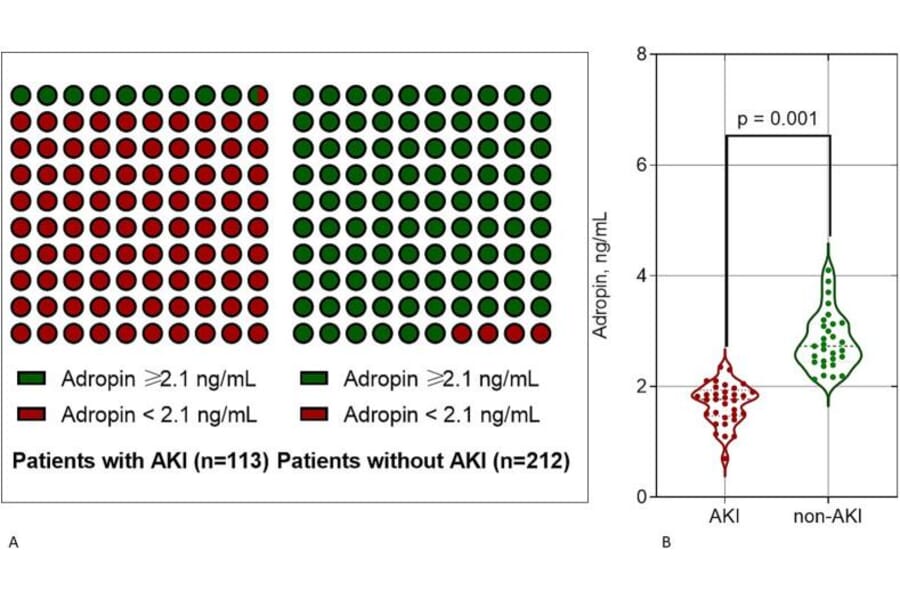
Early stages of chronic kidney disease (CKD) are closely associated with vascular remodeling and coronary artery calcification. The aim of this study is to determine whether adropin is associated with asymptomatic coronary calcification in patients in the early stages of CKD. This study enrolled 337 individuals fulfilling the inclusion criteria of the early stages of CKD (G1-2, A1-3) and divided them into two subgroups with (n = 196) and without (n = 141) asymptomatic coronary artery calcification. Native coronary multi-detector computed tomography angiography was conducted to determine coronary artery calcification, which was stratified into four grades according to the Agatston method. Serum levels of adropin were measured by ELISA. The patients with known asymptomatic coronary artery calcification had significantly lower levels of adropin than those without this condition. The levels of adropin in individuals with mild (130-199 HU), moderate (200-299 HU), severe (300-399 HU) and very severe (=400 HU) calcification were 3.13 (95% CI = 1.92-4.21) ng/mL, 2.3 (95% CI = 1.45-3.6) ng/mL, 2.1 (95% CI = 1.22-3.25) ng/mL and 1.26 (95% CI = 1.13-1.98) ng/mL, respectively. In multivariate logistic regression low adropin (<2.95 ng/mL), a presence of hypertension, type 2 diabetes mellitus (T2DM) exerted their independent potencies to predict asymptomatic coronary calcification. Moreover, adropin demonstrated better discriminative potency than concomitant hypertension and T2DM. Conclusions: Low levels of circulating adropin significantly predicted a risk of coronary artery calcification in patients in the early stages of CKD.
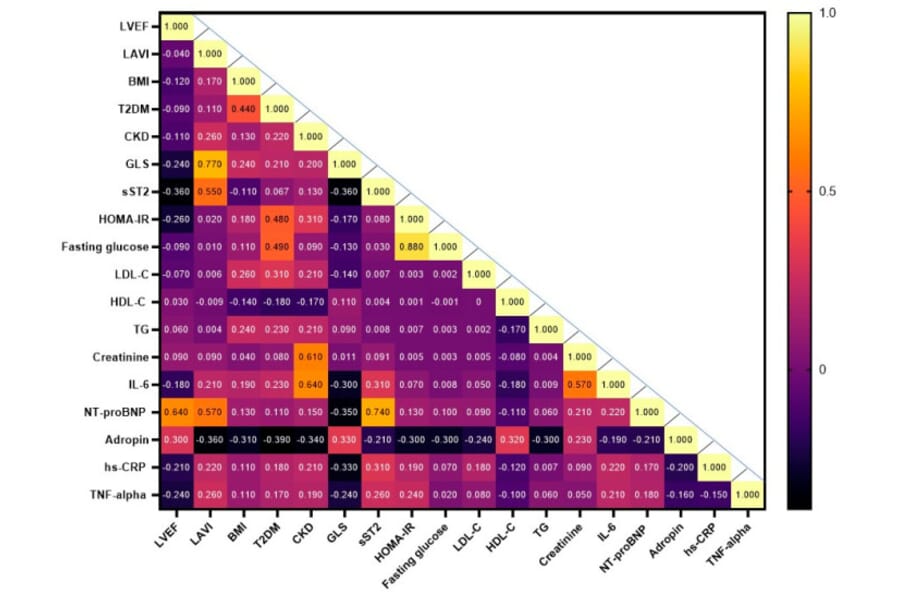
Background: Atrial fibrillation (AF) is common complication of heart failure with preserved ejection fraction (HFpEF) that sufficiently intervenes in the prognosis. The aim of the study is a) to investigate the possible discriminative value of adropin for newly onset AF in patients with HFpEF without a previous history of AF and who are being treated in accordance with conventional guideline and b) to compare it with predictive potencies of conventionally used predictors.
Methods: A total of 953 patients with HFpEF who had sinus rhythm on ECG were enrolled in the study. The course of the observation was 3 years. Echocardiography and assessment of conventional hematological, biochemical parameters and biomarker assay including N-terminal brain natriuretic pro-peptide (NT-proBNP), high-sensitivity cardiac troponin T, tumor necrosis factor-alpha, high-sensitivity C-reactive protein (hs-CRP), galectin-3, interleukin-6, soluble suppressor tumorigenisity-2 (sST2) and adropin, were performed at baseline.
Results: Incident atrial fibrillation was found in 172 patients with HFpEF, whereas 781 had sinus rhythm. In unadjusted rough Cox regression model, age = 75 years, type 2 diabetes mellitus, chronic kidney disease (CKD) stages 1-3, left atrial volume index (LAVI) = 40 mL/m2, NT-proBNP = 1440 pmol/mL, hs-CRP = 5.40 mg/L, adropin = 2.95 ng/mL, sST2 = 15.5 ng/mL were identified as the predictors for new onset AF in HFpEF patients. After adjusting for age = 75 years, a presence of type 2 diabetes mellitus and CKD stages 1-3, the levels of NT-proBNP = 1440 pmol/mL and adropin = 2.95 ng/mL were independent predictors of new onset AF in patients HFpEF. We also found that discriminative value of adropin was superior to NT-proBNP, while adding adropin to NT-proBNP did not improve predictive information of adropin alone.
Conclusions: adropin = 2.95 ng/mL presented more predictive information than NT-proBNP = 1440 pmol/mL alone for new cases of AF in symptomatic patients with HFpEF, whereas the combination of both biomarkers did not improve the predictive ability of adropin alone.