
| Sample Type | n | Range | Average |
|---|---|---|---|
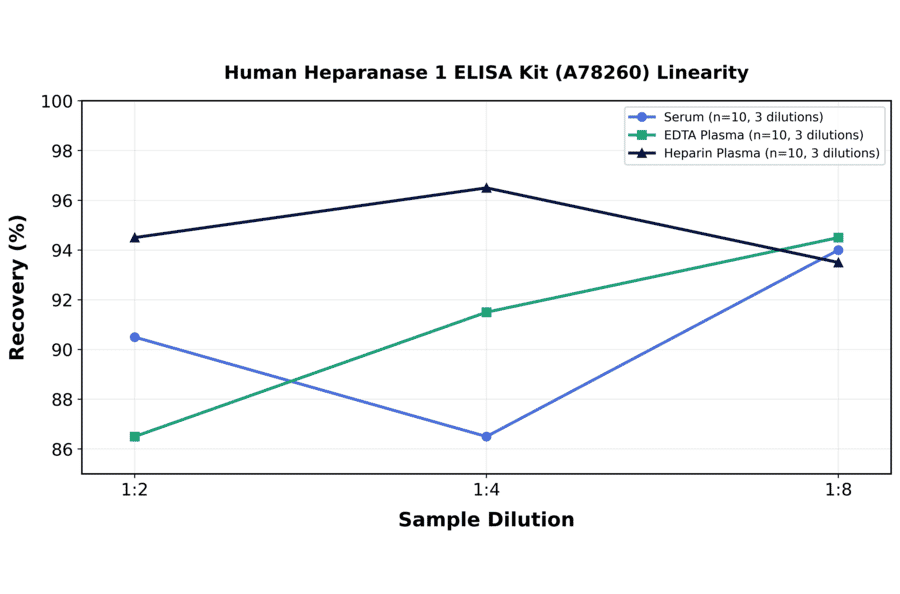
| Serum | 10 | 85% - 99% | 94% |
| EDTA Plasma | 10 | 89% - 99% | 95% |
| Heparin Plasma | 10 | 89% - 103% | 98% |
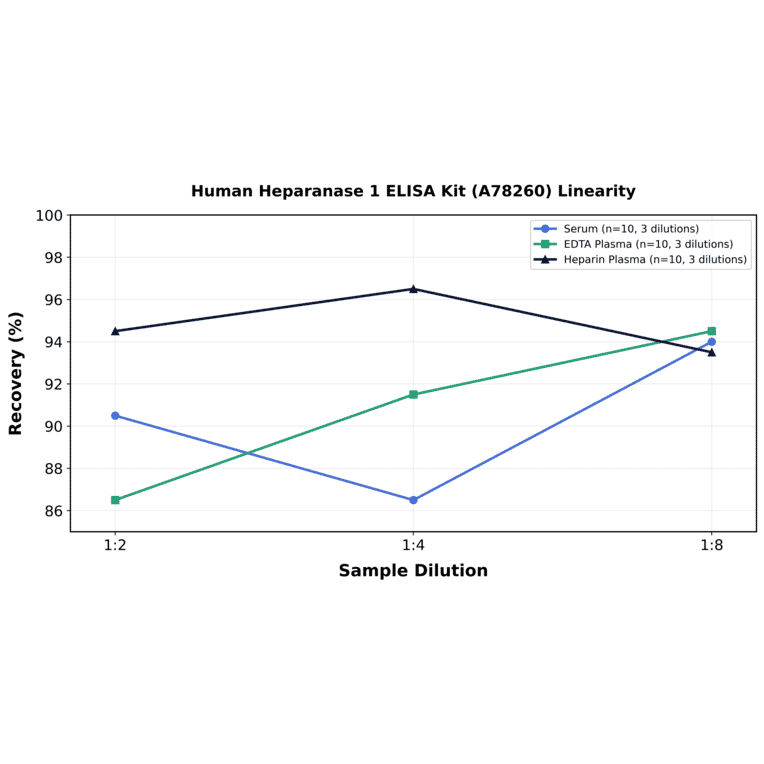
| Sample Type | n | 1:2 | 1:4 | 1:8 |
|---|---|---|---|---|
| Serum | 10 | 82-99% | 80-93% | 88-100% |
| EDTA Plasma | 10 | 81-92% | 84-99% | 86-103% |
| Heparin Plasma | 10 | 86-103% | 94-99% | 88-99% |
| Item | Quantity | Storage |
|---|---|---|
| Pre-Coated 96 Well Microplate | 12 x 8 Well Strips | +4°C |
| Lyopholized Standard | 2 Vials | +4°C |
| Sample Dilution Buffer | 20ml | +4°C |
| Biotinylated Detection Antibody | 120µl | +4°C |
| Antibody Dilution Buffer | 10ml | +4°C |
| HRP-Streptavidin Conjugate | 120µl | +4°C |
| SABC Dilution Buffer | 10ml | +4°C |
| TMB Substrate | 10ml | +4°C |
| Stop Solution | 10ml | +4°C |
| Wash Buffer (25X) | 30ml | +4°C |
| Plate Sealers | 5 Adhesive Strips | - |
| Foil Pouch | 1 Zip-Sealed Pouch | - |
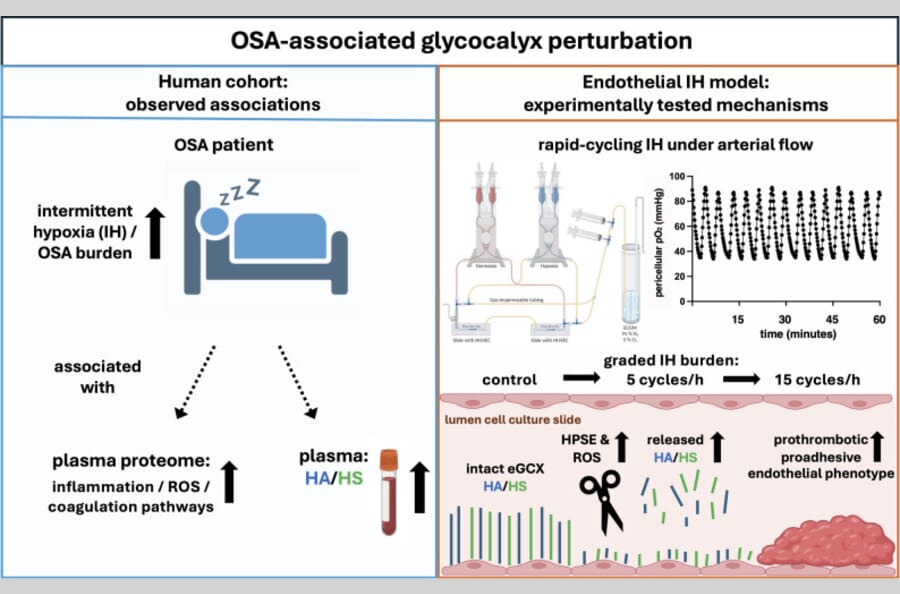
Background: Obstructive sleep apnea (OSA) is associated with cardiovascular disease. The endothelial glycocalyx (eGCX) is a shear-sensitive intravascular barrier. The relevance of OSA and intermittent hypoxia (IH) for eGCX perturbation and cardiovascular disease in humans remains unclear.
Methods: In a prospectively recruited observational cohort with cross-sectional biomarker analysis in men (n = 60), polysomnography quantified apnea-hypopnea index (AHI), oxygen desaturation index (ODI), and hypoxic burden (HB). Using single-time-point plasma sampling, eGCX glycosaminoglycans hyaluronan (HA) and heparan sulfate (HS) and the proteoglycan syndecan-1 (SDC-1) were related to OSA severity and repetitive hypoxemia, including multivariable adjustment for cardiometabolic, inflammatory, and renal determinants. Plasma proteomics defined pathways associated with OSA and HA/HS. Shear-matured primary human endothelial cells were exposed to OSA-characteristic IH cycles under arterial flow to assess eGCX structure, oxidative stress, nitric oxide (NO) signaling, thromboinflammatory status, and antioxidant treatment with N-acetylcysteine.
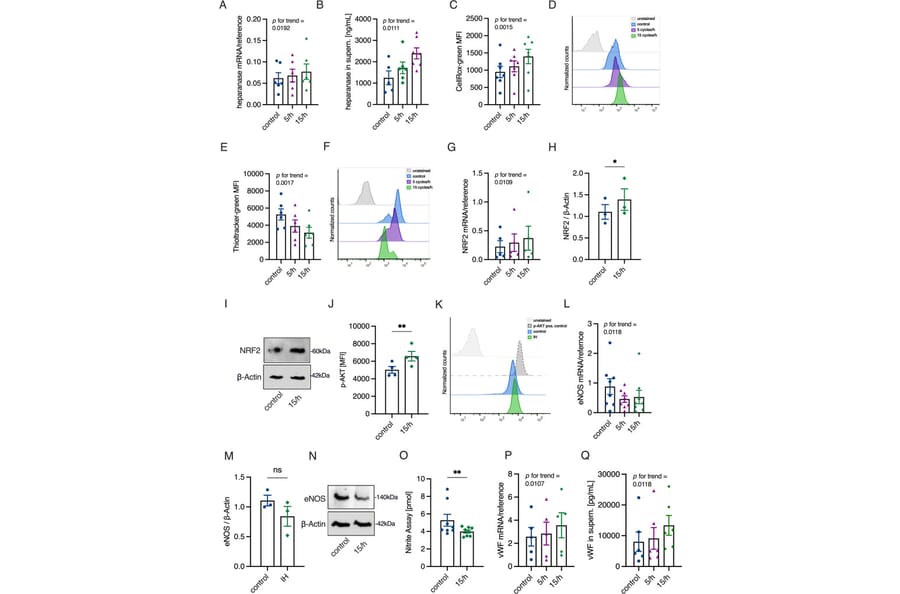
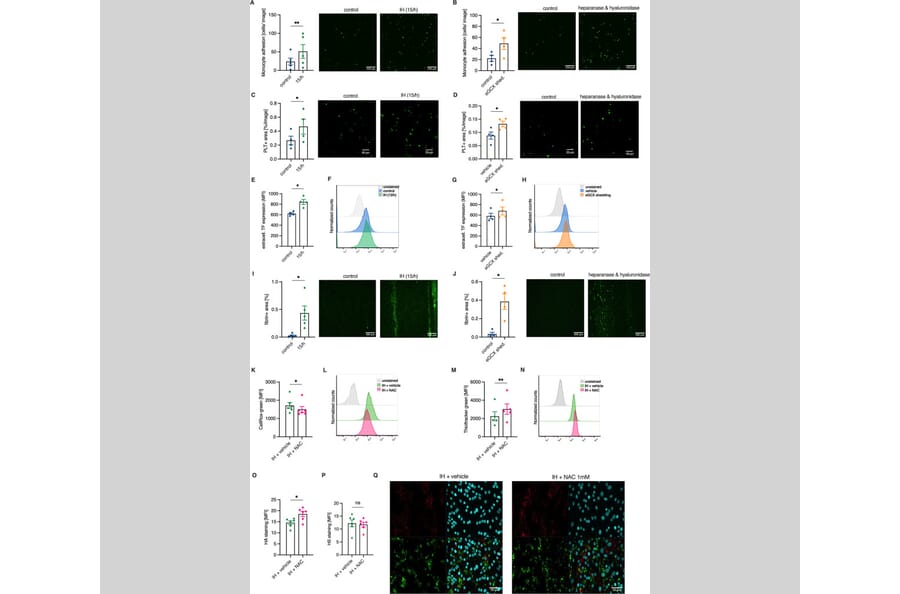
Results: Plasma HA and HS were higher in OSA than in non-OSA individuals and increased stepwise with disease severity, tracking AHI, ODI, and HB. These associations persisted in multivariable analyses adjusting for age, BMI, hypertension, hs-CRP, fasting glucose, and eGFR. Plasma SDC-1 did not differ between groups and remained non-associated in adjusted analyses. Proteomics revealed enrichment of inflammatory, coagulation, and oxidative stress-related pathways that strengthened with increasing OSA burden and higher HA/HS levels. Experimentally, IH caused loss of endothelial surface HA/HS with increased shedding, increased reactive oxygen species, reduced redox capacity, impaired NOS3/eNOS signaling and reduced NO bioavailability. IH or enzymatic eGCX digestion each enhanced monocyte and platelet adhesion, tissue factor expression, and fibrin deposition under shear, while N-acetylcysteine attenuated oxidative stress and partially restored surface HA expression.
Conclusions: Integrated patient and IH-model data show that OSA severity and repetitive hypoxemia are associated with circulating markers consistent with eGCX perturbation, while the endothelial IH model supports induction of oxidative-inflammatory stress and a proadhesive, prothrombotic phenotype by intermittent hypoxia. Together, circulating HA and HS emerge as candidate biomarkers associated with OSA-related eGCX perturbation, warranting further evaluation in longitudinal and interventional studies of eGCX-stabilizing adjunct therapies. These findings derive from an all-male cohort and require validation in women and more diverse populations.