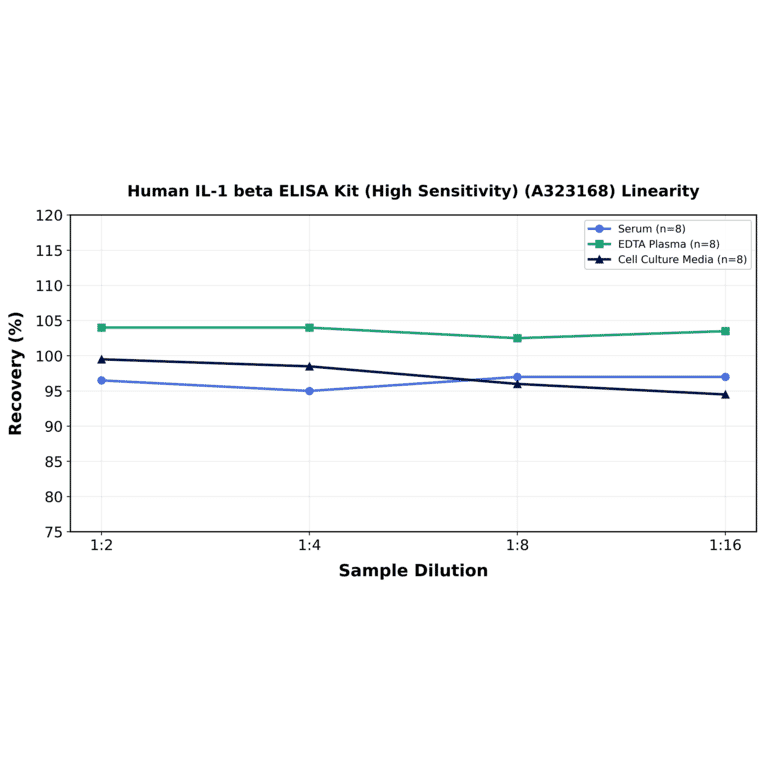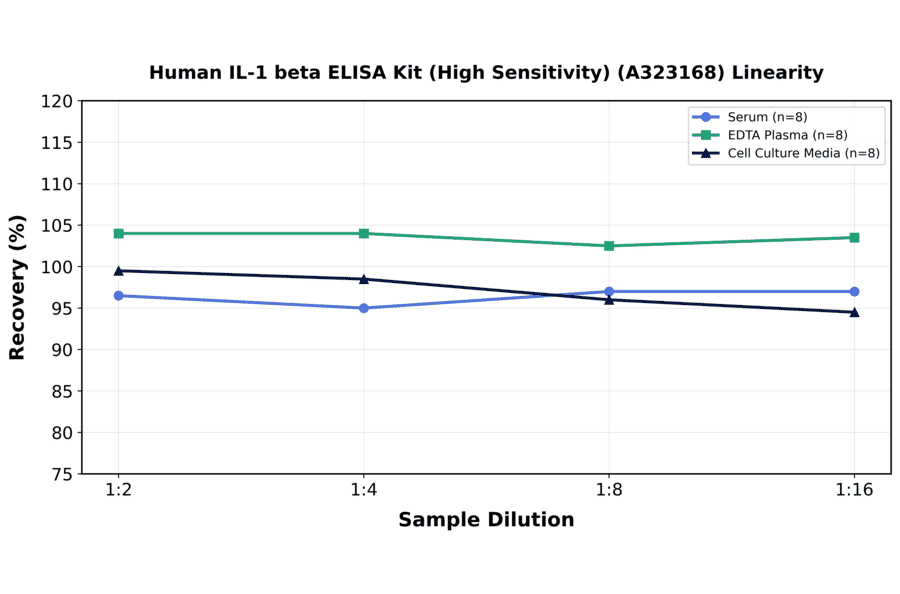

| Sample Type | n | Range | Average |
|---|---|---|---|
| Serum | 8 | 86 - 99% | 91% |
| EDTA Plasma | 8 | 92 - 109% | 100% |
| Cell Culture Media | 8 | 91 - 105% | 97% |
Skin barrier dysfunction and pruritus, central to inflammatory dermatoses, are closely associated with impaired epidermal structural proteins and persistent inflammatory signaling. To address these pathological features, this study aimed to explore the potential anti-inflammatory, barrier-restorative, and anti-pruritic effects of DualPep-ATO, a human-derived cell-penetrating peptide (CPP), using integrated in vitro, ex vivo, and exploratory clinical approaches. Allergic and inflammatory responses were evaluated in rat basophilic leukemia cells and lipopolysaccharide-stimulated macrophages, while barrier-repair properties were partially assessed in ultraviolet B (UVB)-irradiated human epidermal keratinocytes and ex vivo human skin tissue. Mechanistically, DualPep-ATO exhibited no cytotoxicity and successfully suppressed ß-hexosaminidase release, nitric oxide production, and pro-inflammatory cytokine expression. Furthermore, it contributed to mitigating skin barrier damage by restoring key epidermal structural proteins, specifically filaggrin, loricrin, and involucrin. Translating these findings clinically, a four-week topical application of a DualPep-ATO cream in adults with compromised skin significantly decreased transepidermal water loss and itch severity. With high participant satisfaction and no reported adverse events, this peptide may serve as a promising peptide-based topical strategy for inflammatory skin conditions associated with barrier dysfunction and pruritus.