
Human Plexin A4 ELISA Kit (A312006) has been discontinued and is no longer available.
View all available products.
| Item | Quantity | Storage |
|---|---|---|
| Pre-Coated 96 Well Microplate | 12 x 8 Well Strips | +4°C |
| Standard Solution | 500µl | +4°C |
| Standard Diluent | 3ml | +4°C |
| Biotinylated Detection Antibody | 1ml | +4°C |
| Streptavidin-HRP | 6ml | +4°C |
| Wash Buffer (25X) | 20ml | +4°C |
| Substrate Solution A | 6ml | +4°C |
| Substrate Solution B | 6ml | +4°C |
| Stop Solution | 6ml | +4°C |
| Plate Sealers | 5 Adhesive Strips | - |
| Foil Pouch | 1 Zip-Sealed Pouch | - |
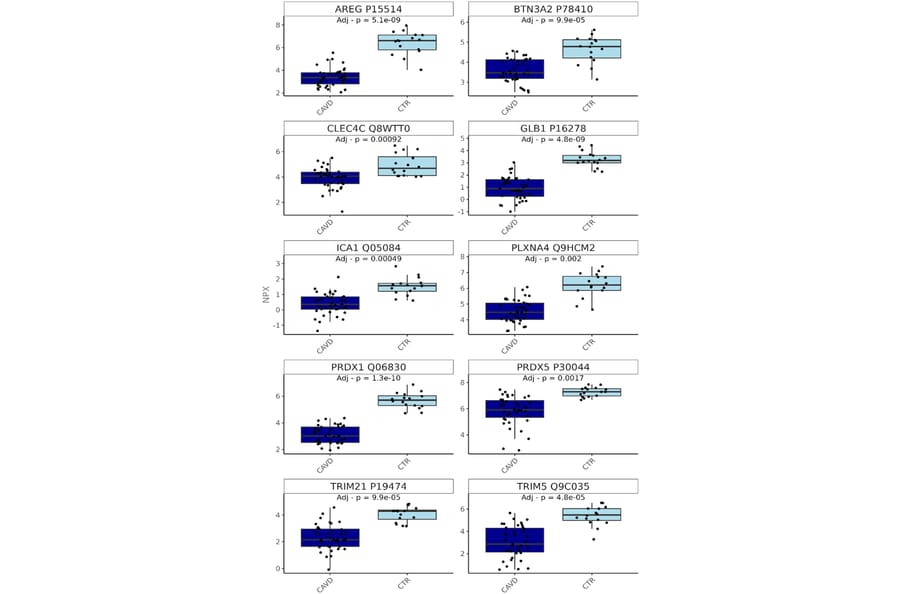
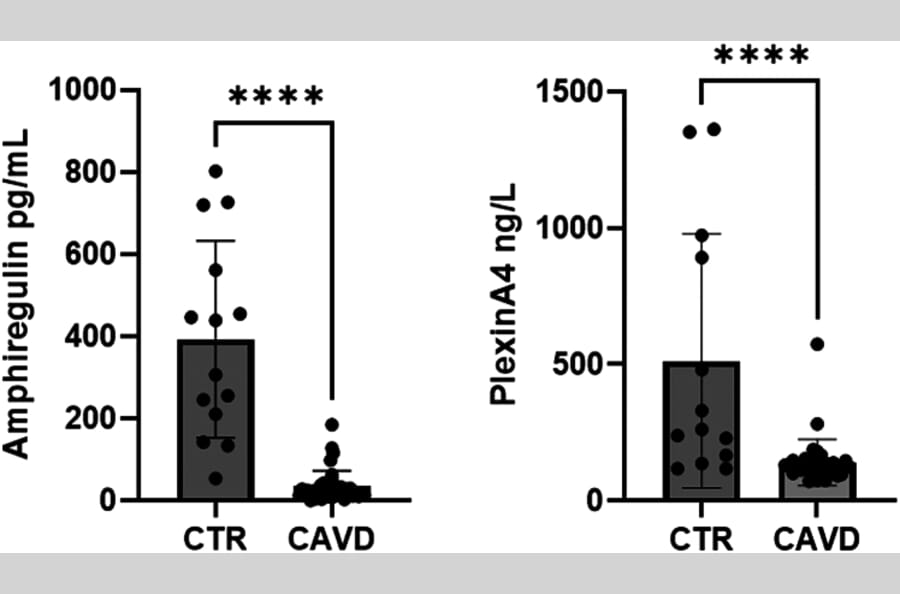
Calcific aortic valve disease (CAVD) is a progressive condition with poor prognosis once symptomatic. The disease's progression is driven by a combination of mechanical stress, lipid infiltration, and immune responses, which involve both innate and adaptive immune systems. To explore the role of immune-related proteins in CAVD, we applied a targeted proteomic approach based on the proximity extension assay technique. Ten proteins were downregulated in patients with CAVD with respect to control subjects, indicating disrupted biological processes such as redox homeostasis, immune response, and cell motility. A protein-protein interaction network revealed connections between these proteins, with notable clusters associated with immune regulation and redox homeostasis. Further analysis identified two distinct patient subgroups, suggesting heterogeneity among patients with CAVD, which could help with patient stratification. The study identified proteins that may serve as candidate biomarkers for early detection of CAVD and emphasizes the role of immune-driven mechanisms in CAVD.