

Unconjugated
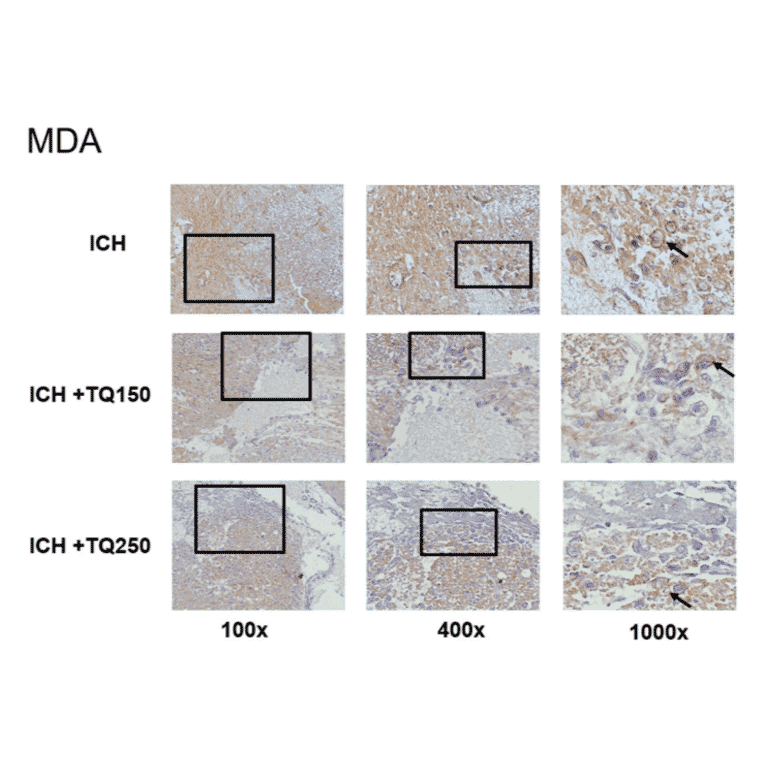
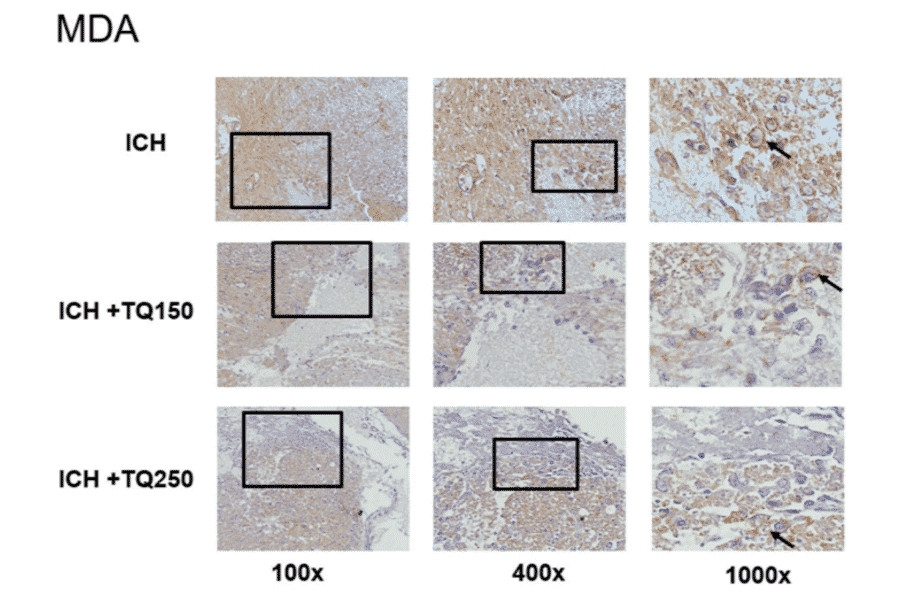
Background/Objectives: Intracerebral hemorrhage (ICH) is a severe subtype of stroke characterized by extensive secondary brain injury driven by oxidative stress, inflammation, and progressive neuronal loss, leading to poor neurological outcomes. Thymoquinone, a bioactive compound derived from Nigella sativa, has demonstrated potent antioxidant and neuroprotective properties, but its integrated effects in hemorrhagic stroke remain insufficiently explored. This study aimed to evaluate the antioxidant and neuroregenerative effects of thymoquinone in a rat model of ICH. Methods: Male Wistar rats with experimentally induced ICH were randomized into untreated controls and two treatment groups receiving thymoquinone (150 mg/kg and 250 mg/kg) for three consecutive days. Oxidative injury and antioxidant responses were assessed using membrane blebbing, malondialdehyde (MDA), superoxide dismutase (SOD) activity, and nuclear factor erythroid 2-related factor 2 (NRF2) expression, while neuroprotection was evaluated by neuronal counts in perihematomal tissue. Results: Thymoquinone treatment significantly reduced membrane blebbing and MDA levels, while markedly increasing SOD activity and NRF2 expression in a dose-dependent manner. These biochemical improvements were accompanied by significant preservation of neuronal morphology and increased neuronal survival, with the 250 mg/kg dose showing the strongest effects. Conclusions: In conclusion, thymoquinone confers robust antioxidant and neuroprotective benefits in experimental ICH and represents a promising candidate for mitigating secondary brain injury following intracerebral hemorrhage.
?-3 polyunsaturated fatty acids (PUFAs) are crucial for brain structure and function, especially docosahexaenoic acid (DHA). However, an excess of DHA may increase lipid peroxidation due to its high degree of unsaturation, particularly in tissues highly susceptible to oxidative stress, such as the brain. Therefore, this study evaluated the effects of 10 weeks of dietary supplementation with fish oil containing 80% DHA on oxidative stress and the modulation of the carbonylated proteome in both the cerebral cortex and cerebellum of male Sprague Dawley rats. The results were compared with those induced by oils with a lower degree of fat unsaturation (fish oil containing 25% DHA and 25% eicosapentaenoic acid, soybean oil containing 50% linoleic acid and coconut oil containing 90% saturated fat). The results demonstrated that fish oil containing 80% DHA significantly increased the ?3/?6 ratio in both the cortex and cerebellum while stimulating antioxidant defense by enhancing the reduced glutathione amount and decreasing the carbonylation of specific proteins, mainly those involved in glycolysis and neurotransmission. The majority of sensitive proteins in both brain regions followed this carbonylation trend (in decreasing order): soybean > EPA/DHA 1:1 > coconut > 80% DHA. The results also indicated that the cerebellum is more responsive than the cortex to changes in the cellular redox environment induced by varying degrees of fat unsaturation. In conclusion, under healthy conditions, dietary supplementation with fish oils containing high DHA levels makes the brain more resilient to potential oxidative insults compared to oils with lower DHA content and a lower degree of fatty acid unsaturation.

![Western Blot - Anti-Malondialdehyde Antibody [11E3] (A304727) - Antibodies.com](https://cdn.antibodies.com/image/catalog/304/A304727_1.png?profile=product_alternative)
![Flow Cytometry - Anti-Malondialdehyde Antibody [6H6] (A304728) - Antibodies.com](https://cdn.antibodies.com/image/catalog/304/A304728_1.png?profile=product_alternative)