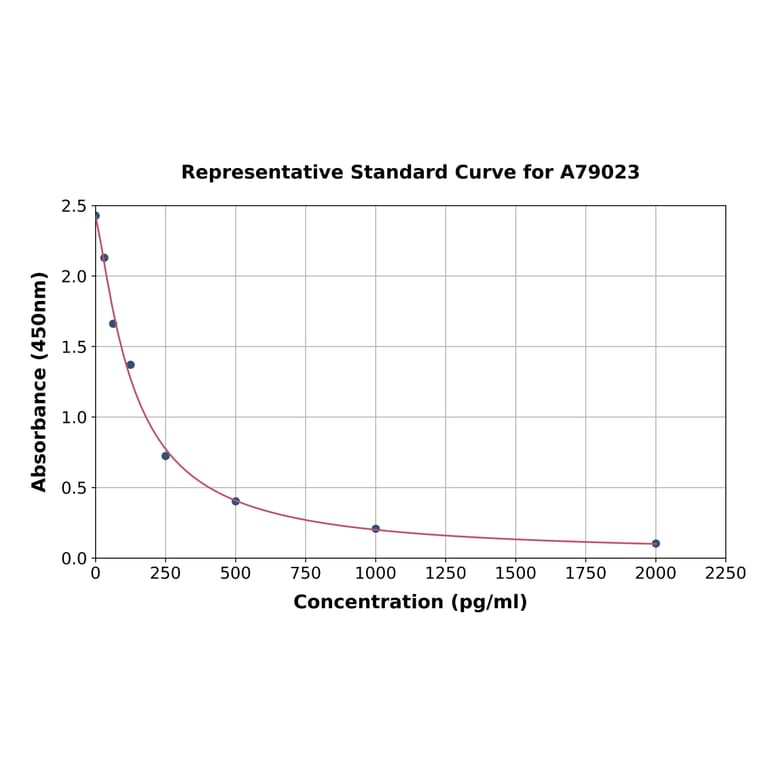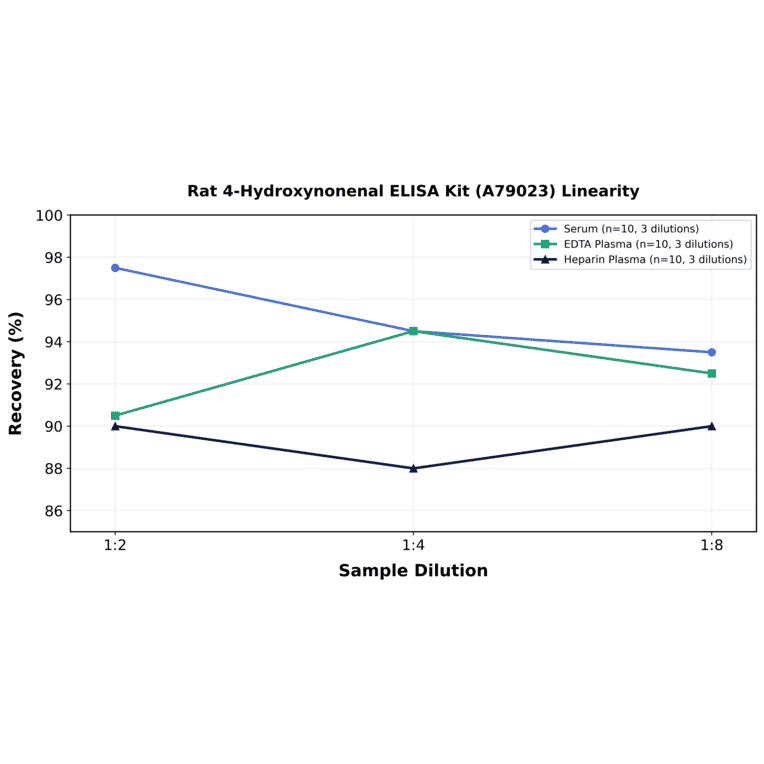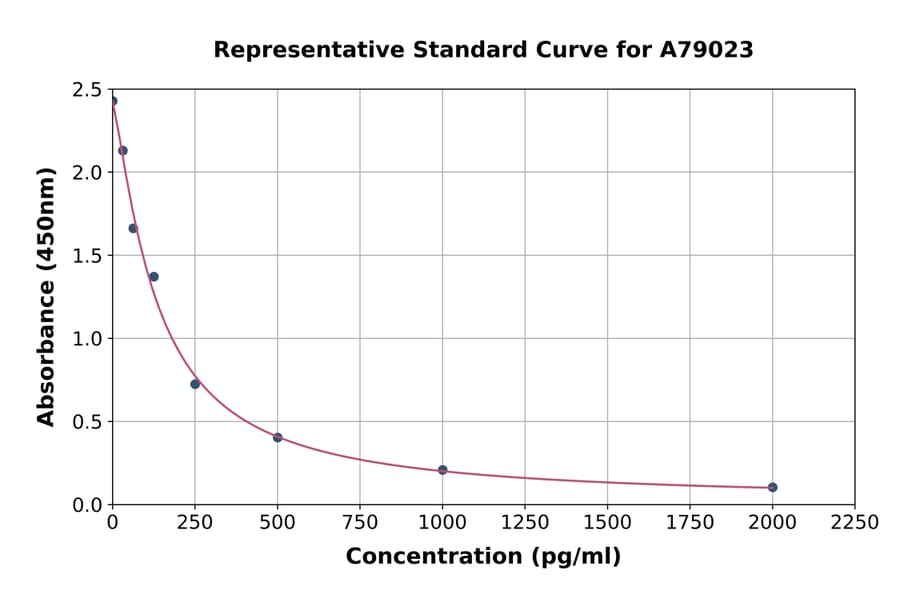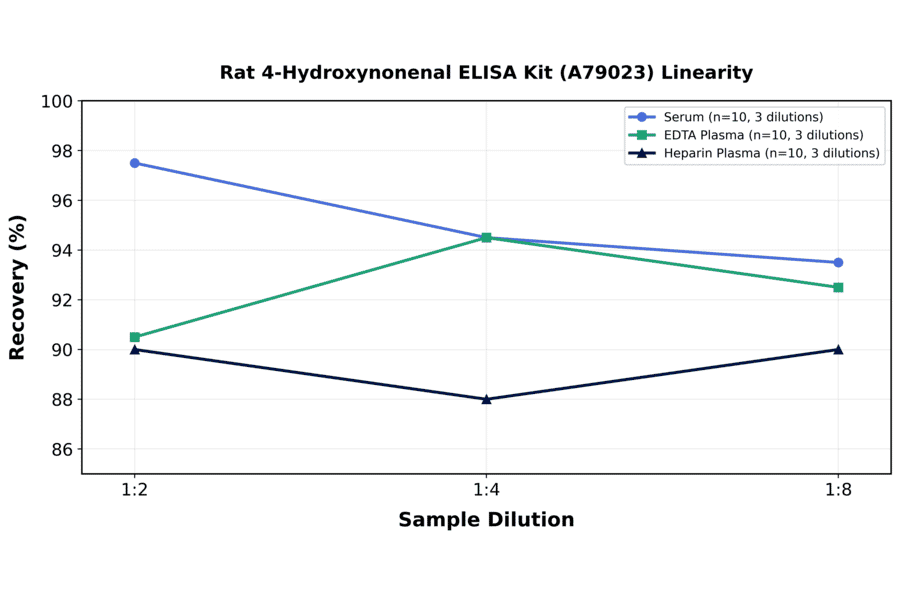

| Sample Type | n | Range | Average |
|---|---|---|---|
| Serum | 10 | 87% - 101% | 94% |
| EDTA Plasma | 10 | 85% - 98% | 92% |
| Heparin Plasma | 10 | 87% - 101% | 97% |
| Sample Type | n | 1:2 | 1:4 | 1:8 |
|---|---|---|---|---|
| Serum | 10 | 90-105% | 87-102% | 88-99% |
| EDTA Plasma | 10 | 82-99% | 88-101% | 85-100% |
| Heparin Plasma | 10 | 81-99% | 82-94% | 80-100% |
| Item | Quantity | Storage |
|---|---|---|
| Pre-Coated 96 Well Microplate | 12 x 8 Well Strips | +4°C |
| Lyopholized Standard | 2 Vials | +4°C |
| Sample Dilution Buffer | 20ml | +4°C |
| Biotinylated Detection Antibody | 60µl | +4°C |
| Antibody Dilution Buffer | 10ml | +4°C |
| HRP-Streptavidin Conjugate | 120µl | +4°C |
| SABC Dilution Buffer | 10ml | +4°C |
| TMB Substrate | 10ml | +4°C |
| Stop Solution | 10ml | +4°C |
| Wash Buffer (25X) | 30ml | +4°C |
| Plate Sealers | 5 Adhesive Strips | - |
| Foil Pouch | 1 Zip-Sealed Pouch | - |
Diabetes increases post-stroke mortality and cognitive impairment (PCSI). We previously demonstrated that iron chelation during the subacute phase enhances cognitive outcomes after stroke in experimental diabetes. Here, we hypothesized that inhibition of ferroptosis, an iron-induced form of cell death, in the post-stroke period would prevent PSCI in diabetic animals. Diabetic male rats underwent sham or 60-min middle cerebral artery occlusion surgery. On Day 3 post-stroke, animals meeting the inclusion criteria (adhesive removal time >35 ?s on Day 3 and either a modified Bederson score =6 on Day 0 or weight loss >10 ?% on Day 1) were randomized to ferroptosis inhibitor UAMC-3203 (2 ?mg/kg) or vehicle treatment for 2 weeks (n ?= ?8-12/group). Sensorimotor/cognitive outcomes were monitored for 8 weeks. As confirmed by MRI, the inclusion criteria predicted successful stroke surgery for over 95 ?% of the animals. Preset inclusion criteria ensured that comparable deficits were present at randomization. There were significant acute neurological deficits. Animals developed episodic and spatial memory deficits after stroke, and UAMC-3203 treatment prevented this decline. All animals showed anxiety-like behavior even at baseline, and this behavior was reversed only in the stroke treatment group. Interestingly, step-through latency in the passive avoidance test showed that stroke does not affect learning in vehicle-treated diabetic animals; however, the latency was lower in the stroke treatment group, suggesting inhibition of ferroptosis impairs aversive learning after stroke. At the molecular level, lipid peroxidation (4-HNE levels) was amplified after stroke, and UAMC-3203 prevented this increase and preserved antioxidant GPX-4 protein levels. Our findings provide evidence that ferroptosis contributes to the development of progressive cognitive decline in memory functions after stroke in diabetes. The prevention of ferroptosis with a third-generation ferroptosis inhibitor is beneficial; however, the adverse effect of treatment on aversive learning warrants further investigation.