
Unconjugated
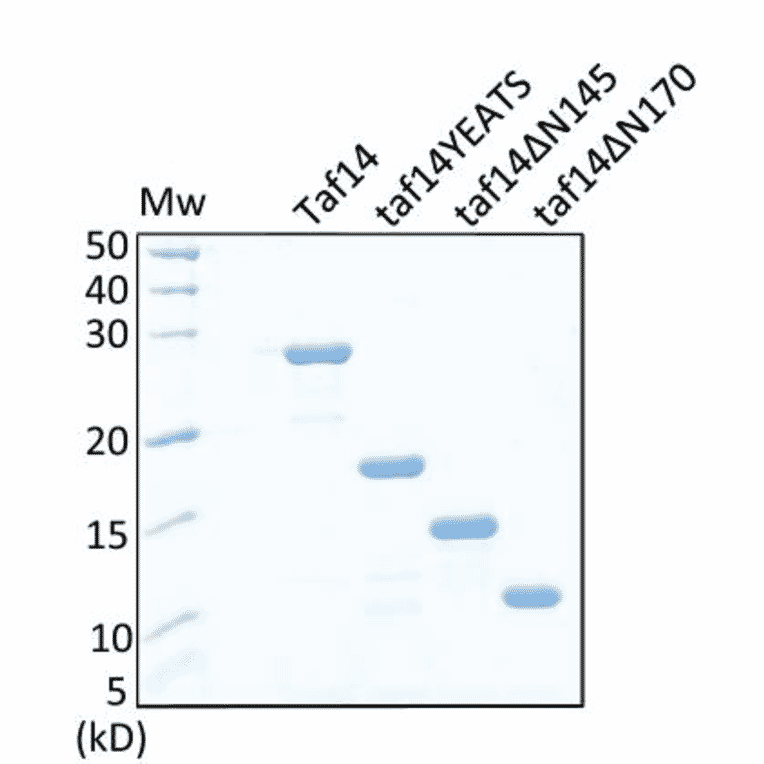
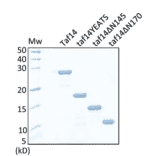
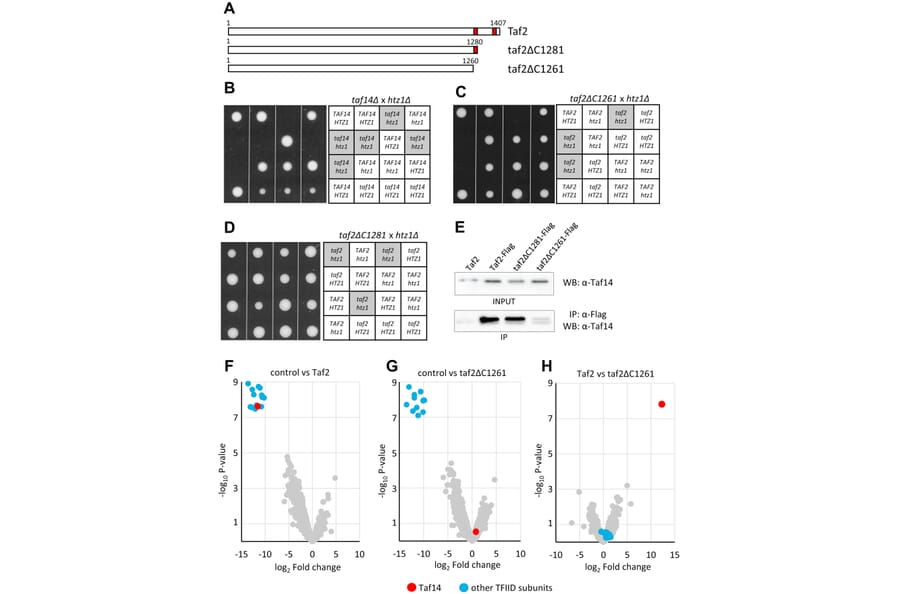
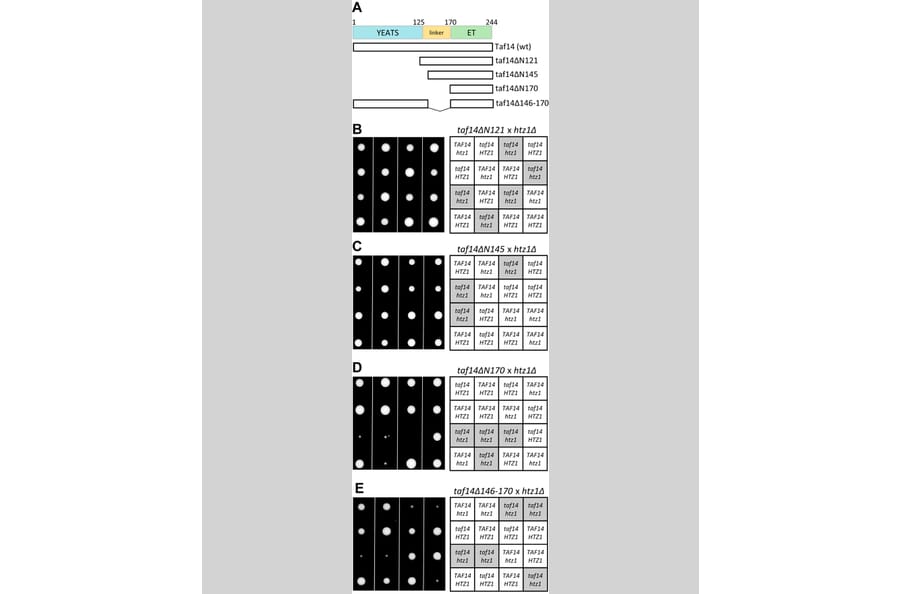
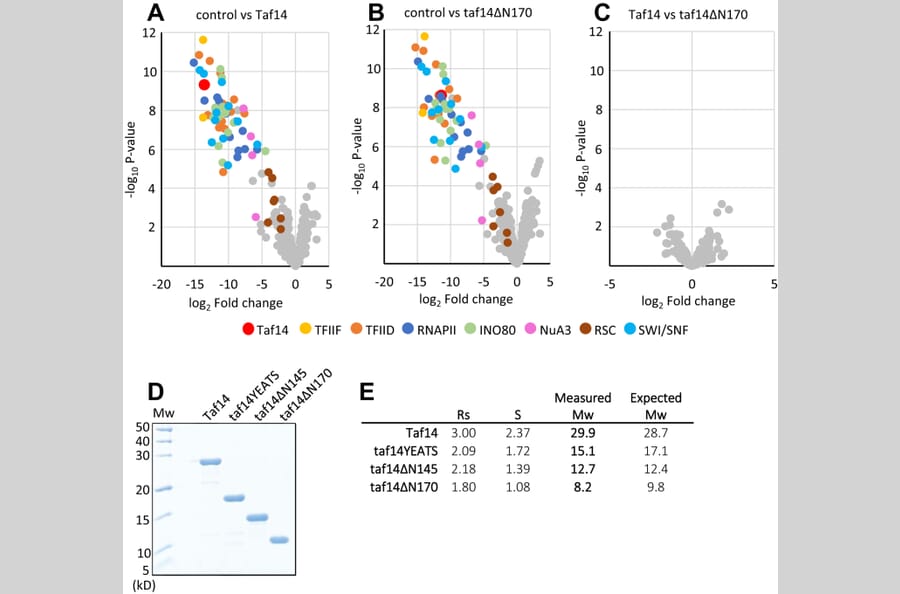
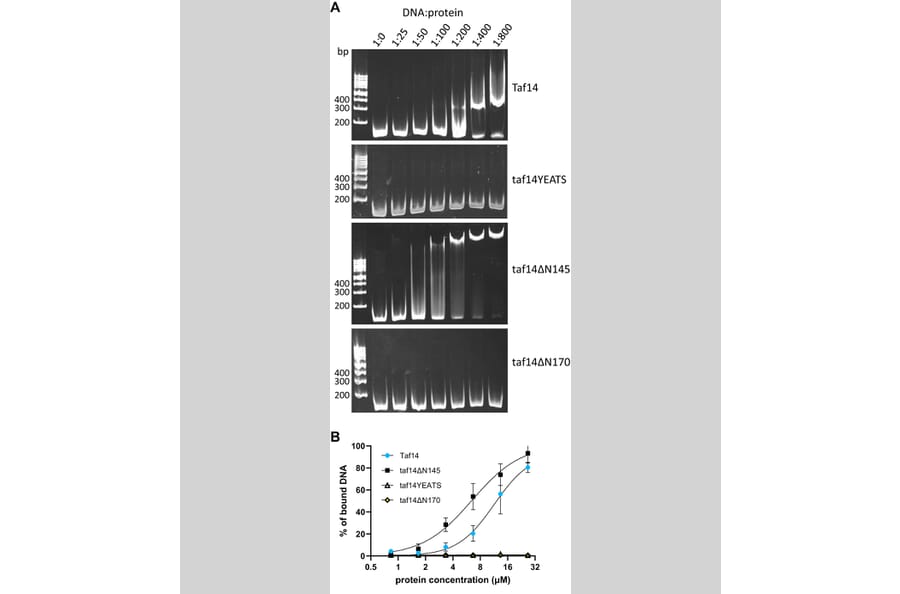
The transcriptional regulator Taf14 is a component of multiple protein complexes involved in transcription initiation and chromatin remodeling in yeast cells. Although Taf14 is not required for cell viability, it becomes essential in conditions where the formation of the transcription preinitiation complex is hampered. The specific role of Taf14 in mediating transcription initiation and preinitiation complex formation is unclear. Here, we explored its role in the general transcription factor IID by mapping Taf14 genetic and proteomic interactions and found that it was needed for the function of the complex if Htz1, the yeast homolog of histone H2A.Z, was absent from chromatin. Dissecting the functional domains of Taf14 revealed that the linker region between the YEATS and ET domains was required for cell viability in the absence of Htz1 protein. We further show that the linker region of Taf14 interacts with DNA. We propose that providing additional DNA binding capacity might be a general role of Taf14 in the recruitment of protein complexes to DNA and chromatin.
Background: The YEATS domain is a highly conserved protein structure that interacts with acetylated and crotonylated lysine residues in N-terminal tails of histones. The budding yeast genome encodes three YEATS domain proteins (Taf14, Yaf9, and Sas5) that are all the subunits of different complexes involved in histone acetylation, gene transcription, and chromatin remodeling. As the strains deficient in all these three genes are inviable, it has been proposed that the YEATS domain is essential in yeast. In this study we investigate in more detail the requirement of YEATS domain proteins for yeast survival and the possible roles of Taf14 YEATS domain in the regulation of gene transcription.
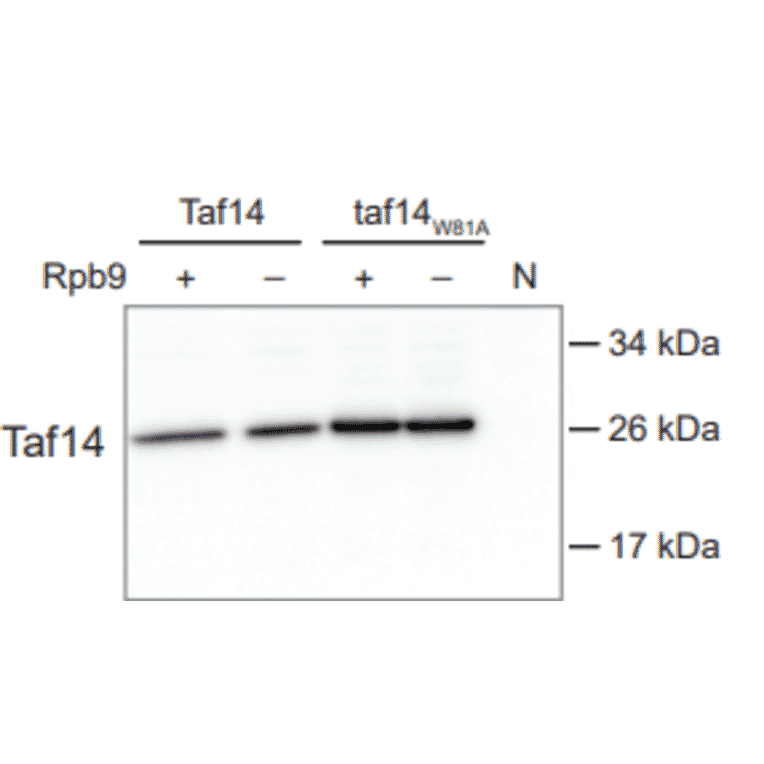
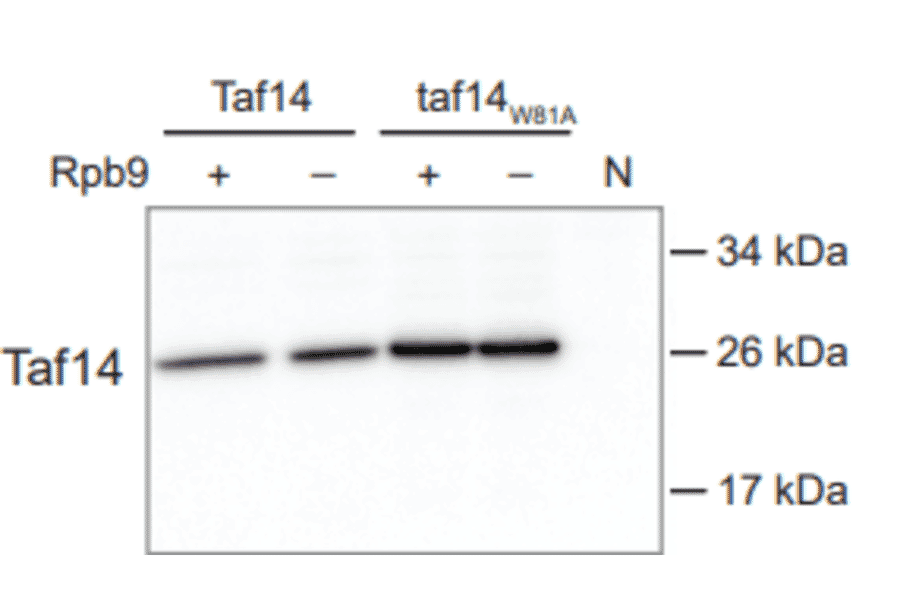
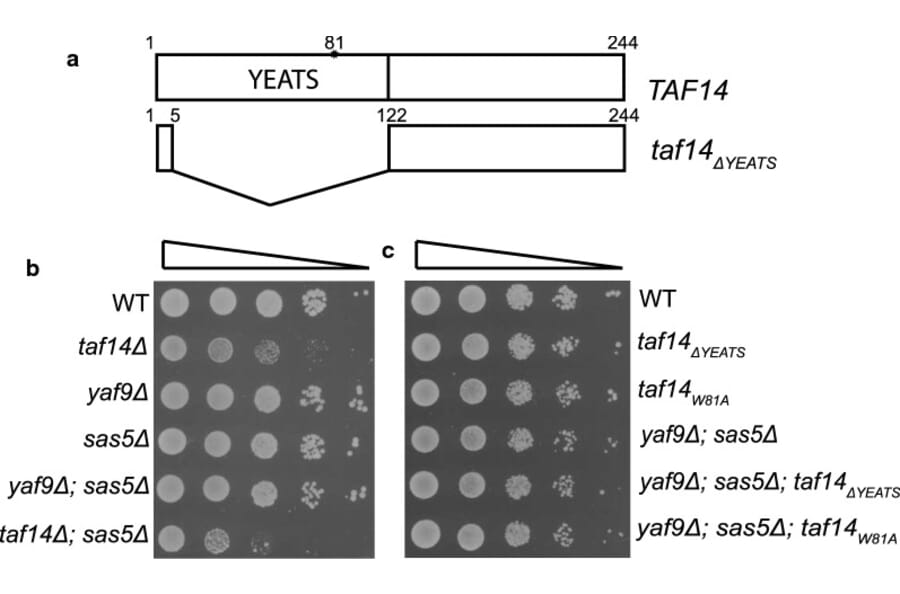
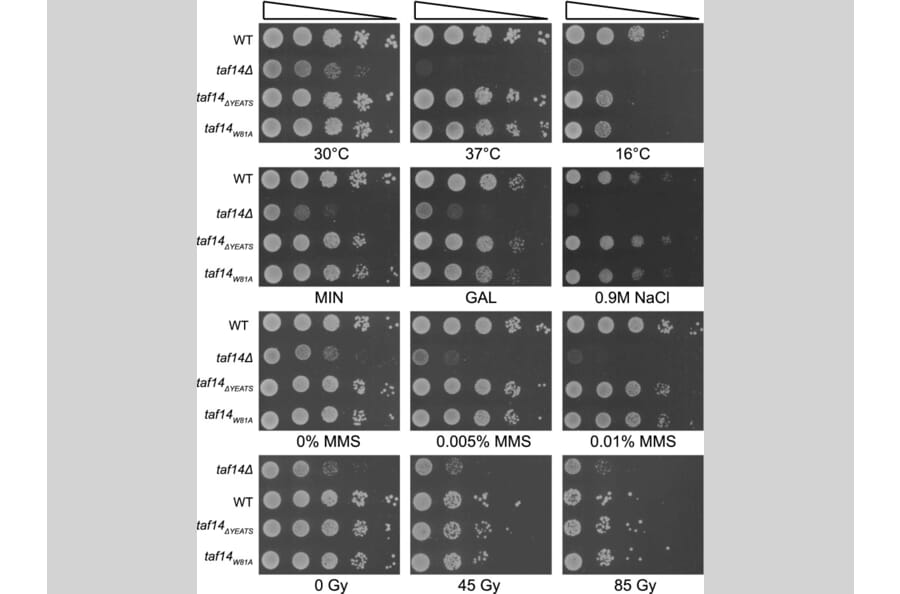
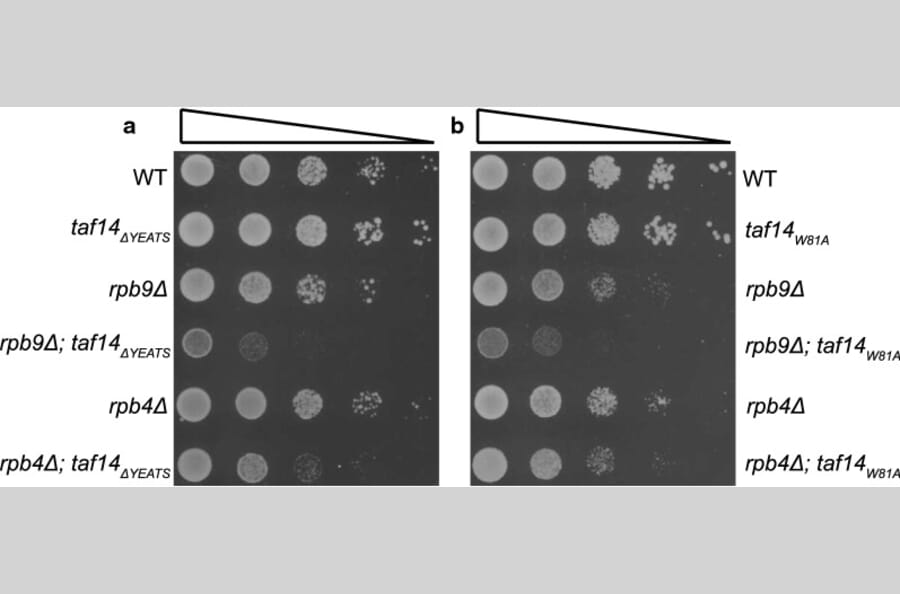
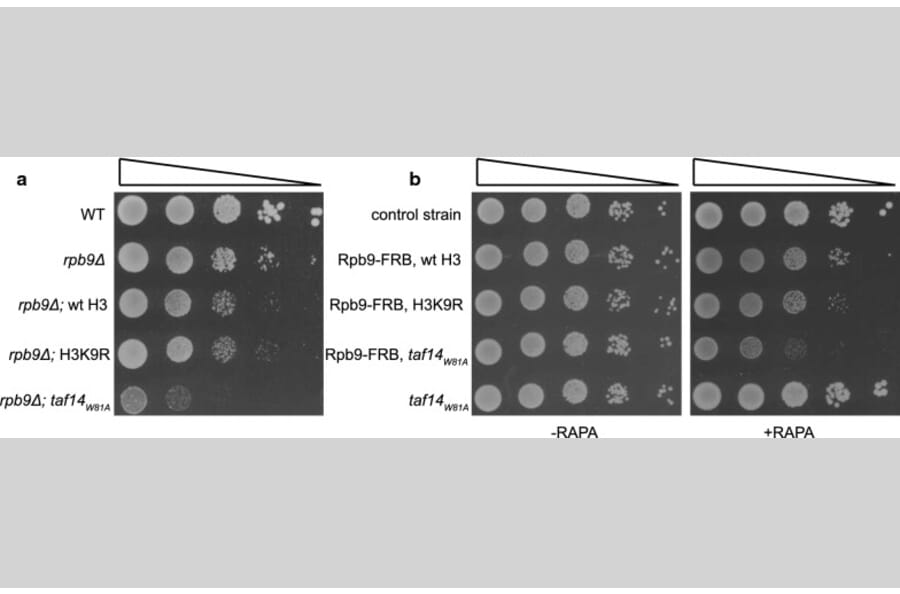
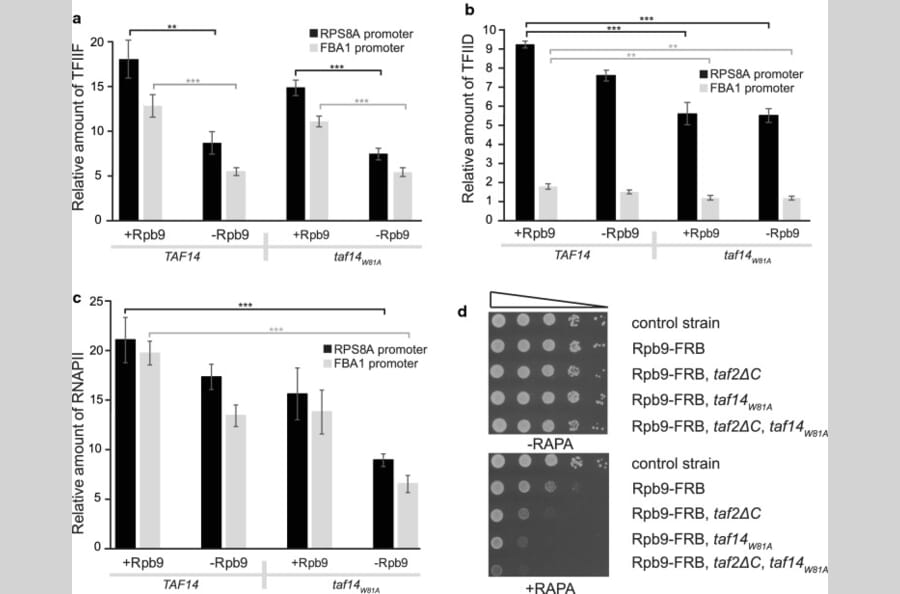
Results: We found that YEATS domains are not essential for the survival of Saccharomyces cerevisiae cells. Although the full deletion of all YEATS proteins is lethal in yeast, we show that the viability of cells can be restored by the expression of the YEATS-less version of Taf14 protein. We also explore the in vivo functions of Taf14 protein and show that the primary role of its YEATS domain is to stabilize the transcription pre-initiation complex (PIC). Our results indicate that Taf14-mediated interactions become crucial for PIC formation in rpb9? cells, where the recruitment of TFIIF to the PIC is hampered. Although H3 K9 residue has been identified as the interaction site of the Taf14 YEATS domain in vitro, we found that it is not the only interaction target in vivo.
Conclusions: Lethality of YEATS-deficient cells can be rescued by the expression of truncated Taf14 protein lacking the entire YEATS domain, indicating that the YEATS domains are not required for cell survival. The YEATS domain of Taf14 participates in PIC stabilization and acetylated/crotonylated H3K9 is not the critical target of the Taf14 YEATS domain in vivo.