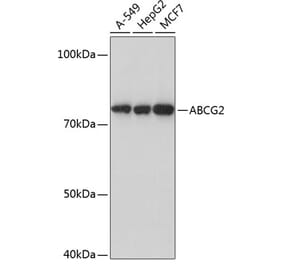

Unconjugated
Colorectal cancer (CRC) remains a leading cause of cancer mortality globally. Vincristine is a well-characterized substrate of ABCB1 and ABCC1 and thus serves as a mechanistic probe to model transporter-driven multidrug resistance in a CRC cellular background. We established two novel vincristine-resistant human colon cancer sublines (S1/V1 and S1/V4) to investigate resistance pathways, focusing on the overexpression of ATP-binding cassette (ABC) transporters. These resistant variants, S1/V1 and S1/V4, were produced by continuous vincristine exposure of parental S1 cells. MTT cytotoxicity assays demonstrated that S1/V1 cells possess approximately 39-fold and S1/V4 cells approximately 35-fold higher resistance to vincristine than S1 cells, with S1/V1 also showing cross-resistance to other ABCB1 substrates, and S1/V4 exhibiting cross-resistance to other ABCC1 substrates. RT-qPCR and Western blot analyses revealed marked upregulation of ABCB1 in S1/V1 and ABCC1 in S1/V4 at both the mRNA and protein levels. Immunofluorescence analysis showed that these transporters were localized at the cell membrane, indicating active drug efflux. Inhibiting their efflux activity fully restored vincristine sensitivity in both sublines. In summary, we establish in vitro CRC models for vincristine resistance and identify ABCB1 and ABCC1 overexpression as principal mediators of this phenotype. These cell lines provide useful models for developing strategies to overcome drug resistance in CRC. Because ABCB1 and ABCC1 are dynamically regulated during tumor evolution and therapeutic pressure, these models capture a heritable transporter-driven component of multidrug resistance.