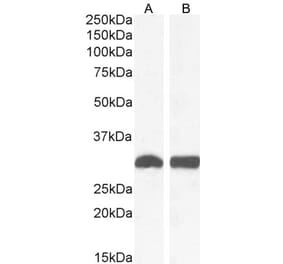
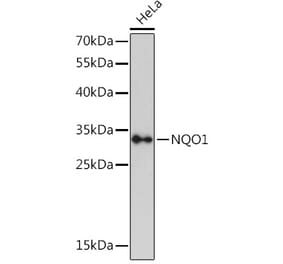
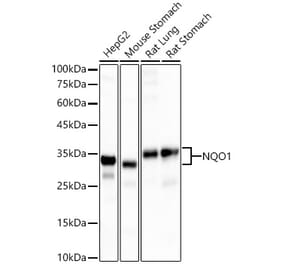
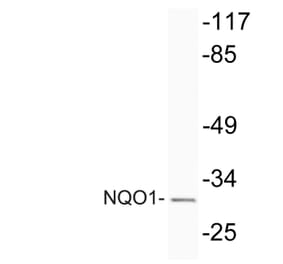
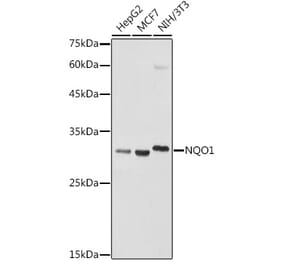
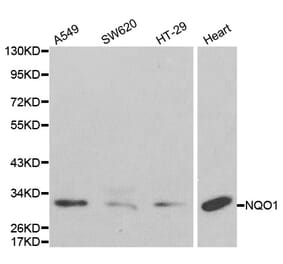
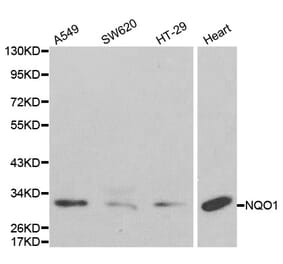
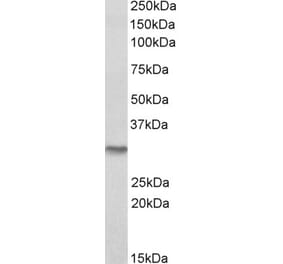
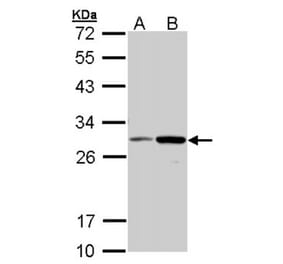
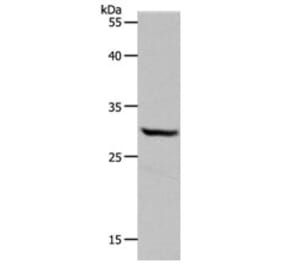
Specificity
Mouse anti human NQO1 antibody, clone A180 recognizes human NQO1 (NAD(P)H:quinone oxidoreductase 1), a ~31 kDa cytosolic flavoenzyme and member of the NAD(P)H dehydrogenase (quinone) family, involved in detoxification. NQO1 catalyzes the two-electron reduction of quinones to hydroquinones.NQO1 is expressed in a wide range of tissues and is overexpressed in many human tumors including lung, brain, liver, colon and breast. The ability of NQO1 to bioactivate anti-tumor quinones including mitomycin C and diaziquone, has become a focus area for chemotherapeutic studies. Mutations in the NQO1 gene are associated with an increased risk of certain cancers, and an increased risk of leukaemia has been associated with diminished NQO1 activity and the NQO1 *2 allele (Nerbert et al. 2002). Mouse anti human NQO1 antibody, clone A180 recognizes the product of the wild-type allele NQO1*1 but does not recognize the product of the mutant NQO1*2 allele (Sato et al. 2010 and Fegerholm et al. 2008).Mouse anti human NQO1 antibody, clone A180 detects endogenous levels of total NQO1, and does not cross-react with NQO2 (Siegal et al. 1998).Mouse anti human NQO1 antibody, clone A180 is reported as suitable for use in immunofluorescence studies (Siegal et al. 2012).