
Unconjugated
Cardiovascular diseases are a cause of global concern with age being a major contributor to failing hearts. Even in aged individuals with no cardiac anomalies, cardiac physiology and functioning are severely affected and so is autophagy. Unfortunately, with aging, there is a decline in the functionality of autophagic machinery, and impaired autophagy sustains which worsens cardiac functioning. Here, in this study we have highlighted for the first time, the autophagy induced role of Tbx20 as a regulatory factor mediating the expression of cardiomyocyte progenitor markers like Nkx2.5 and Gata4 along with stimulating the expression of anti-senescence markers GSK-3ß and especially Sirtuin1 (Sirt1), a known anti-senescent and an anti-aging marker to express in heart. Our study relied on two model systems: H9c2, rat cardiomyoblast cell line as the in-vitro model and the aged murine model system as part of the in-vivo system. Starvation and Rapamycin administration/ treatment were performed to induce autophagy in both the model systems. Immunostaining and Western Blotting (WB) were performed to assess the expression of Tbx20, Nkx2.5, Gata4 and GSK-3ß. In-silico affinity binding assay showed a favourable interactions between Tbx20 and Sirt1 DNA later validated by ChIP assay. Finally, Tbx20 siRNA mediated knockdown was performed in H9c2 cell line to assess its regulatory role. The Tbx20-dependent expression pattern of Nkx2.5, Gata4, GSK-3ß and Sirt1 highlights the master regulatory role of Tbx20 following autophagy induction. Most importantly, the novel interaction between Tbx20 and Sirt1 opens possibilities for how Tbx20 might regulate senescence and the fact that diminishing levels of Tbx20 in aging adults corroborates with declining levels of Sirt1.
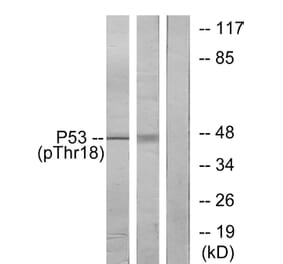
![Immunohistochemistry - Anti-p53 Antibody [PAb1801] (A253360) - Antibodies.com](https://cdn.antibodies.com/image/catalog/250/A250172_1.jpg?profile=product_top)
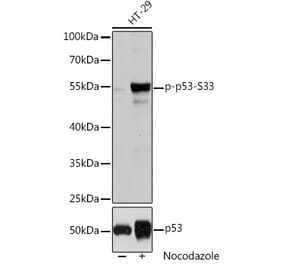
![SDS-PAGE - Anti-p53 Antibody [PAb1801] (A253363) - Antibodies.com](https://cdn.antibodies.com/image/catalog/250/A250172_2.jpg?profile=product_top)
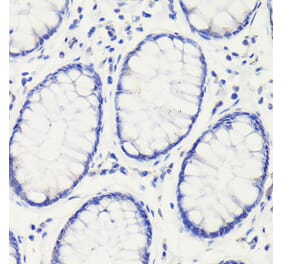
![Protein Array - Anti-p53 Antibody [PAb1801] (A253363) - Antibodies.com](https://cdn.antibodies.com/image/catalog/250/A250172_3.jpg?profile=product_top)
![Immunohistochemistry - Anti-p53 Antibody [PAb1801] (A253360) - Antibodies.com](https://cdn.antibodies.com/image/catalog/250/A250172_1.jpg?profile=product_top_thumb)
![SDS-PAGE - Anti-p53 Antibody [PAb1801] (A253363) - Antibodies.com](https://cdn.antibodies.com/image/catalog/250/A250172_2.jpg?profile=product_top_thumb)
![Protein Array - Anti-p53 Antibody [PAb1801] (A253363) - Antibodies.com](https://cdn.antibodies.com/image/catalog/250/A250172_3.jpg?profile=product_top_thumb)
![Immunohistochemistry - Anti-p53 Antibody [PAb1801] (A253360) - Antibodies.com](https://cdn.antibodies.com/image/catalog/250/A250172_1.jpg?profile=product_image)
![SDS-PAGE - Anti-p53 Antibody [PAb1801] (A253363) - Antibodies.com](https://cdn.antibodies.com/image/catalog/250/A250172_2.jpg?profile=product_image)
![Protein Array - Anti-p53 Antibody [PAb1801] (A253363) - Antibodies.com](https://cdn.antibodies.com/image/catalog/250/A250172_3.jpg?profile=product_image)

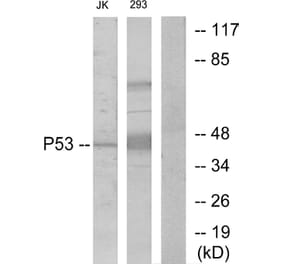
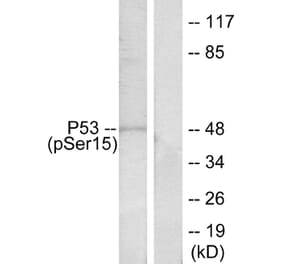
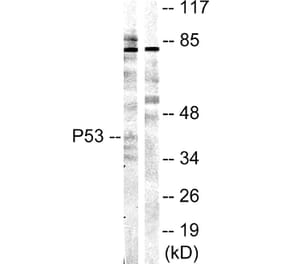
![SDS-PAGE - Anti-p53 Antibody [PAb122] - BSA and Azide free (A250183) - Antibodies.com](https://cdn.antibodies.com/image/catalog/253/A253363_1.jpg?profile=product_alternative)
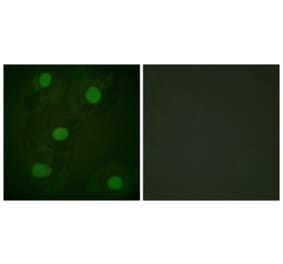
![Western Blot - Anti-p53 Antibody [DO-1] (A280264) - Antibodies.com](https://cdn.antibodies.com/image/catalog/280/A280264_3.jpg?profile=product_alternative)
![Immunohistochemistry - Anti-p53 Antibody [rBP53-12] (A253353) - Antibodies.com](https://cdn.antibodies.com/image/catalog/250/A250176_1.jpg?profile=product_alternative)
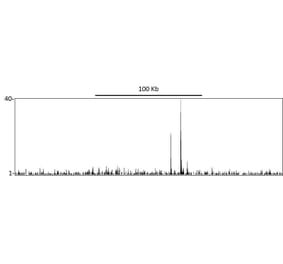
![Immunohistochemistry - Anti-p53 Antibody [TP53/2092R] (A253369) - Antibodies.com](https://cdn.antibodies.com/image/catalog/250/A250192_1.jpg?profile=product_alternative)