
FITC
Excitation: 490nm, Emission: 525nm
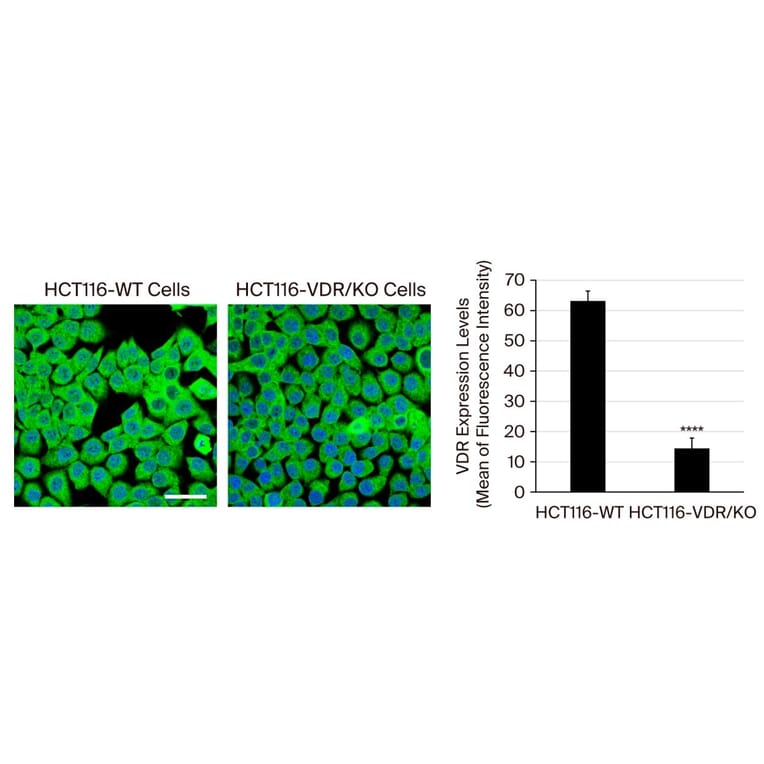
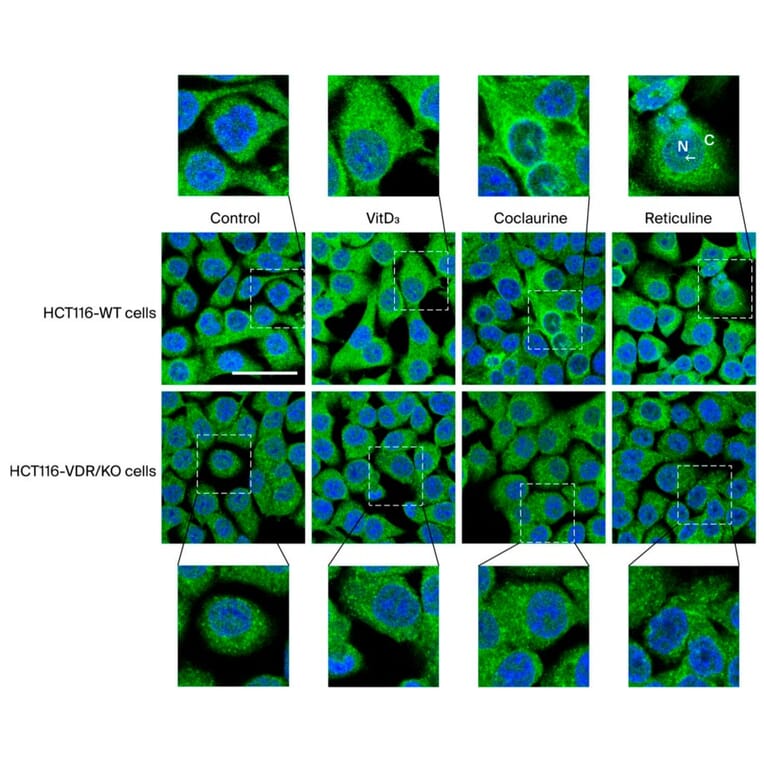
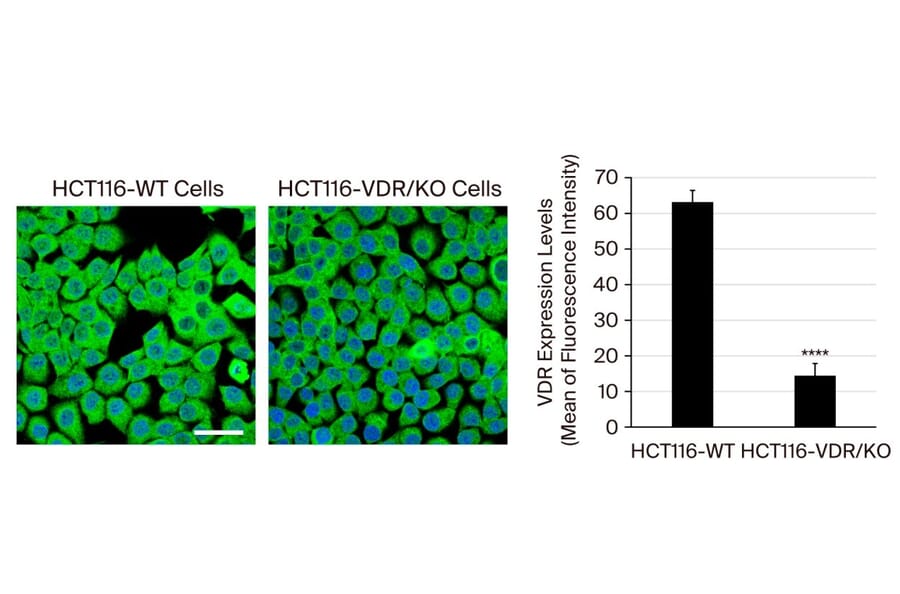
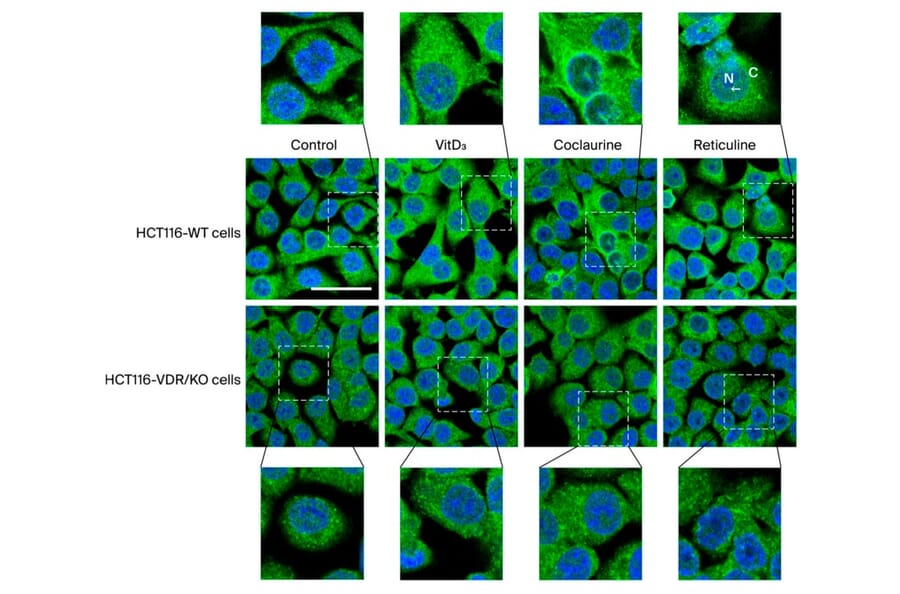
Alkaloids have garnered significant interest as potential anticancer agents. Vitamin D receptor (VDR) plays a role in preventing the progression of colorectal cancer (CRC) and may be a crucial mediator of the anticancer effects produced by certain alkaloids. The search for novel anticancer drugs that induce VDR expression and act through the VDR could improve the clinical outcomes of CRC patients. The anticancer and pro-apoptotic effects of coclaurine and reticuline were investigated using CRISPR/Cas9-edited VDR/knockout (KO) and wild-type (WT) CRC HCT116 cell lines. Western blotting, RT-qPCR, confocal microscopy, cell viability, scratch assays, and flow cytometry were employed to assess VDR expression and cellular localization, cell growth, wound-healing, cytotoxicity, apoptotic status, cell cycle progression, and VDR-mediated gene expression. Coclaurine and reticuline dose-dependently inhibited HCT116-WT cell viability, decreased wound-healing, and increased VDR nuclear localization and gene expression while downregulating the oncogenic genes SNAIL1 and SNAIL2. Both alkaloids induced late apoptosis in HCT116-WT cells, increased the cleavage of PARP and caspase-3, and upregulated Bax and TP53 while decreasing BCL-2. Both alkaloids caused HCT116-WT cell growth arrest in the S-phase, which is associated with cyclin A1 overexpression. Coclaurine and reticuline lost their anticancer effects in HCT116-VDR/KO cells. Docking studies revealed that both alkaloids occupied the VDR's active site. These findings demonstrate that coclaurine and reticuline exert anti-CRC and pro-apoptotic activities via the VDR, suggesting them as natural therapeutic candidates. The use of in vivo CRC models is needed to validate the anticancer activities of coclaurine and reticuline.