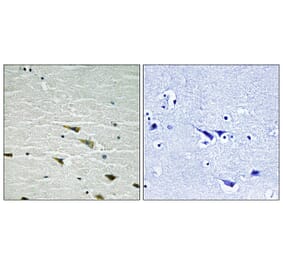

Unconjugated
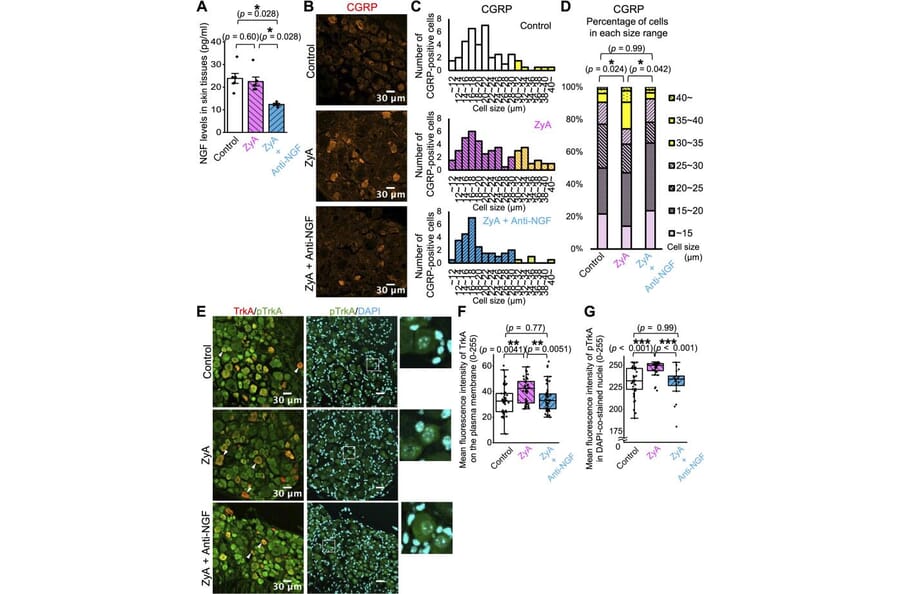
Pain in axial spondyloarthritis (axSpA) may precede clinically detectable inflammation or persist despite adequate control of inflammation. However, the mechanisms underlying this early pain state remain incompletely understood. We investigated nerve growth factor (NGF)-TrkA-calcitonin gene-related peptide (CGRP) signaling in dorsal root ganglia (DRG) before the onset of overt clinical arthritis, using a zymosan A (ZyA)-induced SKG mouse model of inflammatory arthritis with SpA-like features. Female SKG mice received ZyA, with or without a prophylactic anti-NGF monoclonal antibody treatment. Mechanical sensitivity, NGF protein levels in skin tissue, and expression of CGRP, TrkA and phosphorylated TrkA in DRG neurons were evaluated on day 10. ZyA-treated mice developed mechanical hypersensitivity by day 10, while no increase in clinical arthritis scores was observed during this period. In DRG neurons, an altered size distribution of CGRP-positive neurons toward larger-diameter populations was observed in association with early pain-related behavioral changes. These changes may involve downstream TrkA signaling. Prophylactic anti-NGF treatment attenuated the decrease in mechanical thresholds and reduced CGRP-neuronal size distribution changes and TrkA signaling changes. These findings suggest that NGF-associated DRG sensitization contributes to early pain-related behavioral changes during a prodromal phase of ZyA-induced disease, before overt clinical arthritis is established. Our study supports a mechanistic link between early pain-related behavioral changes and NGF-associated DRG sensitization, providing a rationale for further investigation of NGF-targeted strategies for pain management in axSpA.


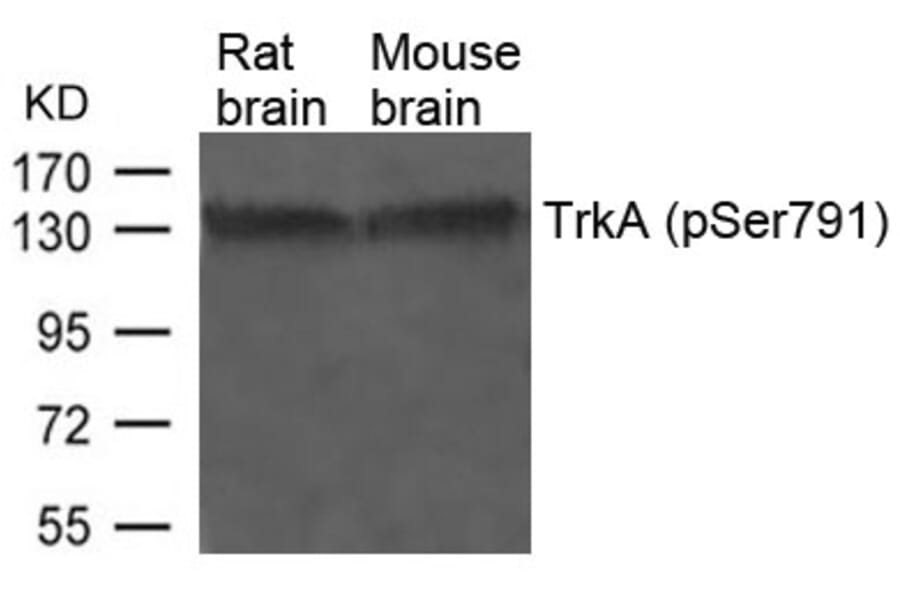
![SDS-PAGE - Anti-TrkA Antibody [GBR 900] - Low endotoxin, Azide free (A324280) - Antibodies.com](https://cdn.antibodies.com/image/catalog/324/A324280_1.jpg?profile=product_alternative)