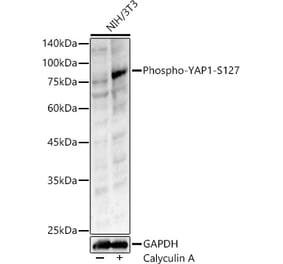

Unconjugated
Osimertinib is the first-line therapy for EGFR-mutated non-small cell lung cancer, but acquired resistance emerges in most patients and remains a major barrier for complete cure. This phenomenon is most likely associated with the drug-tolerant persister (DTP) cell phenotype, a reversible state that enables survival under treatment and leads to irreversible drug resistance. To uncover the molecular mechanism driving this distinct phenotype, we applied data-independent acquisition mass spectrometry (DIA-MS) to establish the dynamic proteomic and phosphoproteomic landscape in the osimertinib DTPs. While osimertinib initially blocks EGFR signaling, ribosome synthesis and protein translation related pathways arise in DTP phase, and resistance developed through the reactivation of EGFR downstream pathways and anti-apoptotic mechanisms such as YAP1 and mTOR-BAD hyperphosphorylation, as validated by growth combination assays. Kinase enrichment revealed elevated phosphorylation of multiple CDK1 substrates in DTP phase and pharmacological or genetic inhibition of CDK1-mediated SAMHD1 activation significantly impair DTP growth and survival. This study illuminates the dynamic landscape underlying the DTPs biology and identifies biomarker and new targets to potentially prevent or delay the onset of resistance.