

Michaela Buerdsell, PhD | 22nd September 2026
Bispecific antibodies (bsAbs) are engineered with two different variable regions that recognize two distinct epitopes or antigens. Building on the proven specificities of monoclonal antibodies, bispecific formats enable additional mechanisms of action. These include cellular bridging, where T cells are recruited and redirected towards tumor cells, as well as the simultaneous inhibition or agonistic activation of two distinct biological pathways. Interest in bispecific antibodies continues to grow, with applications ranging from biosensors and diagnostics to unique therapies. Bispecific antibodies have become particularly prominent in cancer immunology, immune regulation, and infectious disease research.
Explore our range of over 100 recombinant bispecific antibodies, available conjugated and unconjugated for a variety of research applications. Our portfolio includes CD3 T-cell engagers, antibodies targeting established oncology targets such as PD-L1 and EGFR, and neutralizing antibodies against viral targets.
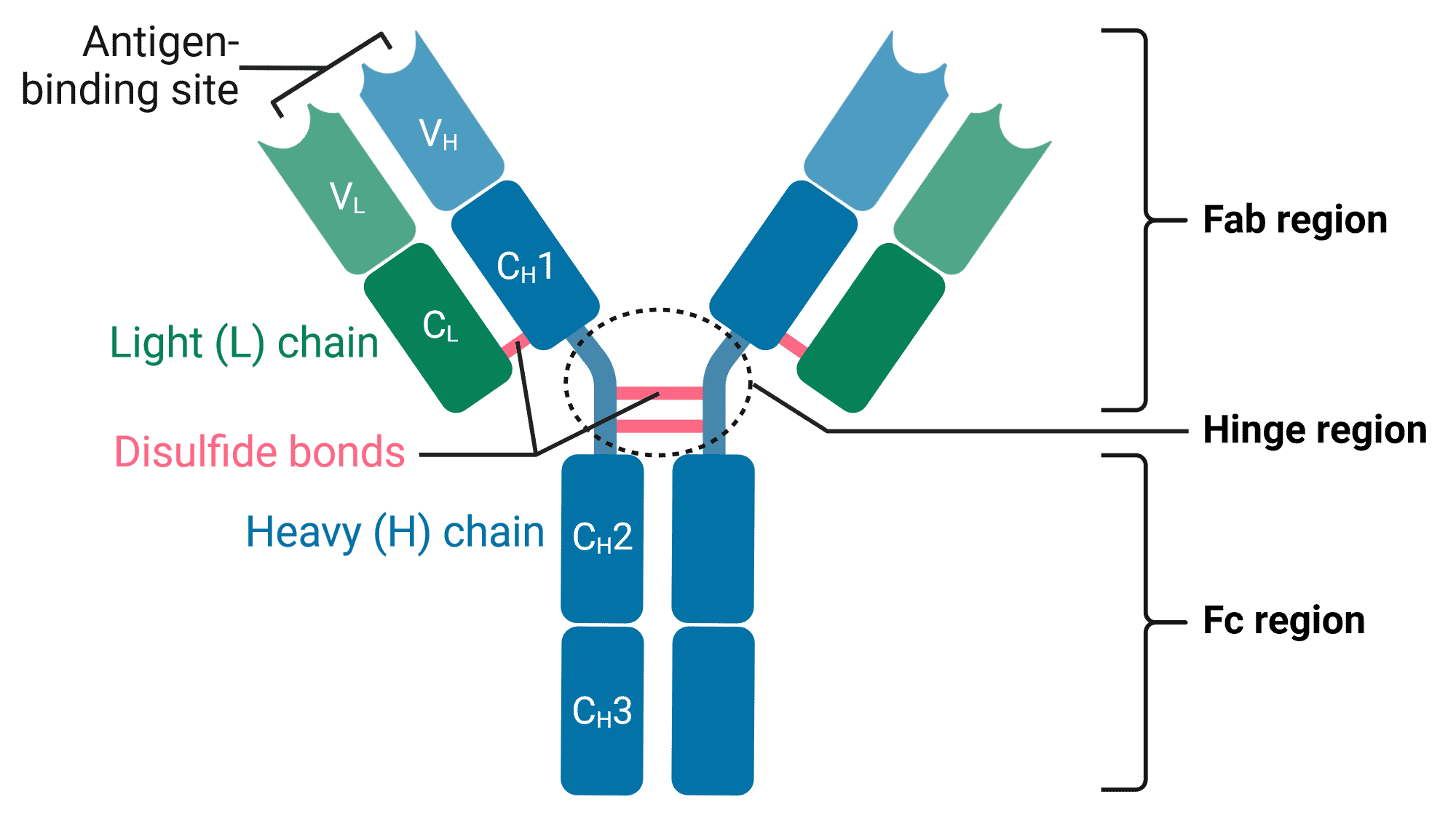
Antibodies are Y-shaped glycoproteins and are composed of two antigen-binding domains (Fabs) and one crystallizable fragment (Fc) connected by a flexible hinge region (Figure 1).1 Each Fab is formed from a variable light chain (VL) and a variable heavy chain (VH)and is typically identical, except for IgG4, which can undergo structural rearrangement termed Fab arm exchange.2 The typically symmetrical Fab arms results in a monospecific antibody, which binds to a single epitope exclusively with high specificity.1
Monoclonal antibodies (mAbs) are lab produced, monospecific antibodies derived from a clonal population of B-cell and binds a single target with high specificity and affinity. They are widely used in research, being fundamental in techniques such as ELISA, Western blot, and immunoprecipitation.3 Therapeutically, mAbs are used to treat a range of diseases, in particular cancer and autoimmune disorders, with over 30 mAbs approved for treatment. To minimize immunogenicity, therapeutic antibodies are engineered to appear more human-like to reduce autoimmunity side effects from treatment.4
Figure 1: Structure of an antibody (IgG).C: Constant region; V: Variable region. Created using BioRender.
For more information on the structure of antibodies, including different isotypes and formats, visit our antibody basics guide.
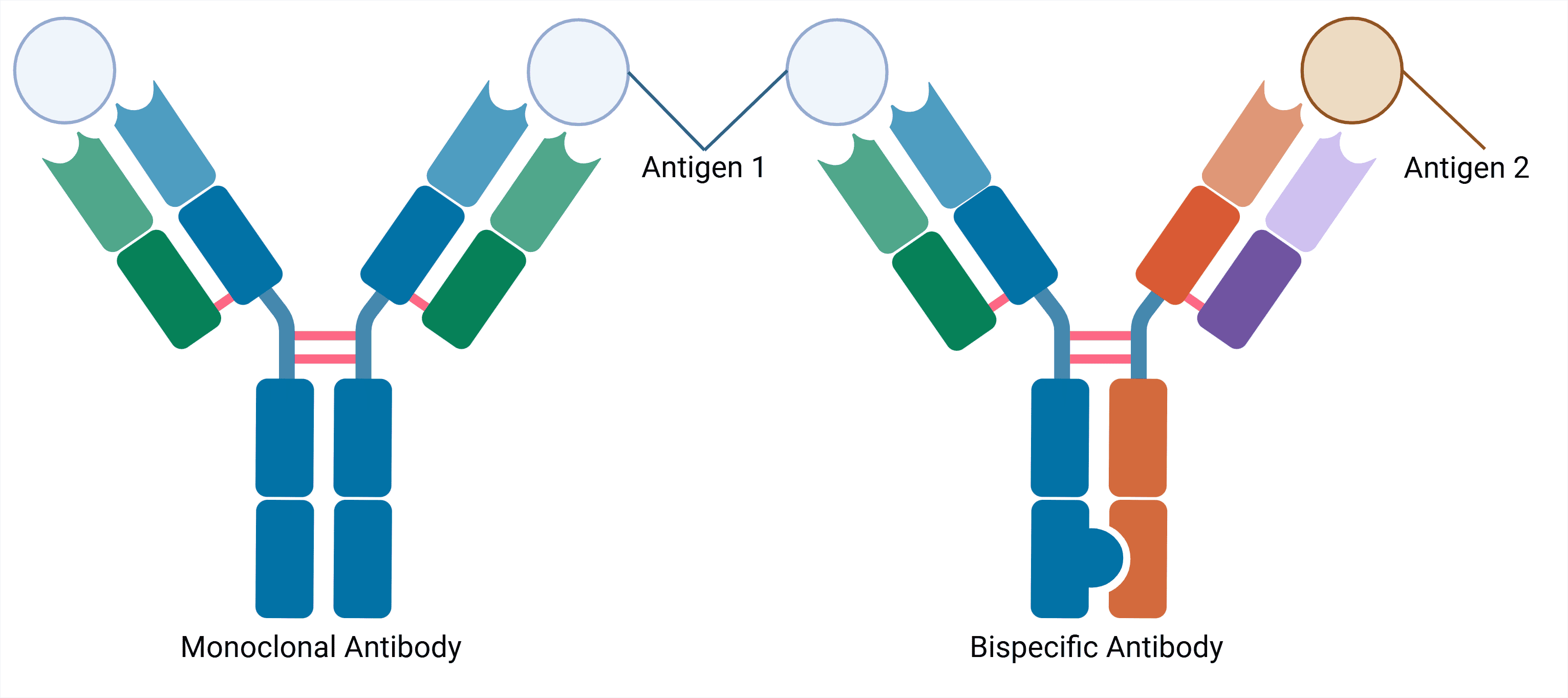
Whilst monoclonal antibodies are used extensively in research and therapeutics, they can be limited by their monospecific properties. Bispecific antibodies (bsAbs) were developed to simultaneously bind two distinct antigens or epitopes, enabling synergistic and complex mechanisms to enhance therapeutic activity (Figure 2).5 Bispecific antibodies represent a major milestone in oncology, where many cancers routinely develop resistance to single-antigen therapies.6
Just like monospecific antibodies, bsAbs can be engineered in a variety of formats, including IgG-like formats, retaining the Fc region, and fragment-based formats discussed below.7 Functionally, bsAbs can be categorized into two formats: obligate and combinatorial. Obligate bsAb require engagement of both targets for a biological effect, whereas combinatorial bsAbs can interact with the targets independently whilst also benefitting from dual-target engagement.5
Figure 2: Structural difference between a monospecific and a bispecific antibody.
Producing IgG-like bispecific antibodies presents significant manufacturing challenges, primarily due to the requirement for correct heavy-chain heterodimerization and light-chain pairing whilst minimizing the formation of undesired antibody species.8 Random association of antibody heavy and light chains can result in multiple by-products, reducing product yield and purity. As a result, several antibody-engineering strategies have been developed to promote the assembly of the desired bispecific molecule.9
Knobs-into-Holes
Knobs-into-holes (KiH) technology was developed to promote heterodimerization of the desired heavy chain combination through complementary mutations on the Fc CH3 domains. On one heavy chain, a ‘knob’ is created by mutating a smaller amino acid with a larger one (e.g., T366Y). While a complementary substitution on the partner creates a ‘hole’ by mutating a larger amino acid with a smaller one (e.g., Y407T).11 This increases the likelihood of the correct heterodimer formation through the engineering of complementary CH3 domains, improving bsAb yield compared to random assembly.9 Nevertheless, efficient production remains challenging because both heavy chains should be expressed at similar levels to maximize the formation of the heterodimer and minimize contaminants.12
Chemical Crosslinking/CovX-Bodies
Chemical cross-linking is frequently utilized in molecular biology for example, in activity-based protein profiling, analyzing protein-protein interactions of binding partners by mass spectrometry, and the investigation of molecular mechanisms.13 Cross-linkers are generally electrophilic and form a covalent bond with nucleophilic amino acid side chains such as Lys and Cys.14 The bispecific CovX-Body platform applies this chemistry by linking an antigen-binding peptide to an antibody scaffold through covalent attachment of the peptide-linker construct to heavy chain Lys93.15
Electrostatic Steering/Charged Pairs
This technique of bsAb production involves engineering complementary charged residues on the Fc CH3 domain to create opposing electrostatic polarities. When co-expressed, the two heavy chains preferentially form the desired heterodimer through electrostatic attraction.16 Similar charge-based engineering strategies have also been applied to residues at VH-VL and CH1-CL interfaces to promote correct light-heavy chain pairing.17 In addition to enhancing correct bsAb assembly, this technique also reduces undesired pairing through electrostatic repulsion between incompatible chains.16
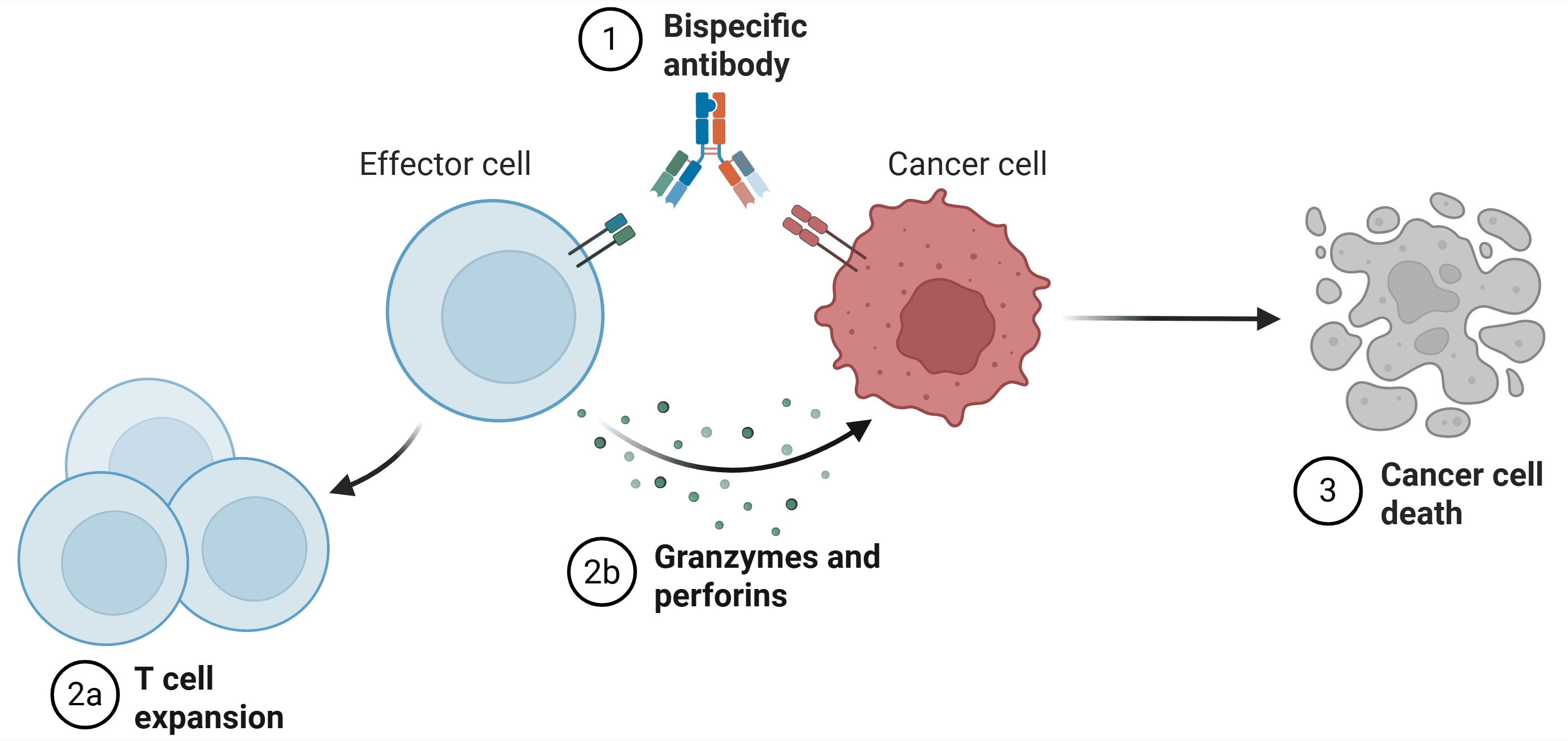
The bispecific nature of bsAbs has expanded the mechanism of action (MOA) beyond those achievable for mAbs. One of the most widely used MOAs in approved bsAbs is known as cellular bridging.6 This is when an antibody simultaneously binds to two different cells, bringing them into close proximity and forming an immunological synapse, typically between an immune effector cell and a pathological cell such as a tumor cell.18 In several approved bsAb treatments, one antigen-binding arm targets CD3 on T cells while the other targets tumor associated antigens such as CD20 (mosunetuzumab, epcoritamab, glofitamab), BCMA (teclistamab, elranatamab), and EpCAM (catumaxomab).6 The close proximity promotes the release cytotoxic granules containing granzymes and perforins, leading to tumor cell death (Figure 3).18
Figure 3: Cellular bridging. Bispecific antibody mechanism which brings a T cell and a cancer cell in close proximity to promote cell death. 1: Bispecific antibody interacts with CD3 on the T cell and a tumor-associated antigen on the cancer cell. 2: The immunological synapse cases rapid T-cell expansion and release of cytotoxic granules. 3: The released cytotoxic granules cause cell death of the cancer cell in close proximity. Created using BioRender.
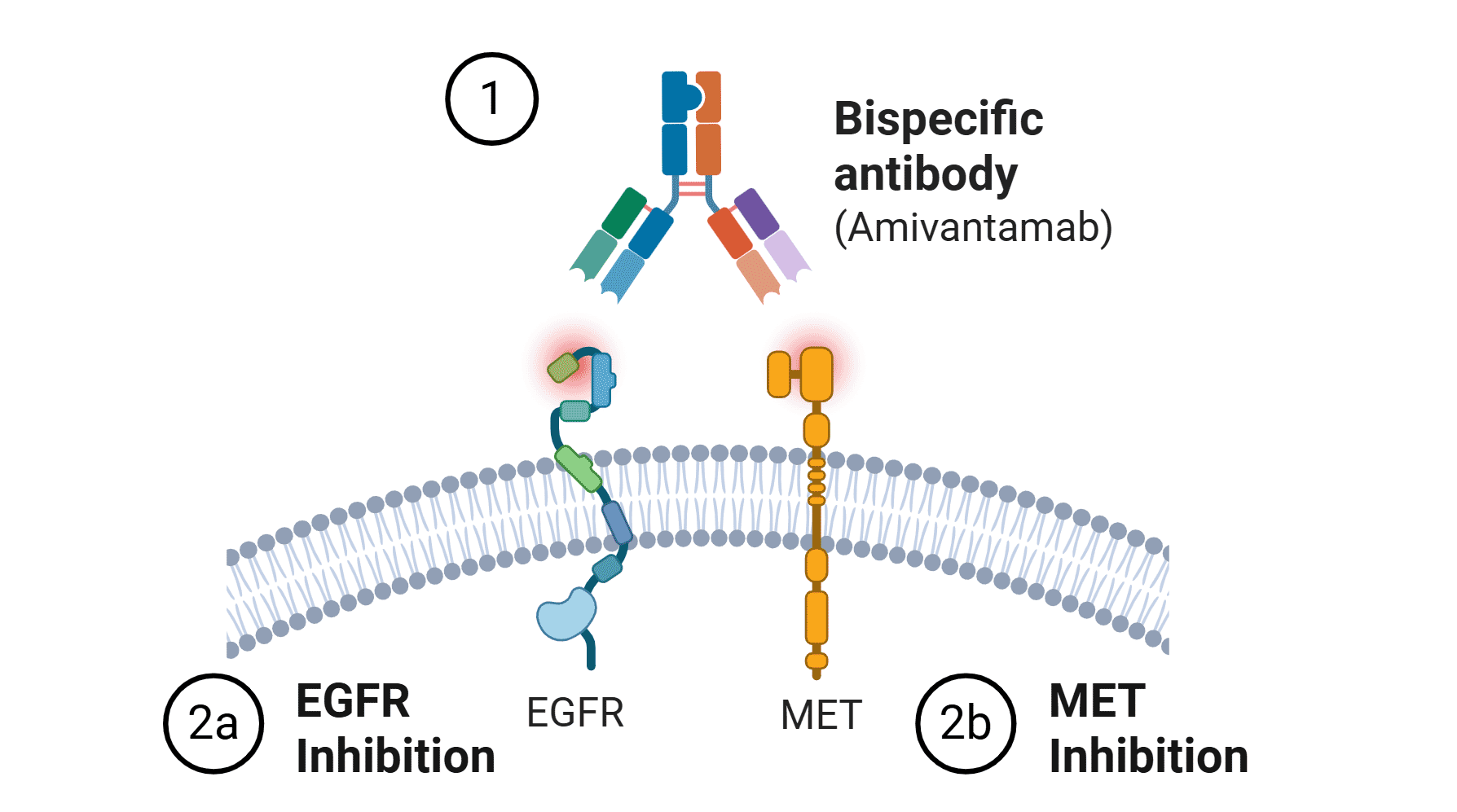
Another clinically approved MOA involves the simultaneous inhibition of two distinct signaling pathways on the same cell, potentially blocking inflammatory and angiogenic pathways to overcome tumor resistance mechanisms.6 An example of this is amivantamab, which inhibits both epidermal growth factor receptor (EGFR) and mesenchymal epithelial transcription factor (MET) and is approved for the treatment of non-small cell lung carcinoma (Figure 4). By concurrently blocking both signaling pathways, amivantamab suppresses tumor proliferation and survival more effectively than blocking either target alone.19
Figure 4: Simultaneous inhibition of two distinct pathways. This shows the mechanism of action of amivantamab inhibiting both EGFR and c-MET on one cell. 1: Amivantamab is administered intravenously/subcutaneously. 2: EGFR and MET are simultaneously inhibited which suppresses tumor proliferation. Created using BioRender.
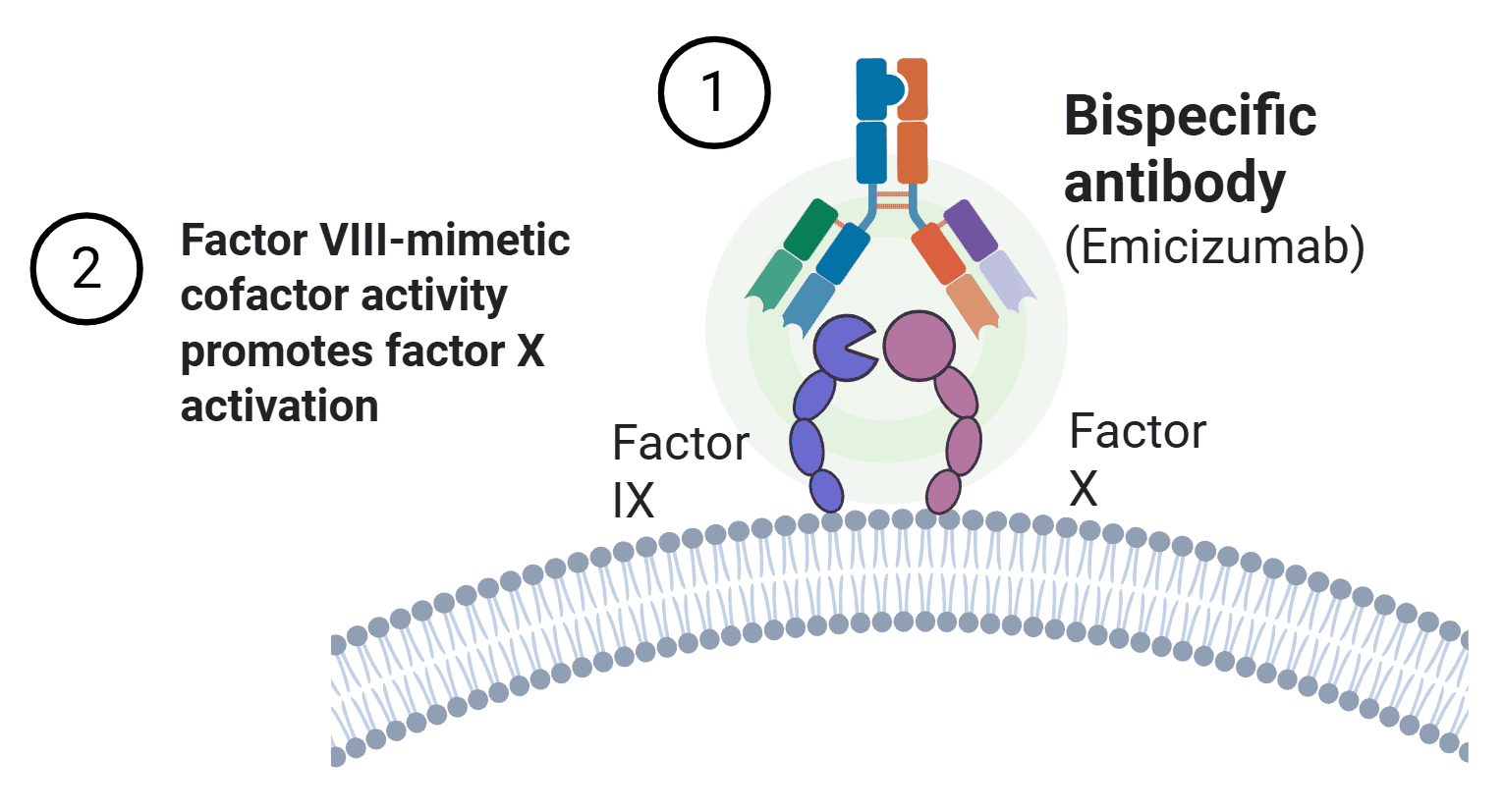
In contrast to simultaneous inhibition, bsAbs can also function as an agonist by bridging receptor subunits, mimicking endogenous cofactors, or promoting optimal interactions between a substrate and enzyme.6 An example of this MOA approved for treatment is emicizumab, a bsAb which mimics the cofactor function of activated factor VIII (FVIII). This pathway is dysfunctional in hemophilia A, so by simultaneously bridging activated factors IX and X, emicizumab restores hemostatic function through a similar mechanism of FVIII (Figure 5).20 Agonistic bsAbs have encountered issues with excessive activation, which led to higher toxicity and impeded additional progress of treatments through this mechanism.6
Figure 5: Dual stimulation. This shows the mechanism of emicizumab which mimics the function of FVIII. 1: Emicizumab is administered by subcutaneous injection. 2: The coagulation cascade is stimulated by bridging factor IX and X, mimicking the function of FVIII. Created using BioRender.
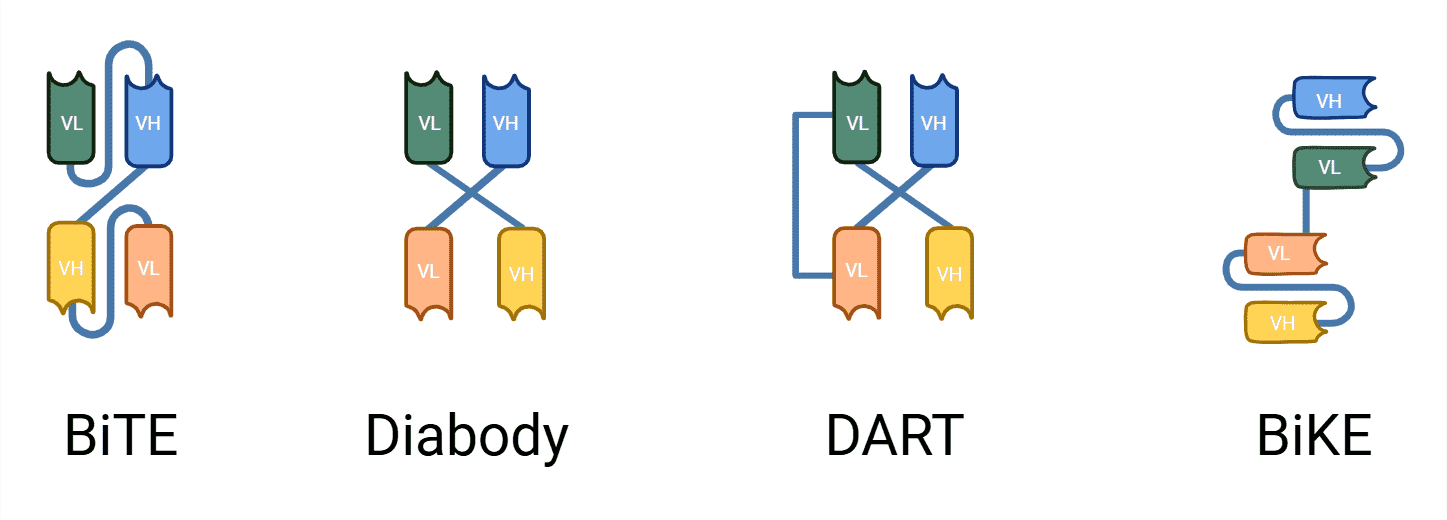
Bispecific antibodies have developed several smaller formats to simplify the production and purification whilst retaining activity.21 Some such formats include:
Figure 6: Formats of bispecific fragments.
Table 1: Summary of some of the fragment-based bispecific formats.
| Format | Composition | Size | Use |
|---|---|---|---|
| Bispecific T Cell Engager (BiTE) | Two single-chain variable fragments (scFv) connected by a peptide linker. One scFV targets T cells, usually by the CD3 antigen.22 | ~55 kDa | Cancer immunotherapy |
| Diabody | Two polypeptide chains with the VH of antibody 1 connected to the VL of antibody 2. VH of antibody 2 is connected to the VL of antibody 1.23 | ~55 – 60 kDa | Cancer immunotherapy, structural biology (CryoEM), diagnostic imaging |
| Dual-Affinity Retargeting (DART) | Engineered diabody format with additional disulfide bonds for stability and manufacturing ease.23 | ~50 kDa | Cancer immunotherapy, autoimmune disorders |
| Bispecific killer engagers (BiKE) | Similar to BiTE but designed to recruit natural killer cells by the CD16 antigen.24 | ~50 – 75 kDa | Cancer immunotherapy |
These smaller formats exhibit higher structural flexibility and generally lower immunogenicity than the full-sized IgG-like bsAbs with improved tissue penetration. However, the decreased stability shortens the shelf-life, and the small size increases clearance from blood, which is compensated by high-frequency dosing.6 Some strategies being tested to increase serum half-life include adding polyethylene glycol to increase hydrodynamic volume, fusing the bsAb to a protein such as human serum albumin or adding an Fc fragment to increase size, and multimerization which also increases size and can improve affinity.25
BsAbs are applied widely in both research and clinical applications, with their therapeutic significance continually expanding. In diagnostics, an agglutination assay to diagnose hepatitis B infection was developed using a bispecific diabody, achieving a sensitivity of 97.7 % and specificity of 100 %.26
BsAbs have been incorporated into immunoassays, such as a bridging ELISA, which is a type of sandwich ELISA. In bridging ELISAs, one analyte is immobilized onto a solid surface while the bsAb simultaneously captures the immobilized analyte and a second, biotinylated analyte, which enables detection through reporter systems such as horseradish peroxidase (HRP).27 This technology has been used to develop a sensitive and specific, one-step ELISA to detect E. coli O157:H7 in complex aquatic media.28
Correlative Light and Electron Microscopy (CLEM) is a powerful technique combining light and electron microscopy for visualizing microstructural and ultrastructural levels to study dynamic cellular events in live cells.29 Using bsAbs with CLEM has allowed for the study to membrane proteins by interacting with the membrane protein and a marker such as green fluorescent protein (GFP). This has been applied to human epithelial growth factor 2 (HER2), a common tumor-associated protein in breast cancer, to track distribution and interaction in real time using a fluorescent marker and elucidate tumor microenvironments.30
BsAbs have also been explored for biosensor development. For example, a bsAb capable of simultaneous binding of two chloramphenicol antibiotic derivatives, florfenicol and thiamphenicol. This was incorporated into a microfluidic biosensor for the sensitive and specific detection of these antibiotics in environmental water sources, with higher sensitivity than traditional immunoassay formats.31
The first approved bispecific antibody therapeutic was catumaxomab, which was approved in 2009 by the European Union (since withdrawn in 2017 for commercial reasons) for the treatment of malignant ascites caused by epithelial carcinomas.6 Since then, multiple bsAbs have received regulatory approval to be used as therapeutics, with the majority being in oncology.32
The number of bsAbs entering clinical development continues to increase. One such bsAb is PM8002 which inhibits both programmed death-ligand 1 (PD-L1) and vascular endothelial growth factor (VEGF) with initial results showing promising anti-tumor activity with acceptable safety levels in patients with solid tumors.33 Another is navicixizumab, a dual inhibitor of Delta-like ligand 4 (DLL4) and VEGF to inhibit angiogenesis and has shown some anti-tumor activity in several solid tumors types.34
Despite significant advances in therapeutic bsAbs, there are still limitations such as toxicity concerns, decreased serum half-life, limited T-cell activation, and prolonged T cell activation leading to exhaustion.35 A particular limitation of bsAbs targeting CD3 used in T-cell engaging cellular bridging MOAs is excessive immune activation and cytokine release. This can result in cytokine release syndrome (CRS), a severe inflammatory response that correlates with worse prognosis in affected patients.34
Bispecific antibodies have expanded the capability of traditional monoclonal antibodies by allowing for the binding of two different epitopes.
Table 2: Summary of monoclonal antibodies vs bispecific antibodies
| Monoclonal Antibodies | Bispecific Antibodies | |
|---|---|---|
| Target Recognition | Binds one epitope with high affinity. | Binds two distinct epitopes. |
| Structure | Symmetrical structure with both binding arms having same specificity, fragment formats available (without Fc region). | Two different Fab regions with different specificities for different epitopes, fragment formats available. |
| Production | Established production platform with higher yields. | Complex engineering required with low yield due to chain mispairing. |
| Applications | Used broadly for binding analytes reliably and with high specificity e.g ELISAs, Western Blots, fluorescent labeling for microscopy. | Can be used in similar applications to mAbs but for more complex mechanism of actions such as the need to bind two or more analytes. |
| Mechanism of action | Can block, activate, or neutralize a target. | Can bridge different cells, or activate/inhibit different pathways. |
Diagrams created with BioRender.com.
![SDS-PAGE - Anti-CD38 + CD3 epsilon Bispecific Antibody [AMG-424] (A341060) - Antibodies.com](https://cdn.antibodies.com/image/catalog/341/A341060_1.jpg?profile=product_image)
![SDS-PAGE - Anti-PD 1 + IL-2 Bispecific Antibody [IBI363] (A341050) - Antibodies.com](https://cdn.antibodies.com/image/catalog/341/A341050_1.jpg?profile=product_image)
![SDS-PAGE - Anti-B7-H3 + EGFR Bispecific Antibody [Ibi-334] (A341180) - Antibodies.com](https://cdn.antibodies.com/image/catalog/341/A341180_1.jpg?profile=product_image)
![SDS-PAGE - Anti-Envelope Glycoprotein H +gL Complex Bispecific Antibody [769B10] (A341118) - Antibodies.com](https://cdn.antibodies.com/image/catalog/341/A341118_1.jpg?profile=product_image)
![SDS-PAGE - Anti-gp160 + CD4 Bispecific Antibody [GS-8588] (A341066) - Antibodies.com](https://cdn.antibodies.com/image/catalog/341/A341066_1.jpg?profile=product_image)
![SDS-PAGE - Anti-P-Cadherin + CD3 epsilon Bispecific Antibody [PF 6671008] (A341047) - Antibodies.com](https://cdn.antibodies.com/image/catalog/341/A341047_1.jpg?profile=product_image)
![SDS-PAGE - Anti-CD38 + CD3 epsilon Bispecific Antibody [GBR-1342] (A341061) - Antibodies.com](https://cdn.antibodies.com/image/catalog/341/A341061_1.jpg?profile=product_image)
![SDS-PAGE - Anti-CD28 + EGFR Bispecific Antibody [Regn7075] (A341182) - Antibodies.com](https://cdn.antibodies.com/image/catalog/341/A341182_1.jpg?profile=product_image)
![SDS-PAGE - Anti-CD133 + CD3 epsilon Bispecific Antibody [MS133] (A341062) - Antibodies.com](https://cdn.antibodies.com/image/catalog/341/A341062_1.jpg?profile=product_image)
![SDS-PAGE - Anti-UL128 + UL131A Bispecific Antibody [Iv0187] (A341125) - Antibodies.com](https://cdn.antibodies.com/image/catalog/341/A341125_1.jpg?profile=product_image)