
Unconjugated
Plants have significant potential as recombinant protein expression chassis, as they can produce complex post-translationally modified proteins that are unobtainable using prokaryotic production systems, with almost limitless scalability and substantially reduced costs relative to eukaryotic cell cultures. Transient protein expression reduces the time taken between transformation and recombinant protein extraction and purification, however low protein yields relative to conventional stable expression systems remain a major obstacle. Here, we have assessed the effectiveness of combining several established genetic components, including a promoter, 5' UTR, 3' UTR, double terminator, and matrix attachment region, to modify the TMV-based pJL-TRBO expression vector for improved recombinant protein expression in plants. Using enhanced green fluorescent protein (eGFP) as a reporter, we quantified expression using fluorescence imaging in planta together with SDS-PAGE and western blotting and showed that our optimum construct resulted in a significant increase relative to pJL-TRBO-eGFP. This increase was exclusively due to the presence of the additional 5' UTR. We anticipate that our expression constructs will be a useful tool for high-yield plant recombinant protein production and may serve as a template for further improvements.
The intricate process of male gametophyte development in flowering plants is regulated by jasmonic acid (JA) signaling. JA signaling initiates with the activation of the basic helix-loop-helix transcription factor (TF), MYC2, leading to the expression of numerous JA-responsive genes during stamen development and pollen maturation. However, the regulation of JA signaling during different stages of male gametophyte development remains less understood. This study focuses on the characterization of the plant ARID-HMG DNA-BINDING PROTEIN 15 (AtHMGB15) and its role in pollen development in Arabidopsis (Arabidopsis thaliana). Phenotypic characterization of a T-DNA insertion line (athmgb15-4) revealed delayed bolting, shorter siliques, and reduced seed set in mutant plants compared to the wild type. Additionally, AtHMGB15 deletion resulted in defective pollen morphology, delayed pollen germination, aberrant pollen tube growth, and a higher percentage of nonviable pollen grains. Molecular analysis indicated the downregulation of JA biosynthesis and signaling genes in the athmgb15-4 mutant. Quantitative analysis demonstrated that JA and its derivatives were ~10-fold lower in athmgb15-4 flowers. Exogenous application of methyl jasmonate could restore pollen morphology and germination, suggesting that the low JA content in athmgb15-4 impaired JA signaling during pollen development. Furthermore, our study revealed that AtHMGB15 physically interacts with MYC2 to form a transcription activation complex. This complex promotes the transcription of key JA signaling genes, the R2R3-MYB TFs MYB21 and MYB24, during stamen and pollen development. Collectively, our findings highlight the role of AtHMGB15 as a positive regulator of the JA pathway, controlling the spatiotemporal expression of key regulators involved in Arabidopsis stamen and pollen development.
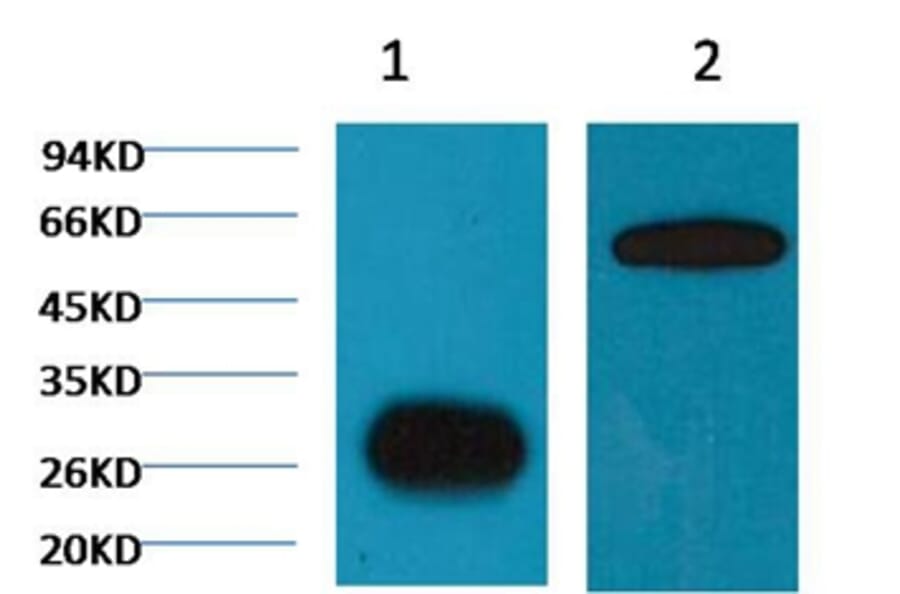

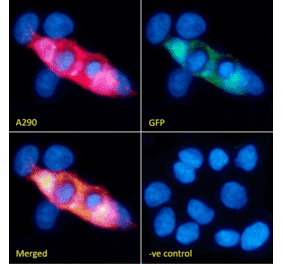
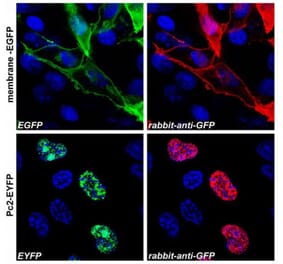
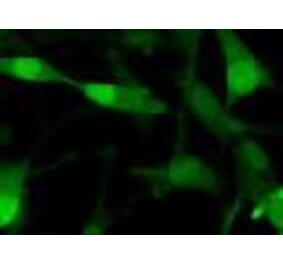
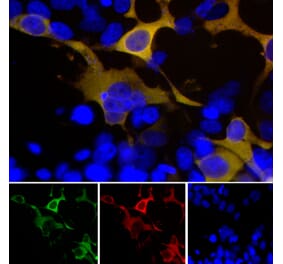
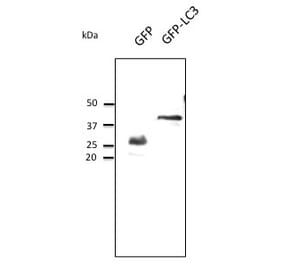
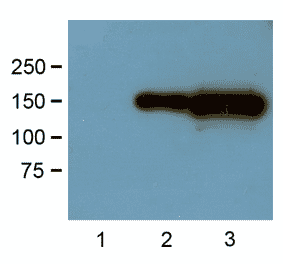
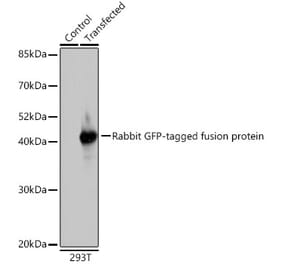
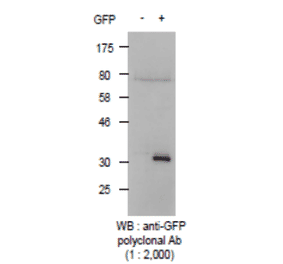
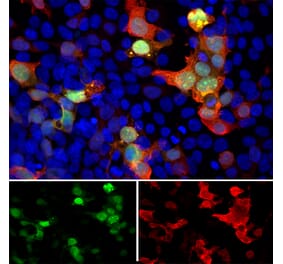
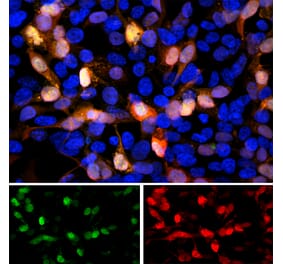
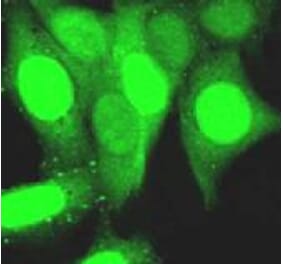
![Fluorescent image of COS1 cells due to GFP of GST-ZIPK fusion protein expressed in HEK293T cells (Right) and the same cells were immunostained using Anti-GFP Antibody [1A5], followed by Anti-Rat IgG (Texas Red) (Left). Note that fluorescence by the immunofluorescent staining using Anti-GFP Antibody [1A5] is much stronger than fluorescence due to GFP.](https://cdn.antibodies.com/image/catalog/0/A251_1.png?profile=product_alternative)