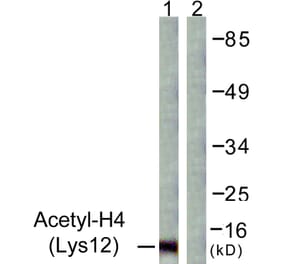
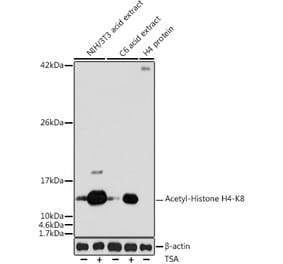
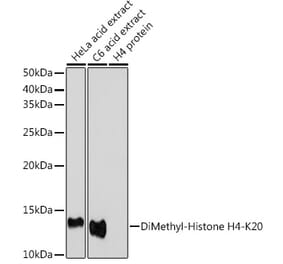
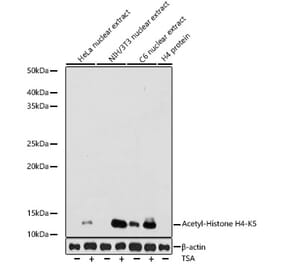
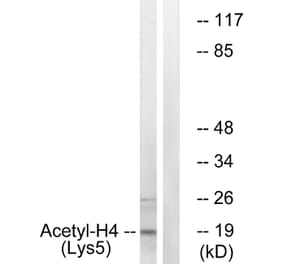
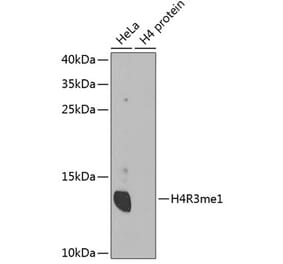
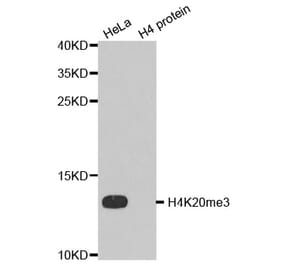
Specificity
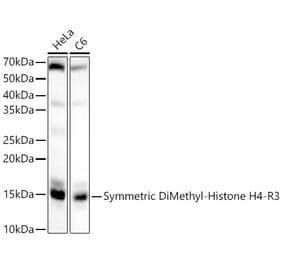
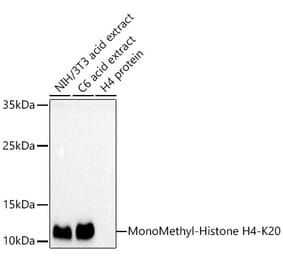
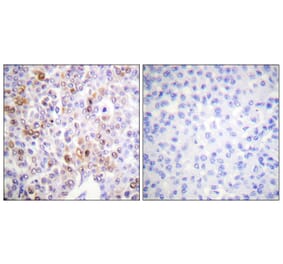
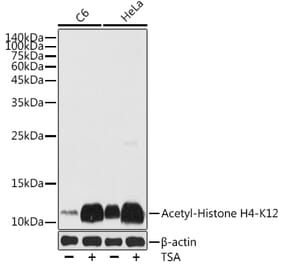
This antibody recognises Histone H4 when asymmetrically di-methylated at arginine 3.Histone H4 is one of the four core histones that make up the nucleosome core particle. Nucleosomes are the smallest subunit of chromatin and are made up of 146 bp of DNA wrapped around an octamer comprised of pairs of the four core histones (H2A, H2B, H3, and H4) (Smith, 1991). Histones can be mono-, di- or tri-methylated by histone methyltransferases (HMTs). Depending on which amino acid residues are methylated, methylation of histones may increase or decrease the transcription of genes. Methylation events that weaken the binding between histone tails and DNA lead to increased transcription because they make the DNA more accessible to transcription factor proteins and RNA polymerase. Methylation of histones is therefore crucial for the regulation of gene expression. Histone H4 may be asymmetrically di-methylated at arginine 3 by the PRMT methyltransferases PRMT1 and PRMT6, an event that normally leads to transcriptional activation by nuclear hormone receptors. Wide species cross-reactivity is expected from Rabbit anti Human asymmetric di-methyl-histone H4 (Arg3) antibody based on sequence.