

Glial cells are essential, non-neuronal components of the central and peripheral nervous systems, present in approximately equal numbers to their neuronal counterparts. Glia have a range of roles in the nervous system, including supporting neuronal health, modulating neuronal activity, and acting as a local immune system.
Antibodies against glial markers help to distinguish between different glial subtypes, such as astrocytes, oligodendrocytes and microglia. Each subtype has specific functions within the nervous system and makes distinct contributions to neurodegenerative and neuropsychiatric disorders, thus insights into their relative numbers, activation state and localization are important for understanding physiology and pathology of the nervous system.

Astrocytes are star-shaped glia in the CNS that support neurons by providing nutrients, maintaining the blood-brain barrier, and regulating synaptic transmission. Using astrocyte markers to detect changes in astrocyte numbers or activation states is useful to indicate reactive gliosis, such as in response to traumatic brain injury, or neurodegenerative disorders such as Alzheimer’s disease.
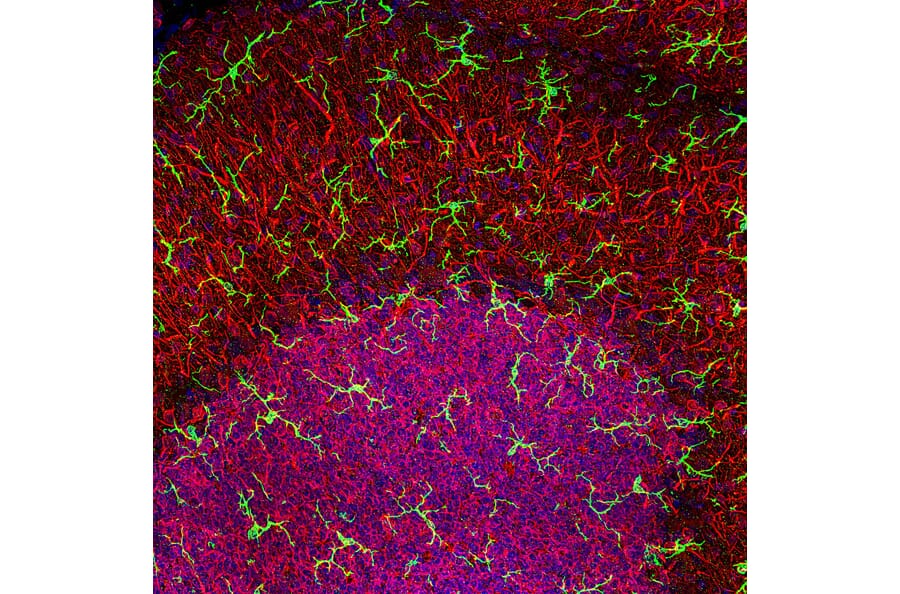
Microglia are the resident immune cells of the CNS, responsible for responding to injury and disease by clearing debris and orchestrating inflammatory responses. Microglia activation, such as indicated by increased expression of Iba1, is observed in various neurodegenerative diseases, while microglial migration and clonal expansion occurs in response to insults and during recovery.
![Anti-Myelin Basic Protein Antibody [7G7] (A85322) IHC](https://cdn.antibodies.com/image/catalog/85/A85322_1.jpg?profile=product_image)
Oligodendrocytes are glial cells in the CNS that produce myelin, crucial for insulating axons and facilitating rapid signal transmission. Changes in oligodendrocyte populations or myelination status can reflect demyelinating diseases like multiple sclerosis or traumatic CNS injuries.
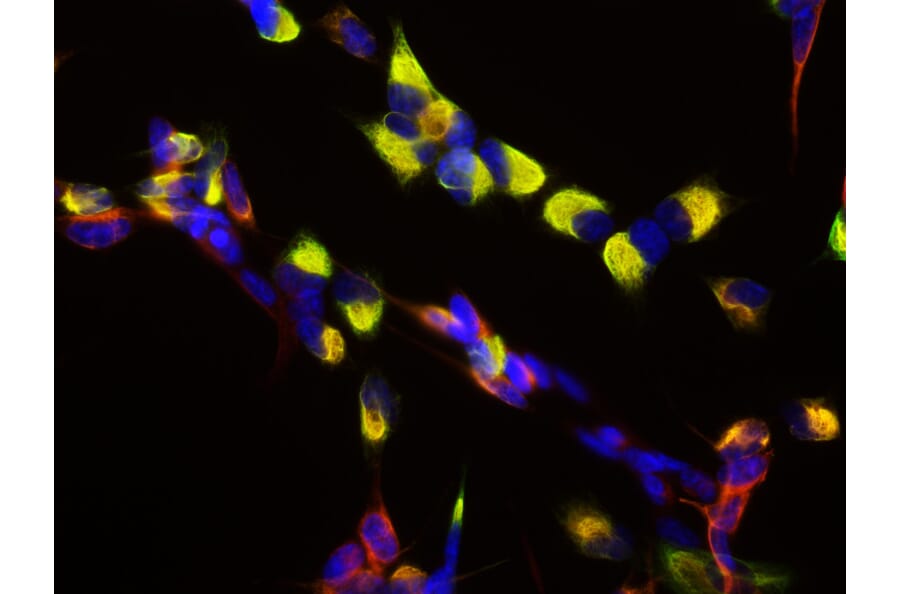
Radial glia are progenitor cells for the developing nervous system. They act as both a source of new, postmitotic neurons and a scaffold to aid in the migration and organization of other cell types. Assessing radial glia with specific markers reveals dramatic increases in radial glia number throughout embryonic development as the brain develops, and declining after birth as they differentiate into astrocytes, oligodendrocytes, and other neural cells. Radial glia-like cells persist in the adult brain at sites of neurogenesis such as the dentate gyrus and subventricular zone.
![Anti-GAP43 Antibody [3H14] (A85393) IHC](https://cdn.antibodies.com/image/catalog/85/A85393_1.jpg?profile=product_image)
Schwann cells are a type of glia in the peripheral nervous system, some of which ensheathe peripheral neurons with myelin in a similar way to oligodendrocytes. Changes in Schwann cell number, location, or activation state as indicated by Schwann cell markers can reflect responses to peripheral nerve damage or disorders like Charcot-Marie-Tooth disease.